
- All
- Product Name
- Product Keyword
- Product Model
- Product Summary
- Product Description
- Multi Field Search
English
Views: 238 Author: Young Mei Publish Time: 09-24-2026 Origin: Site


Content Menu
● Ageha Gel vs Kokoist at a Glance
● Understanding the Base Gel Difference
● Viscosity, Self-Leveling, and Application Control
>> Ageha Gel Texture Experience
● Removal, Nail Condition, and Long-Term Wear
>> Professional Removal Checklist
● Top Gels: Shine, Strength, and Finish
>> Ageha Gel Top and Matte Options
● Art Performance: Gradation, Marbling, and Charms
>> Choosing a Gel for Nail Art
● A Manufacturer's View: What Makes a Gel Line Commercially Strong?
● Final Verdict: Ageha Gel or Kokoist?
● FAQ
>> 1. Is Ageha Gel better than Kokoist?
>> 2. Which gel is better for clients with lifting problems?
>> 3. Can Ageha Gel and Kokoist products be mixed?
>> 4. What is the difference between a thin base gel and a builder gel?
>> 5. Is a potted top gel better than a bottled top gel?
>> 6. Which gel is best for nail charms and rhinestones?
>> 7. What should an OEM gel nail manufacturer provide?
Choosing between Ageha Gel and Kokoist is not simply a matter of picking a color palette or following a popular salon trend. For nail technicians, salon owners, distributors, and private-label nail brands, the better system depends on the service goal: fast removal, flexible adhesion, structured overlays, art performance, shine retention, or dependable embellishment application.
As a nail-product manufacturer with more than 15 years of experience supporting global brands, wholesalers, and retail chains, we evaluate gel systems from a practical product-development perspective. That means looking beyond marketing claims and focusing on viscosity, cure behavior, removal workflow, flexibility, adhesion strategy, packaging, service consistency, and the needs of the final customer.
This guide compares Ageha Gel vs Kokoist in detail, while also placing their base, top, and art-gel approaches in the wider context of Japanese professional gel systems. The goal is to help professionals choose products more confidently—and help nail businesses understand what makes a gel collection commercially successful.

Both Ageha Gel and Kokoist are associated with the Japanese professional nail market, where product development often emphasizes refined textures, controlled application, thin-yet-durable layers, and service-specific formulas.
However, their product philosophies can feel different in practical use.
| Comparison Area | Ageha Gel | Kokoist |
|---|---|---|
| Overall positioning | Artistic, detail-oriented gel system with multiple specialty formulas | Broad professional system designed for versatile salon applications |
| Base gel approach | Offers formulas for cushioning, medium-viscosity application, and easier removal | Known for strong adhesion-focused base options, including thicker sticky formulas |
| Texture character | Often smooth, controlled, and suitable for detailed service customization | Often practical, stable, and designed for predictable daily salon use |
| Best for | Nail artists seeking specialized gel behaviors and creative flexibility | Technicians seeking a streamlined, multifunctional working system |
| Art applications | Strong potential for gradation, marbling, charms, and finish variations | Particularly useful for controlled art applications and clear-art effects |
| Business fit | Boutique salons, artists, premium Japanese-gel retail assortments | Professional salons, education-led retail, distributors, and service-focused collections |
The most important point is this: neither system is automatically "better." A better choice depends on the nail condition, removal habits, desired design, technician technique, and whether the salon needs a specialized or simplified inventory.
A base gel is not only the first coat in a manicure. It is the layer that can influence adhesion, flexibility, removal time, client comfort, and long-term wear.
For professionals comparing Ageha Gel vs Kokoist, base-gel selection is usually the most important decision.
Ageha's range is commonly discussed through the lens of application purpose. Rather than expecting one base formula to solve every client issue, a technician may choose different products for different nail types and service styles.
Examples include:
- Ageha Base Gel More, often described as a smoother medium-viscosity base with a flexible, self-leveling feel.
- Ageha Cushion Base, positioned around easier removal while providing more body than a thin watery base.
- Specialty formulas that can support varying levels of flexibility, overlay control, and service customization.
A medium-viscosity base can be valuable when a technician wants to create a subtle apex or smooth irregularities without moving immediately into a separate builder-gel step. In a busy salon, this can improve application efficiency while helping the finished nail look more balanced.
The key operational advantage is flexibility. A salon can build its service menu around different client needs instead of forcing all natural nails into the same product behavior.
Kokoist is widely associated with professional formulas that emphasize adhesion and service practicality. Its base-gel selection includes options with more grip and body, such as Mega Stick Base, which is often compared with other medium-to-thicker adhesion-oriented bases.
A thicker or stickier base may be helpful for clients who experience repeated lifting, especially when nail preparation, lifestyle, moisture exposure, or nail flexibility creates adhesion challenges. However, product thickness alone does not eliminate lifting. Correct preparation, lamp compatibility, application thickness, and removal technique remain essential.
Kokoist can be a strong option for technicians who prefer a more standardized system. Instead of constantly switching between many specialty products, a technician may select a core base, color, and top combination that works reliably for a large share of their client base.
Choose Ageha Gel when:
- You want several base-gel behaviors available within the same professional system.
- You regularly customize services for different nail types.
- You perform structured overlays, detailed art, or quick-removal services.
- You value a more specialized product-selection process.
Choose Kokoist when:
- You need a practical gel system for frequent salon appointments.
- You prefer a stronger adhesion-focused working texture.
- You want to simplify staff training and service procedures.
- You are building a repeatable core manicure menu.
For commercial nail brands, the lesson is important: a successful collection should include more than one base-gel viscosity. A thin adhesion base, a flexible medium-viscosity base, and a builder or reinforcement gel can help a brand serve more customer needs without overcomplicating the product line.
When comparing professional gel systems, the word viscosity matters. It refers to how thick or fluid a product feels and how quickly it moves after application.
A thin gel can spread quickly and sit close to the natural nail. A thicker gel can offer more control, help create structure, and reduce the risk of flooding the cuticle area when used correctly.
Ageha Gel is often appreciated by nail artists who want controlled movement during application. In particular, medium-viscosity formulas may provide enough time to guide the gel around the nail before curing.
This is useful for:
- Creating a smooth overlay
- Correcting small surface imperfections
- Forming a subtle apex
- Encapsulating decorative elements
- Working on detailed art without excessive product flow
A self-leveling formula can reduce visible brush marks, but it should not be confused with a "no-skill-required" product. If a gel is applied too heavily, even an excellent self-leveling formula can pool near the sidewalls or cuticle.
Kokoist products are often selected for their predictable handling. A technician who uses the same system repeatedly can develop a consistent rhythm: product pickup, brush pressure, bead placement, self-leveling time, and curing sequence.
For salon environments, this consistency is commercially valuable. It can reduce training time, improve service speed, and help different technicians deliver a more similar result.
A thicker sticky base can feel more secure to professionals who work with clients prone to lifting. Yet it requires controlled application. Too much product near the free edge or sidewalls can lead to bulk, uneven curing, or premature lifting caused by incomplete bonding in thick areas.
Use the following simple decision framework:
1. Choose a thin base for close-contact adhesion and easy soak-off services.
2. Choose a medium-viscosity base for flexibility, smoothing, and light structure.
3. Choose a higher-viscosity builder formula when the service requires reinforcement or stronger shape correction.
4. Choose an art gel based on movement control, pigment density, and the specific design technique.
This approach applies not only to Ageha Gel and Kokoist, but also to the development of private-label professional gel lines.
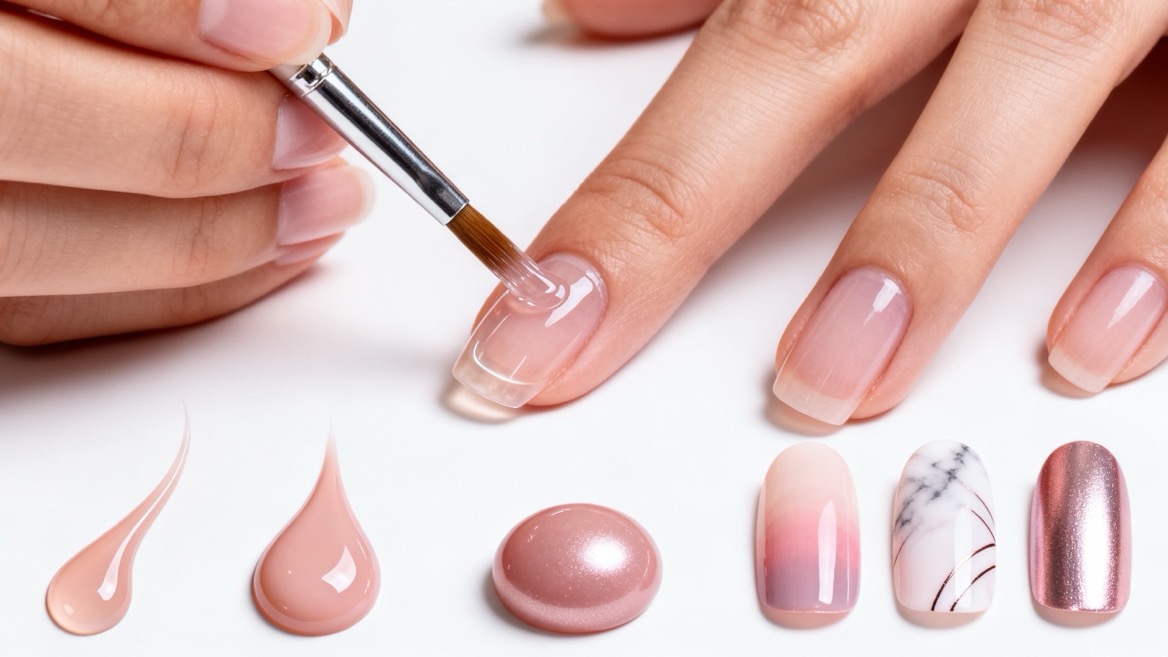
Many gel comparisons focus on color, shine, or texture. But the removal process may have a greater effect on the client's perception of nail health.
A gel system should be evaluated through its full service cycle:
- Preparation
- Base application
- Color or art application
- Top coat
- Daily wear
- Removal
- Natural-nail condition after removal
A thin, soak-off-oriented base may be useful when clients change colors frequently or prefer complete removal at every appointment. A more structured base may be better when the technician performs infills or controlled debulking rather than full soak-off removal.
The original comparison notes that thin watery bases from some Japanese systems can help product flow into nail-plate texture and may support easier removal. It also emphasizes that quick-off products should be handled carefully during e-file removal, because aggressive filing can damage the natural nail.
That advice is highly relevant across brands: the best gel formula cannot compensate for poor removal technique.
- Use the correct curing lamp specified or validated for the gel system.
- Avoid applying base and color layers too thickly.
- Do not peel, pry, or force product from the natural nail.
- Reduce bulk carefully before soaking off.
- Use controlled e-file pressure when leaving a protective base layer.
- Reassess the natural nail before selecting the next service formula.
For salon operators, documenting removal standards is one of the best ways to protect service quality. For product brands, clear removal instructions and professional education can reduce customer complaints more effectively than simply adding more colors to a collection.
Top gels affect more than gloss. They influence scratch resistance, surface smoothness, design clarity, maintenance expectations, and the final visual identity of a manicure.
Ageha offers professional finishing options including potted and bottled top-gel formats, as well as a wipe-required matte top gel. A potted top gel can be beneficial when the technician wants greater control, slight surface leveling, or a more substantial finish on a one-color manicure.
A bottle top gel is often more convenient for fast salon work. It can be easier to apply consistently, particularly when a technician is moving through several appointments per day.
Matte finishes deserve special attention. A high-quality matte top should cure evenly, avoid patchiness, resist premature shine buildup, and preserve the intended velvet-like appearance. Wipe-required matte products can require a slightly more deliberate finishing workflow, but some technicians prefer the final surface effect.
Kokoist is often associated with practical, polished finishing products, including glossy top-gel options that can provide surface smoothing without requiring a separate potted formula in every workflow.
For a salon that values speed, a reliable bottle top gel can be a major advantage. It supports easier inventory control, faster staff onboarding, and more consistent finishing across technicians.
The choice comes down to service style:
- Potted top gel: More control, potentially more leveling, often preferred for detailed or premium services.
- Bottled top gel: Faster application, convenient for standard salon workflows.
- Matte top gel: Essential for trend-led sets, editorial looks, and contrast designs.
Nail artists often judge a gel system by what it allows them to create. This is where Ageha Gel and Kokoist can appeal to different working styles.
Ageha's specialty products, such as Gradation Gel and Charme On Gel, address specific design needs. Gradation formulas can help produce softer color transitions, while charm or affixing gels help hold three-dimensional embellishments in place.
Kokoist's Art Clear Zero has been compared with Ageha's gradation-focused formula for techniques such as marbling, blending, and color mixing. In the source comparison, Kokoist appeared to fade more easily in one gradient test, while Ageha helped preserve a marbled pattern more clearly. These results should be treated as technique-dependent observations rather than universal performance guarantees.
| Nail Art Need | Better Product Characteristic | Potential System Fit |
|---|---|---|
| Soft ombré or gradation | Smooth movement and blendability | Kokoist-style art clear formulas or Ageha gradation products |
| Marble designs | Controlled spread and pattern retention | Ageha-style gradation or clear art gel |
| 3D charms and rhinestones | High-viscosity, stable, non-wipe affixing gel | Ageha Charme On Gel or dedicated hard-texture charm gels |
| Fine line art | High pigment, low spreading, brush control | Dedicated liner or art-gel formula |
| Encapsulation | Clear formula with stable viscosity | Medium-viscosity clear or builder-style gel |
For brands entering the nail-art market, a color collection alone is rarely enough. A complete professional assortment should consider liners, clear art gels, chrome-adhering finishes, charm gels, matte tops, and reinforcement formulas.
From a product-development and supply-chain perspective, Ageha Gel vs Kokoist is also a useful lesson in how professional nail brands create value.
A commercially strong gel line typically needs five elements:
- Clear product roles: Customers should understand which base, builder, top, and art gel to use.
- Consistent batch quality: Color, viscosity, odor, brush performance, and curing behavior should remain stable.
- Compatible packaging: Bottles, pots, brushes, labels, and outer cartons should support professional use and brand positioning.
- Education support: Application, curing, removal, and troubleshooting instructions are essential.
- Scalable customization: Brands should be able to develop colors, packaging, finishes, and product bundles that fit their market.
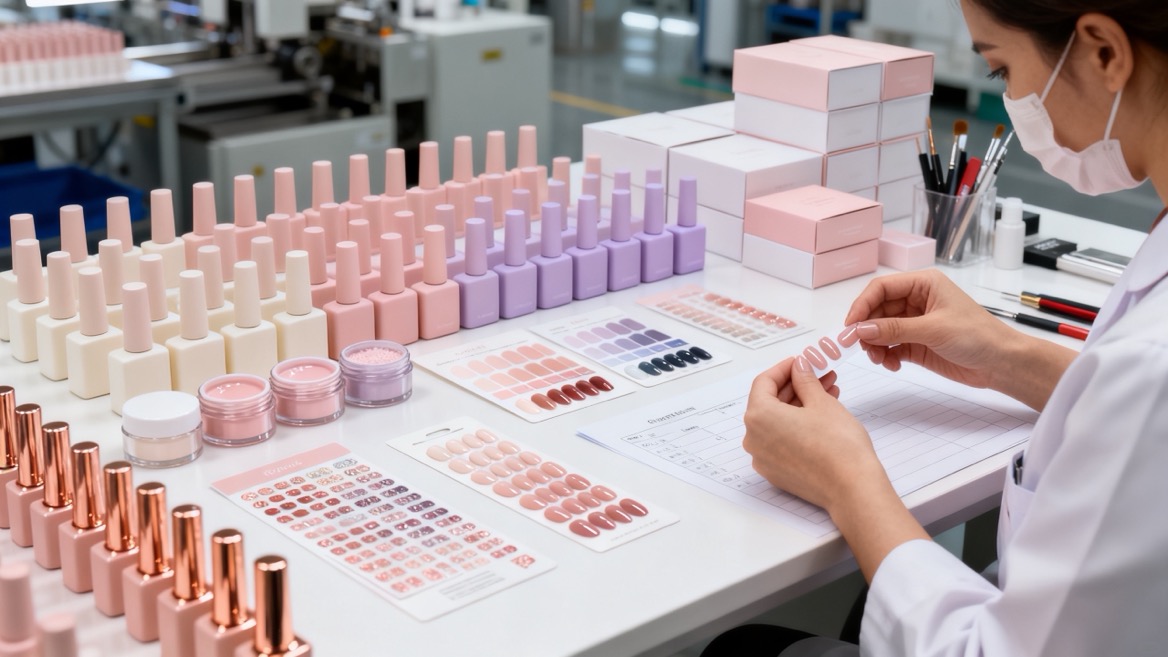
For new nail brands, private-label development should begin with a practical assortment rather than an oversized catalog. A balanced starter range may include:
1. A thin adhesion base gel.
2. A medium-viscosity rubber or flexible base gel.
3. A builder or strengthening gel.
4. A no-wipe glossy top gel.
5. A matte top gel.
6. A curated color range.
7. A clear art gel or blooming gel.
8. A charm-affixing gel.
9. Press-on nails or nail stickers for retail expansion.
This structure supports both salon professionals and retail consumers. It also allows brands to expand in a controlled way after identifying their best-selling colors, finishes, and service categories.
Ageha Gel is an excellent choice for nail professionals who value specialized textures, creative options, controlled application, and a more customized service approach. Its appeal is particularly strong for artists working with gradation, marbling, charms, premium overlays, and multiple finishing effects.
Kokoist is a strong choice for technicians and salon operators who want a versatile, dependable, and streamlined professional system. Its adhesion-focused products and practical workflow can suit repeat salon services, team training, and consistent everyday results.
The best strategy is not to select a gel brand based only on popularity. Evaluate the product according to nail type, removal preference, technician skill, lamp compatibility, service time, design requirements, and client expectations.
For distributors, salon chains, and emerging beauty brands, the broader opportunity is to build a product system that solves these same real-world service problems. A well-designed OEM or ODM nail collection can combine the usability professionals need with the branding, packaging, and market positioning your customers expect.
Looking to develop a custom gel nail, press-on nail, or nail sticker collection? Contact Dongguan YoungMei Technology Co., Ltd. to discuss OEM/ODM formulations, packaging concepts, rapid sampling, and one-stop manufacturing solutions for your brand.
Neither brand is universally better. Ageha Gel may be more appealing for specialized creative work and multiple texture options, while Kokoist may suit technicians who want a practical, repeatable salon system with strong adhesion-focused products.
Lifting can result from preparation, curing, product thickness, nail flexibility, water exposure, or removal damage. A tackier, adhesion-focused base such as Kokoist Mega Stick Base may be worth testing, but technicians should also review prep procedures and lamp compatibility.
Professionals sometimes combine products across brands, but this should be done carefully. Curing performance, chemical compatibility, removal behavior, and warranty guidance can vary. The safest workflow is to test the complete system before using it on paying clients.
A thin base gel primarily supports adhesion and easier soak-off removal. A builder gel has more viscosity and is typically used for reinforcement, shape correction, overlays, and creating an apex.
Not necessarily. Potted top gels can offer more control and may help level minor surface imperfections. Bottled top gels are often faster and more convenient for routine salon services. The right choice depends on the desired finish and service speed.
Use a dedicated, high-viscosity charm or affixing gel. These formulas are designed to hold three-dimensional decorations more securely than standard base gel or top gel.
A capable manufacturer should offer stable formulation support, color matching, packaging customization, sample development, quality control, compliance documentation where applicable, scalable production, and reliable delivery coordination.
1. [Paola Ponce Nails: Ageha Gel vs Kokoist, Leafgel, and Vetro]
2. [Kokoist USA: Professional Gel Nail Products]
3. [Kokoist: Mega Stick Base Product Information]
4. [Ageha Gel Official Website]
5. [U.S. Food and Drug Administration: Nail Care Products]
6. [Professional Beauty Association: Nail Professional Resources]