
- All
- Product Name
- Product Keyword
- Product Model
- Product Summary
- Product Description
- Multi Field Search
English
Views: 258 Author: Young Mei Publish Time: 10-08-2026 Origin: Site


Content Menu
● Korean Gel vs Japanese Gel at a Glance
● Performance, Application, and Safety
>> Pigmentation: Coverage Is Only Half the Story
>> Viscosity and Brush Control
>> Nail-Art Styles: Inspiration, Not Boundaries
>> Curing and System Compatibility
>> Allergy Risks and Ingredient Claims
● A Buyer's Testing and Sourcing Framework
>> Compare Equivalent Products First
>> Use a Scorecard Instead of Impressions
>> Calculate Cost per Usable Result
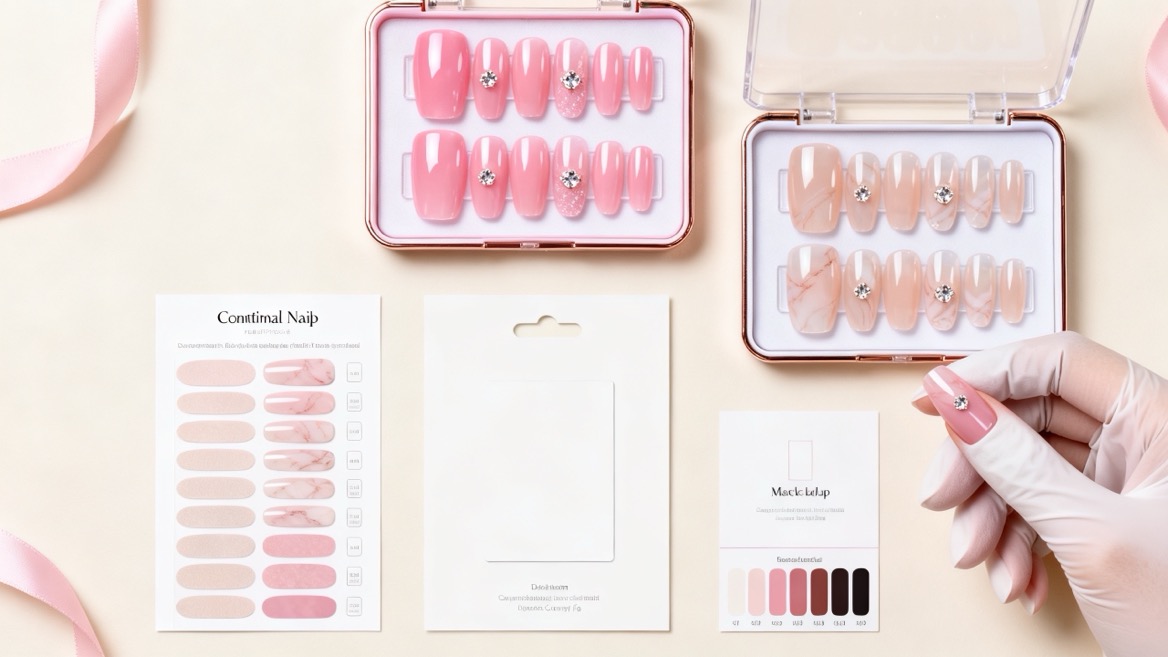
>> Translate the Look into Press-Ons and Wraps
● Develop Your Collection with YoungMei
>> Is Korean Gel Better Than Japanese Gel?
>> Are Japanese Gels Always Sold in Pots?
>> Are Korean Gels Only Bottled?
>> Can Korean and Japanese Gels Be Mixed?
>> Does HEMA-Free Mean Allergy-Free?
>> Which Category Is Better for Press-On Brands?
Korean gel vs Japanese gel is not a contest with one universal winner. Both categories include professional nail systems, but the better choice depends on the specific formula, application method, desired finish, and business model—not simply the country printed on the packaging.
From our product-development perspective at Dongguan YoungMei Technology Co., Ltd., the most useful question is: Which system delivers the result your customers need consistently? With more than 15 years of experience developing and manufacturing press-on nails, nail wraps, and related products, we approach this comparison through design execution, repeatable quality, and commercial practicality.
This guide explains the differences without treating national style preferences as fixed technical standards.

"Korean gel" and "Japanese gel" are market descriptions, not standardized chemical classifications. Neither label guarantees a particular viscosity, ingredient list, curing requirement, or wear time.
Korean gel generally refers to gel nail products associated with Korean brands. The category includes bottled colors, clear gels, specialty effects, and products designed for decorative applications.
Highly pigmented bottled colors are a prominent feature in educator Paola Ponce's comparison. However, bottles are not the entire category: Korean brand Mithmillo also offers its distinctive Cakegel format and an extension gel.
For buyers, the practical appeal is often the combination of accessible brush-on application and coordinated decorative collections. Still, each product needs evaluation on its own merits.
Japanese gel generally refers to gel systems associated with Japanese brands, including professional color gels, bases, builders, and finishing products.
Potted color gels are strongly associated with the category, but Japanese products are not exclusively potted. KOKOIST, for example, offers a broader professional system rather than a single packaging format.
The important distinction is product function. A color gel, strengthening base, and extension gel serve different purposes, even when they share the same brand or country of origin.
| Evaluation point | Korean gel | Japanese gel | What buyers should verify |
|---|---|---|---|
| Packaging | Bottled colors are prominent; other formats also exist | Potted gels are prominent; bottled options also exist | Container usability and dispensing control |
| Color application | Some lines emphasize highly pigmented brush-on colors | Some lines emphasize brush-controlled color and layering | Coverage at the prescribed layer thickness |
| Nail-art associations | Embellished, glossy, and dimensional looks | Blended, understated, and nuanced looks | Actual collection versatility |
| Structural services | Suitable products exist within certain systems | Suitable products exist within certain systems | Whether the specific gel permits overlays or extensions |
| Safety | Depends on ingredients and handling | Depends on ingredients and handling | Ingredient information and application instructions |
| Commercial value | Depends on product and distribution | Depends on product and distribution | Total cost per usable result |
These are market tendencies, not rules. Neither category owns a particular aesthetic, and individual products may contradict the general pattern.
A richly pigmented gel can produce a strong visual result, but pigmentation alone does not establish quality.
A buyer should examine coverage and control together. Does the product apply evenly at its recommended thickness? Can the technician create a clean cuticle margin? Does the color remain consistent between applications?
For translucent designs, opacity may actually be undesirable. A sheer pink that builds predictably can be more useful than a dense pink that overwhelms a layered effect.
When comparing Korean gel polish vs Japanese gel, select equivalent products. Comparing a sheer jelly color with an opaque painting gel produces a misleading result.
Packaging influences workflow, but it does not reliably reveal viscosity.
A bottle includes an integrated brush, while a pot allows the user to choose a separate brush. Neither arrangement automatically creates better application.
For a salon, handling preference matters. A brush-on format may suit an established manicure routine. A pot may suit a technician who switches brushes for detailed painting.
For manufacturing, evaluate flow, edge definition, leveling, and application consistency. A product that looks excellent in one sample may still be difficult to reproduce across a full collection.
Korean-style nail art is often associated with decorative accents, sparkle, and dimensional details. Japanese-style nail art is often associated with blended colors and delicate, nuanced effects.
These associations help organize design inspiration, but style is not chemistry.
A Korean gel can create a restrained nude manicure. A Japanese gel can support a bold decorative look. The relevant question is whether the selected product performs the required technique.
For brands developing press-on collections, translate the aesthetic into measurable specifications: color transparency, glitter density, accent placement, surface smoothness, and decoration height.
There is no defensible category-wide answer to "Which lasts longer?"
Wear depends on the complete system, preparation, application, curing, nail condition, and everyday exposure. A national label cannot replace product-specific instructions or documented testing.
Likewise, do not assume every gel is removable in the same way. Check whether the particular product is soak-off and follow its prescribed removal procedure.
A useful supplier question is: Under what conditions was this wear claim established? Ask about the base, top coat, application method, and evaluation criteria rather than accepting an unexplained duration.
Follow the manufacturer's specified lamp and curing instructions. Do not treat one curing time as universal across Korean and Japanese products.
KOKOIST's educational guidance emphasizes thin color layers and correct hand placement. These are useful application principles, but they do not replace instructions for another formula.
Avoid assuming that products from different brands are compatible because they appear similar. Request compatibility guidance before combining a base, color, builder, and top coat.
For professional or production use, document the complete system. Record the exact products, lamp, layer sequence, and curing settings so the process can be repeated.
Neither Korean nor Japanese gel is inherently allergy-free. Reactive ingredients in nail products can cause adverse reactions in people who become sensitized.
The term "HEMA-free" describes the absence of one ingredient; it does not establish that a product is free from every potential allergen. Low odor also does not prove safety.
Prioritize ingredient transparency, careful handling, and avoidance of uncured product on skin. Anyone experiencing itching, swelling, or other suspected reactions should stop using the product and seek medical advice.
For sourcing, specific documentation beats reassuring language. Ask for ingredient information, relevant safety documentation, and instructions—not merely claims such as "clean" or "gentle."
A fair Korean gel vs Japanese gel comparison starts with matched functions.
Compare opaque colors with opaque colors, clear builders with clear builders, and top coats with top coats. Otherwise, differences in intended use may be mistaken for differences in quality.
Our recommended sample evaluation follows five steps:
1. Define the target result, including finish, opacity, nail shape, and decoration.
2. Select products intended for the same application.
3. Apply each product according to its own manufacturer's instructions.
4. Record handling, appearance, process time, and removal behavior.
5. Repeat the evaluation before making a purchasing decision.
This is a proposed assessment framework, not a claim that either category has already passed a particular test.
A visual sample can attract attention while hiding operational weaknesses. A structured scorecard makes the decision more useful.
| Criterion | Question to answer | Evidence to record |
|---|---|---|
| Color accuracy | Does the result match the approved target? | Controlled-lighting photographs |
| Application | Is the intended finish repeatable? | Operator observations and application time |
| Surface quality | Are edges and decorative details consistent? | Close-up inspection |
| System instructions | Is the process clearly defined? | Product and lamp documentation |
| Removal | Does the stated procedure work as described? | Removal observations |
| Supply continuity | Can the supplier repeat the approved result? | Batch records and replenishment terms |
Set acceptance criteria before testing. This prevents an attractive color or fashionable package from outweighing a requirement that matters to your business.
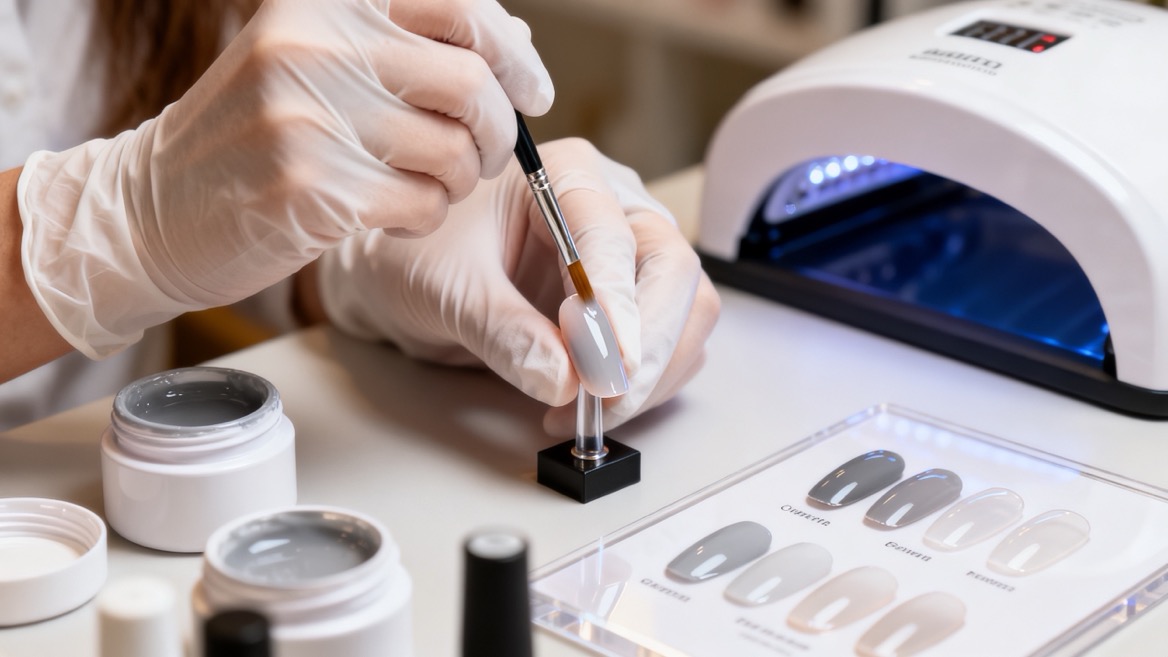
Container price alone provides an incomplete comparison.
For salons, consider product consumption, application time, removal time, and corrective work. For brands, include sampling, rejected units, packaging, freight, and replenishment requirements.
A practical purchasing measure is:
Cost per usable result = total relevant cost ÷ accepted results.
For illustration, a less expensive product may lose its advantage if it requires additional application time or produces more rejected pieces. This is a costing example, not a documented outcome for any named brand.
Ask suppliers for comparable quotations with clear specifications. Different fill sizes, packaging requirements, and order quantities can distort apparent price differences.
Salon gel systems, finished press-on nails, and nail wraps are different product formats. Do not assume a salon gel workflow transfers unchanged into manufacturing.
For a Korean-inspired decorative press-on collection, specify accent placement, attachment quality, packaging protection, and acceptable dimensional variation.
For a Japanese-inspired translucent collection, specify color depth, layering appearance, edge definition, and consistency across nail sizes.
For nail wraps, confirm the material and application method. A conventional adhesive wrap and a semi-cured gel strip should not receive identical instructions.
At Dongguan YoungMei Technology Co., Ltd., our stated capabilities include OEM/ODM customization, rapid sampling, an owned factory, and an established supply chain. The appropriate starting point is an approved design brief—not an unsupported claim that one national gel category is always superior.
Choose a product direction based on your customer, not simply a country label. Share your design references, target market, desired nail shapes, packaging requirements, and expected order volume with Dongguan YoungMei Technology Co., Ltd.
Our team can discuss OEM/ODM press-on nails, nail wraps, and related products, then develop samples for your review. Approve appearance and practical quality requirements before moving to production.
Not universally. Korean gel may suit a buyer seeking particular bottled colors or decorative collections, while Japanese gel may suit a preferred potted workflow or specific system. Compare equivalent products against your requirements.
No. Potted gels are strongly associated with Japanese professional nail systems, but bottled options also exist. Check the individual product range rather than relying on the category label.
No. Although bottled colors are prominent, Korean products also include other formats. Mithmillo's Cakegel provides a clear counterexample to an exclusively bottled definition.
Do not assume compatibility. Obtain guidance for the exact products and curing equipment involved. A visually acceptable sample does not, by itself, establish validated compatibility.
No. Other ingredients can still cause allergic reactions. Ingredient claims should not replace careful application or medical advice for someone with a suspected nail-product allergy.
Neither category automatically determines the better finished product. Design execution, sizing, decoration quality, repeatability, packaging, and supplier reliability are more useful purchasing criteria.
- [Paola Ponce Nails — Korean Gel vs Japanese Gel: What's the Big Difference?] — Practitioner commentary informing the discussion of packaging, pigmentation, and aesthetic tendencies; these observations are not treated as universal technical rules. [paolaponcenails]
- [KOKOIST USA — Gel Curing Units] — Official brand information supporting the discussion of Japanese professional systems and associated curing equipment. [kokoistusa]
- [KOKOIST USA — How to Get a Proper Cure with Each Japanese Gel Manicure] — Brand educational guidance on thin application, hand placement, and curing practices. [kokoistusa]
- [Zillabeau — About Mithmillo] — Distributor information establishing Cakegel as an alternative Korean product format. [zillabeau]
- [Zillabeau — Mithmillo EVERGEL] — Product information identifying an extension gel within a Korean brand's range. [zillabeau]
- [U.S. Food and Drug Administration — Nail Care Products] — Authoritative guidance on reactive monomers, sensitization, and avoiding skin contact. [fda]
- [DermNet — Nail Cosmetics Allergy] — Clinical background on nail-product allergens and avoidance of identified allergens. [dermnetnz]
- [Asthma and Allergy Foundation of America — Am I Allergic to Gel Nails or Nail Polish?] — Expert guidance identifying HEMA as a potential cause of reactions and advising against contact with uncured gel. [community.aafa]