
- All
- Product Name
- Product Keyword
- Product Model
- Product Summary
- Product Description
- Multi Field Search
English
Views: 220 Author: Young Mei Publish Time: 09-22-2026 Origin: Site


Content Menu
● Press-On Nails vs Acrylic Nails at a Glance
● Durability: Which Lasts Longer?
● Application Experience: Home Convenience vs Salon Service
>> Choose Press-On Nails When You Want:
>> Choose Acrylic Nails When You Want:
>> Practical Nail-Safety Rules
>> Cost Is More Than the Sticker Price
● Design Freedom and Customization
● A Product-Development Checklist for Buyers
>> Ask These Questions Before Launching
● Which Option Is Right for You?
● Partner With a Professional Press-On Nail Manufacturer
● FAQ
>> Are press-on nails better than acrylic nails?
>> Do press-on nails damage natural nails?
>> How long do press-on nails last?
>> Are acrylic nails bad for your nails?
>> Can I reuse press-on nails?
>> What should a private-label press-on nail brand customize?
>> Should I use adhesive tabs or nail glue?
When comparing press-on nails vs acrylic nails, the best choice depends on more than appearance. Wear time, application method, natural-nail condition, customization, cost, retail positioning, and customer lifestyle all matter.
As a nail-product manufacturer with more than 15 years of production experience, Dongguan YoungMei Technology Co., Ltd. has worked with global brands, wholesalers, and retailers that need dependable, market-ready nail solutions. From a product-development perspective, press-on nails and acrylic nails serve different customer needs. Acrylics remain a salon-led enhancement service, while premium press-on nails have become a scalable, flexible, and highly customizable retail category.
For consumers, the decision is personal. For beauty brands and buyers, it is also a commercial decision: which product format can deliver the right balance of quality, repeat purchase potential, convenience, design differentiation, and responsible product use?

Press-on nails are pre-shaped artificial nail tips that are applied directly to the natural nail with adhesive tabs or nail glue. They are typically worn at home and can be designed in many shapes, lengths, colors, and finishes.
Acrylic nails are created by combining liquid monomer with polymer powder to form a workable material. A nail technician applies and shapes the product directly on the nail or nail extension. The finished result hardens into a durable enhancement that generally requires salon maintenance.
| Comparison factor | Press-on nails | Acrylic nails |
|---|---|---|
| Application location | Usually at home | Usually in a salon |
| Typical application time | About 10–20 minutes | Often 1–2 hours |
| Wear period | Days to around two weeks, depending on adhesive and care | Usually requires fills every 2–3 weeks |
| Style flexibility | Easy to change frequently | Less convenient to change |
| Customization | Size, shape, print, finish, packaging, design collections | Technician-led shaping and hand-created salon art |
| Removal approach | Gentle soaking and careful lifting | Usually acetone soaking and/or professional removal |
| Business model | Retail, e-commerce, subscription, wholesale, private label | Salon service and maintenance |
| Best for | Convenience, trend-led designs, events, travel, flexible routines | Long-wear users who prefer professional salon appointments |
Neither option is automatically better for every person. The right answer depends on the customer's schedule, budget, natural-nail condition, design expectations, and preferred maintenance level.
Press-on nails are ready-made artificial nail tips. A high-quality set normally includes multiple sizes so the wearer can match each tip to the width and curve of their natural nails.
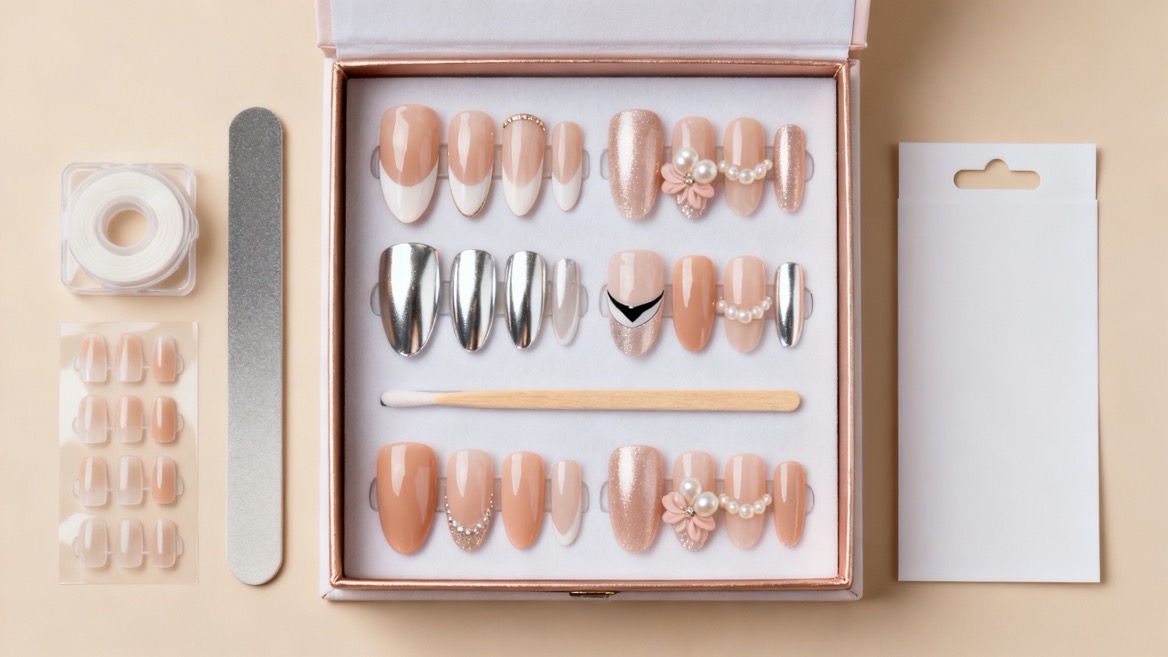
Today's premium press-on nail category is far more advanced than the basic plastic nail sets many people remember. Modern designs may include:
- French tips
- Chrome finishes
- Cat-eye effects
- Jelly and translucent looks
- 3D charms and sculpted details
- Hand-painted nail art
- Rhinestones and pearl embellishments
- Ombre gradients
- Seasonal collections
- Short, medium, and long lengths
- Square, almond, coffin, oval, stiletto, and ballerina shapes
A well-designed press-on nail set can create a salon-inspired look without requiring a salon appointment. For busy professionals, travelers, students, parents, and event shoppers, that convenience is a major advantage.
From a manufacturing perspective, product quality begins with fit, material thickness, tip curvature, edge smoothness, decoration durability, and adhesive compatibility. A beautiful design is not enough if the nails feel uncomfortable, crack easily, or do not fit a broad range of nail beds.
Acrylic nails are a professional nail enhancement system. A technician typically combines acrylic liquid and powder, applies the material to the nail, shapes it, and finishes the surface with color or nail art.
The main strength of acrylic nails is their structural durability. They can create long extensions, reinforce weak-looking nails temporarily, and support bold shapes that may be harder to maintain with natural nails alone.
However, acrylics also require an ongoing service routine. Natural nails grow continuously, so a visible gap develops near the cuticle. Most acrylic wearers need regular fills to maintain the appearance and structure of the manicure.
The American Academy of Dermatology notes that acrylic application typically requires roughening the natural nail surface for adhesion, which can thin and weaken the nail. It also advises that frequent touch-ups can contribute to nail damage over time.
That does not mean every acrylic manicure will cause severe damage. Results depend greatly on technician skill, product quality, application technique, removal method, aftercare, and the individual wearer's sensitivity. Still, customers should understand that acrylic nails are a higher-maintenance enhancement system, not simply a one-time beauty purchase.
Acrylic nails generally win when the only measurement is long-term durability. A professionally applied acrylic set can remain in place for weeks, although it needs fills as the natural nail grows.
Press-on nails have a shorter wear cycle, but their durability varies widely depending on the adhesive method, nail preparation, product quality, and daily activities.
With adhesive tabs, press-on nails are often suitable for short-term wear. They are ideal for:
- A dinner date
- A wedding
- A photo shoot
- A weekend trip
- A work event
- A holiday celebration
- Testing a new nail shape before committing to a longer look
With nail glue and careful preparation, many users can achieve longer wear. However, it is important to avoid exaggerated promises. The actual wear time can differ from person to person because natural nail oil levels, water exposure, handwashing habits, work activities, and application technique all influence adhesion.
Acrylic nails can stay on for a longer period, but the manicure still changes as the natural nail grows. The visible regrowth area must be filled, and any lifting should be addressed promptly by a qualified nail professional.
Durability is not the same as convenience. A product that stays on longer may also require more time, stronger removal methods, higher maintenance spending, and more salon visits.
One of the clearest differences in the press-on nails vs acrylic nails comparison is the application journey.
Press-on nails are designed for fast, flexible use. A customer can choose a set, prepare their nails, apply the tips, and complete the look at home. This makes them especially attractive to people who value privacy, speed, and the freedom to change styles whenever they want.
Acrylic nails offer a different type of value. Some customers enjoy the salon experience, personal attention, and technician-led shaping. A skilled technician can assess the client's preferences, create a tailored length, and build a look in real time.
- A quick manicure at home
- Lower time commitment
- Easy style changes
- Occasion-based wear
- Travel-friendly beauty products
- A lower barrier to trying new nail designs
- Flexible retail purchasing rather than appointment booking
- A longer-wear enhancement
- Salon shaping and technician service
- Extra structure for long extensions
- A consistent look over several weeks
- A professional appointment as part of your self-care routine
For beauty brands, this distinction creates different customer journeys. Acrylic services depend heavily on technicians and local salons. Press-on nails can be sold globally through e-commerce, retailers, subscription boxes, beauty stores, department stores, and influencer-led collections.
Natural-nail care should be part of every honest comparison. The safest-looking manicure is not worth sacrificing healthy nails through poor preparation, aggressive removal, or continued use after irritation develops.
Acrylic nails often require the natural nail plate to be filed or roughened before application. The American Academy of Dermatology explains that this process can thin natural nails and make them weaker. It also recommends reserving artificial nails for special occasions when possible to reduce nail problems.
The U.S. Food and Drug Administration explains that artificial nails are commonly made from acrylic polymers created through reactions involving acrylic monomers and polymers. It also notes that people who become sensitive to methacrylates may experience reactions such as redness, swelling, or nail-bed pain.
Press-on nails can reduce the need for salon filing and drilling, particularly when adhesive tabs are used. However, they are not entirely risk-free.
Nail glue often contains cyanoacrylate-based adhesive ingredients. These adhesives should be used carefully, kept away from skin and eyes, and stored out of reach of children. A clinical case-series study reported that nail and false-eyelash glues can cause harmful effects after skin or eye exposure, with cyanoacrylate identified as a major concern in the reported cases.
1. Never apply artificial nails over irritated, broken, infected, or painful skin.
2. Do not forcefully peel off press-on nails or acrylic enhancements.
3. Stop use if burning, swelling, itching, redness, or unusual pain develops.
4. Use adhesive only as directed and avoid skin contact.
5. Keep nail glue away from eyes, mouth, children, fabrics, and heat sources.
6. Allow natural nails time to recover if they become thin, peeling, or brittle.
7. Seek medical advice for persistent nail discoloration, pain, swelling, or suspected infection.
A premium brand should not position any nail product as "completely harmless." The more responsible message is that proper material selection, clear instructions, suitable adhesive options, and gentle removal can help customers use artificial nails more safely.
Acrylic nails often involve an initial application fee plus recurring fill appointments. The exact price differs by city, salon tier, technician expertise, length, design complexity, and additional services such as repairs or removals.
Press-on nails are usually purchased as individual sets, bundles, or recurring collections. This makes spending easier to control. A customer can buy a simple everyday set, invest in a handcrafted special-occasion set, or rotate designs according to season and mood.
When comparing costs, consumers should consider:
- Initial purchase or salon appointment
- Fill appointments
- Removal charges
- Repair costs for broken nails
- Transportation and appointment time
- Adhesive tabs, glue, and prep products
- Replacement sets
- Reusability potential
- The value of switching styles quickly
For many customers, the biggest benefit of press-on nails is not simply that they may cost less. It is that they provide choice and control. A wearer can select a new set for a meeting, vacation, festival, wedding, or social-media shoot without committing to weeks of one design.
Acrylic nails remain highly customizable in a salon setting. A talented technician can sculpt a bespoke length, alter the shape during the appointment, and build a unique design from scratch.
Press-on nails offer a different form of customization: scalable, repeatable, retail-ready design variety. Brands can create collections for specific customer segments, markets, seasons, or sales channels.
For example, a global retailer may launch:
- Short neutral office-wear press-ons for professionals
- Bridal French-tip sets with pearl accents
- Fashion-forward chrome collections
- Cute nail art for younger consumers
- Holiday capsule collections
- Premium 3D art designs for gifting
- Custom logo packaging for private-label clients
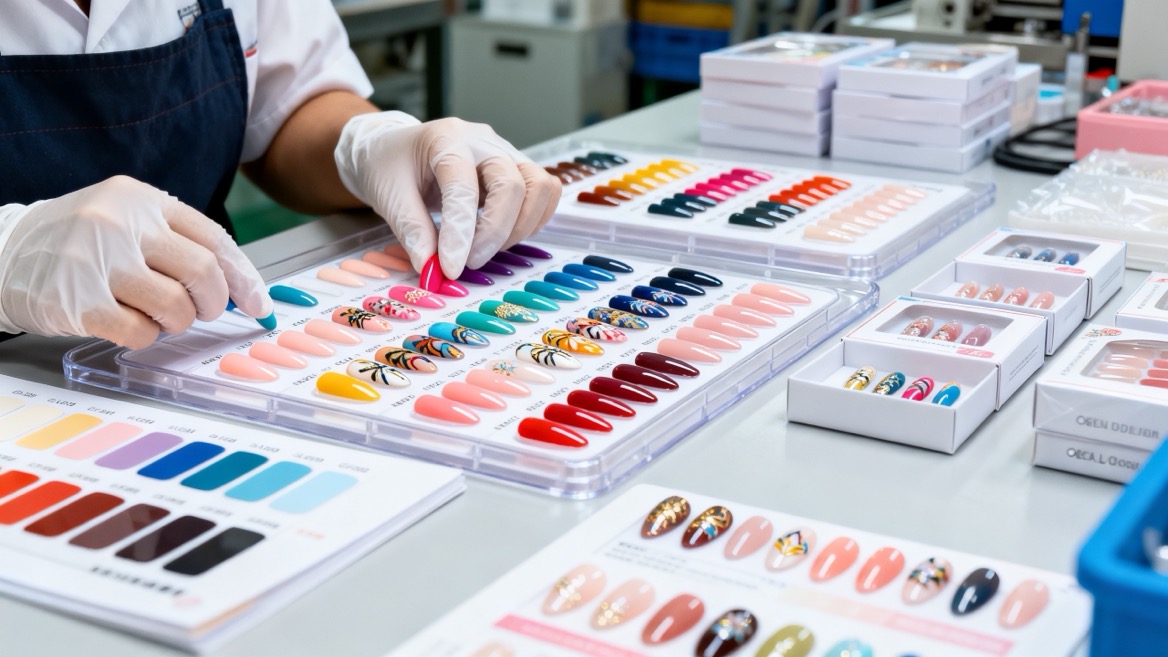
For an OEM/ODM buyer, the opportunity extends beyond the nail itself. A complete project may include tip shape, length range, color palette, surface finish, decoration style, size assortment, adhesive type, instruction card, inner tray, outer box, barcode, and retail display requirements.
At Dongguan YoungMei Technology Co., Ltd., the development process can support brands that need more than a generic catalog product. A successful press-on nail line needs commercially relevant designs, consistent production standards, reliable packaging, and a supply partner that understands retail execution.
For distributors, brand owners, wholesalers, and chain retailers, selecting between press-on nails and acrylic-related products should start with the target customer rather than the trend alone.
1. Who is the main customer: salon professional, everyday consumer, trend shopper, bridal buyer, or gift purchaser?
2. Is the intended product designed for one-day wear, weekly rotation, or longer wear?
3. Which nail shapes and lengths match the target market?
4. Does the design need hand-painted detail, printed art, 3D decoration, or minimalist color?
5. Will the collection use adhesive tabs, nail glue, or both?
6. What packaging standard is needed for e-commerce, retail shelves, or export markets?
7. Is size customization required for a premium or made-to-order collection?
8. Can the supplier provide stable quality across repeat orders?
9. Are product instructions and safety messaging clear for end users?
10. Does the supplier offer rapid samples and practical OEM/ODM support?
This is where press-on nails offer a major commercial advantage. They can be developed as a complete consumer product, not only as a beauty service. That creates opportunities for brand storytelling, repeat purchases, seasonal launches, retail merchandising, and international distribution.
Choose press-on nails if you value convenience, trend-led designs, easy switching, at-home application, and flexible spending. They are particularly suitable for customers who want a polished manicure for work, events, travel, content creation, or everyday style changes.
Choose acrylic nails if you prefer professional salon service, want a durable long extension, and are comfortable with regular maintenance appointments.
The most balanced approach may be to use both at different times. Some people prefer press-on nails for daily flexibility and reserve salon acrylic appointments for milestone events, longer holidays, or occasions when they want a particular professional service experience.
For brands looking to build or expand a press-on nail category, product quality must support the visual concept. A strong collection needs reliable fit, refined surface finishing, stable decoration, practical packaging, and a supply chain that can scale with demand.
Dongguan YoungMei Technology Co., Ltd. provides OEM/ODM support for press-on nails, nail stickers, and related nail products. With more than 15 years of manufacturing experience, an in-house factory, and integrated supply-chain capabilities, we help global brands, wholesalers, and retail chains develop customized nail products with fast sampling, stable quality, and one-stop sourcing support.
Contact our team to discuss your next private-label press-on nail collection, custom nail-art project, retail-ready packaging solution, or wholesale sourcing requirement.
Press-on nails are better for people who prioritize convenience, fast application, easy style changes, and flexible use. Acrylic nails may be better for those who want a longer-wear salon enhancement and are willing to maintain it regularly.
Press-on nails can be gentler than systems that require aggressive filing, but damage can still occur if they are pulled off forcefully or if adhesive causes irritation. Soaking and gently lifting the nails is safer than peeling them off.
Wear time depends on the adhesive, preparation, fit, water exposure, and daily activity. Adhesive tabs are generally suited to shorter wear, while nail glue can support longer wear when used carefully according to product instructions.
Acrylic nails can weaken natural nails when repeated filing, roughening, maintenance, or removal causes damage. The American Academy of Dermatology states that filing the natural nail surface for acrylic adhesion can thin and weaken the nail.
Some press-on nails can be reused if they are removed gently, cleaned carefully, and remain structurally intact. Reusability depends on the nail material, decoration durability, adhesive residue, and the removal method.
A brand can customize nail shape, length, color, design, finish, size range, adhesive solution, accessory kit, instruction card, logo, packaging, retail display, and market-specific product presentation.
Adhesive tabs are often preferred for temporary wear and faster removal. Nail glue may offer stronger adhesion but must be used carefully because it can bond quickly and may cause irritation in sensitive users. Follow product instructions and avoid applying adhesive to damaged skin.
- [American Academy of Dermatology — Artificial nails: Dermatologists' tips for reducing nail damage]
- [U.S. Food and Drug Administration — Nail Care Products]
- [National Library of Medicine — Exposure to Nail and False Eyelash Glue: A Case Series Study]
- [CosmoDerma — Adverse Effects of Nail Cosmetics and How to Prevent Them]
- [Joyee Nails — Press-On Nails vs Acrylics: An Honest Side-by-Side Comparison]