
- All
- Product Name
- Product Keyword
- Product Model
- Product Summary
- Product Description
- Multi Field Search
English
Views: 264 Author: Young Mei Publish Time: 10-24-2026 Origin: Site


Content Menu
● Structured Gel Manicure vs. Structured Gel Overlay: Quick Comparison
● What Is a Structured Gel Manicure?
>> How a Structured Gel Manicure Works
>> Who May Prefer This Service?
● What Is a Structured Gel Overlay?
>> Does a Gel Overlay Always Use Builder Gel?
>> Does a Structured Gel Overlay Add Length?
● The Main Differences That Actually Matter
>> 1. Nail Length and Support Requirements
>> 2. Product Properties, Not Just Product Names
● Durability, Maintenance, and Cost
>> Which Service Lasts Longer?
>> Is a Structured Gel Overlay More Expensive?
● Safety: What Both Gel Services Require
>> Compatible Curing and Controlled Application
>> UV Exposure and Nail Health
>> Removal Depends on the Formula
● A Practical Consultation Checklist
● A Manufacturer's Perspective: Turning Salon Expectations into Better Retail Products
>> Press-On Nails Are Not Gel Overlays
>> A Better Product-Development Brief
>> An Illustrative Sampling Workflow
● Develop a Nail Collection Around Real Customer Needs
>> Is a structured gel manicure the same as builder gel?
>> Can you get a structured gel overlay on short nails?
>> Is a structured gel overlay healthier than gel polish?
>> Can a structured gel overlay be filled?
>> Can I remove builder gel with acetone?
>> Are press-on nails an alternative to structured gel services?
A structured gel manicure vs. structured gel overlay comparison starts with an important clarification: these services often overlap. Both can reinforce natural nails with carefully placed gel. The practical differences usually involve nail length, product selection, the amount of structure, and the salon's service definitions—not two universally standardized techniques.
For clients, understanding that distinction prevents confusing bookings. For nail brands and retailers, it supports clearer product descriptions and more realistic expectations.
At Dongguan YoungMei Technology Co., Ltd., our perspective comes from more than 15 years of manufacturing experience in press-on nails, nail stickers, and related nail products. We approach this comparison through product design, customer communication, and sourcing—not as a substitute for hands-on assessment by a qualified nail professional.
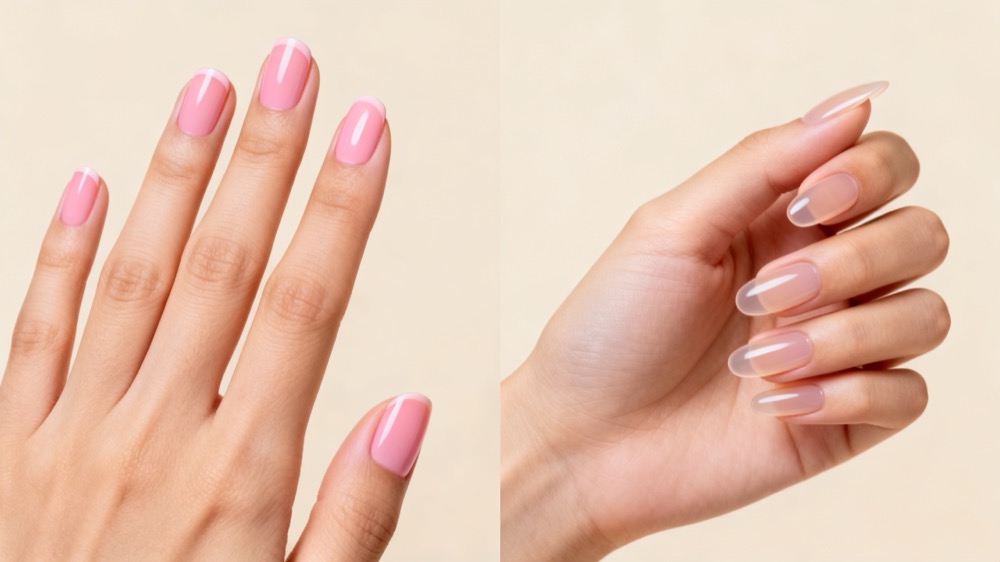
The most useful distinction is structure: how the gel supports the natural nail, rather than simply what the service is called.
| Comparison point | Structured gel manicure | Structured gel overlay |
|---|---|---|
| Typical service positioning | A manicure with added reinforcement | A reinforcement service built over natural nails |
| Common nail length | Often short to medium | Often medium or longer, although suitable for short nails too |
| Product selection | A suitable structured base or builder gel | A suitable builder or other enhancement gel |
| Nail architecture | Usually subtle and lightweight | Often more deliberately developed |
| Added length | Usually none | None by definition; extensions are a separate procedure |
| Finished appearance | Natural, polished, and softly contoured | Natural or more sculpted, depending on the brief |
| Maintenance | Removal or rebalance, depending on the system | Frequently rebalanced when the system and nail condition allow |
| Pricing basis | Application time, product, and complexity | Application time, architecture, repairs, and maintenance needs |
These are common service-menu conventions, not fixed industry rules. Always confirm what a particular salon includes.
A structured gel manicure adds a supporting contour rather than applying every coat as a uniformly thin layer.
A conventional gel-polish manicure primarily delivers color and shine. A structured service also uses an appropriate gel to create reinforcement and improve the nail's profile.
The technician assesses the natural nail, prepares it according to the product system, and places gel to create a balanced shape.
The apex—the highest point of the enhancement—helps form that architecture. Its position and height should suit the nail's length, shape, and condition.
The goal is not maximum thickness. It is controlled product placement, with a smooth transition near the cuticle and a proportionate free edge.
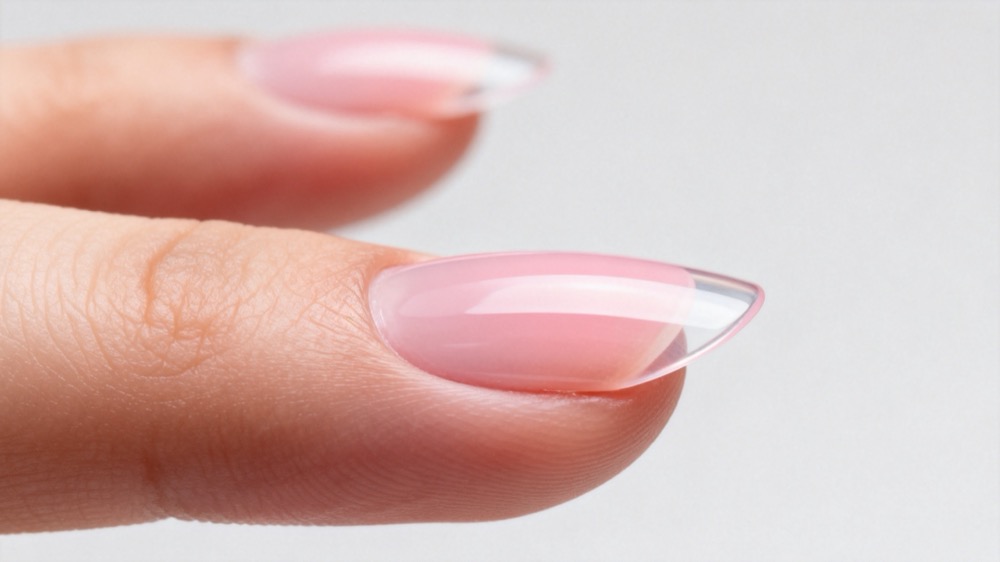
A structured gel manicure may suit clients who:
- Prefer short, natural-looking nails.
- Want more reinforcement than a flat gel-polish application.
- Experience free-edge bending or minor splitting.
- Want a smooth foundation for color or understated nail art.
However, a cosmetic coating does not treat an underlying nail disorder. Painful, inflamed, discolored, or separating nails need appropriate assessment before another enhancement.
A structured gel overlay places an enhancement material over the existing natural nail without deliberately extending its length.
"Overlay" describes where the material sits. "Structured" describes how it is shaped.
This explains why an overlay and a structured manicure can describe essentially the same service.
Builder gel is a common option, but the service name alone does not identify the formula.
Different systems have different flexibility, viscosity, curing requirements, and removal methods. Some builder gels soak off; others require filing. A bottle or pot does not reliably tell customers which removal procedure applies.
The technician should select the material according to the manufacturer's instructions and the client's needs—not assume every product labeled "builder" behaves identically.
Not ordinarily. An overlay follows the natural nail's existing length.
Adding length with forms or tips creates an extension, even if the same product can also perform overlays.
An overlay may help someone retain length by reinforcing the nail while it grows. It does not make the nail grow faster.
Some educators distinguish the services by length: a lightly structured manicure for shorter nails and a builder-gel overlay for longer nails.
That is a useful booking convention, but not a universal definition.
Longer nails create different leverage and support requirements. Their architecture must account for more than appearance. Simply applying the same thin coating used on short nails may not suit the longer design.
Viscosity describes how a product flows. It is not a complete measure of cured strength, flexibility, adhesion, or suitability.
A thick gel is not automatically better. Likewise, a flexible formula is not automatically appropriate for every flexible natural nail.
Professional selection considers the full system: preparation, base requirements, structural product, lamp compatibility, application thickness, and removal instructions.
Both services can look slim and natural when correctly designed.
An overlay does not have to appear bulky. A structured manicure does not have to look flat.
For either service, the technician should explain the proposed shape and check comfort. Persistent pain, burning, or unusual pressure should not be dismissed as the normal price of stronger nails.
Neither name guarantees longer wear.
Retention depends on nail condition, preparation, product compatibility, application, curing, lifestyle, and timely maintenance.
Some professional systems advertise approximately three weeks of wear, but those claims apply to their specified products and procedures. They should not become a blanket promise for every structured manicure or overlay.
Ask the technician for a maintenance interval suited to the actual system and your nails.
As the natural nail grows, the enhancement's original proportions change.
A rebalance does more than cover visible regrowth. It restores appropriate architecture while addressing lifting and other service issues.
Where permitted by the system, sound product may remain in place. Lifted material should not simply be concealed under fresh gel.
Complete removal may be more appropriate when the product, nail condition, or service history requires it.
It can be, particularly when additional shaping, repairs, or technical work are involved. However, there is no universal price difference.
Compare appointments by what they include:
- Preparation and consultation.
- Structural application.
- Color or nail art.
- Repairs.
- Rebalancing or removal.
- Expected appointment duration.
A cheaper booking is not necessarily better value if essential maintenance appears later as an unexpected charge.
Light-cured products need the lamp and curing procedure specified by their manufacturer. Lamp wattage alone is not a dependable compatibility test.
Uncured product should stay off the skin. A hard-looking surface is not, by itself, proof that every layer received an adequate cure.
If itching, swelling, blistering, or nail separation develops, stop further application and seek medical advice. Do not assume changing brands will solve a suspected allergy.
Gel-curing lamps involve ultraviolet exposure, including lamps marketed as LED.
The American Academy of Dermatology recommends broad-spectrum, water-resistant SPF 30 or higher on the hands before gel manicures, or dark, opaque gloves with the fingertips exposed.
It also advises against picking off gel and recommends moisturizing nails and cuticles between manicures.
Soak-off systems require their prescribed removal process. File-off products require controlled filing by someone with suitable training.
Neither repeated soaking nor routine electric filing is automatically harmless. Nail condition and technique matter.
Never peel away an enhancement or aggressively scrape material that has not released.
Before choosing between a structured gel manicure and structured gel overlay, use this five-step discussion:
1. Describe the result: natural length, retained length, or an extension.
2. Explain daily demands: typing, cleaning, sport, and frequent water exposure.
3. Share previous problems: lifting, reactions, painful removal, or breakage.
4. Confirm the system: product type, curing method, and removal procedure.
5. Agree on maintenance: timing, price, and what happens if lifting occurs.
This turns an ambiguous service name into an understandable treatment plan.
For a short-nail client seeking subtle reinforcement, a lightly structured service may be sufficient. Someone maintaining longer natural nails may need more deliberate architecture. A client with suspected product allergy needs assessment—not a stronger coating.
For brands, the valuable lesson is not to label every nail product "structured gel." It is to understand which customer need each format actually serves.
A press-on nail is a preformed enhancement attached using a specified adhesive method. A salon overlay is constructed directly over the natural nail.
They can share a visual direction—such as a soft apex, slim cuticle transition, or glossy nude finish—without sharing the same application process or performance.
Nail stickers also vary. Decorative stickers and products requiring additional curing need different instructions. Category names must not replace clear usage directions.
From our manufacturing perspective, brands should translate "salon-inspired" into measurable specifications:
- Size range and curvature.
- Sidewall coverage and cuticle-edge profile.
- Thickness distribution.
- Shape and length consistency.
- Color and finish consistency.
- Application, removal, and warning instructions.
These details are more useful than vague promises such as "perfect fit" or "damage-free."
They also provide a clearer basis for reviewing samples and discussing changes before production.
Consider a retailer developing a short, everyday press-on collection inspired by structured manicures.
Rather than approving appearance alone, the team could:
1. Define target nail shapes and customer use cases.
2. Compare sample fit across different nail widths and curves.
3. Record pressure points, gaps, and edge snagging.
4. Evaluate application and removal using the proposed instructions.
5. Refine the design before approving the production specification.
This is a recommended development approach, not a reported customer case or a claim about completed testing.
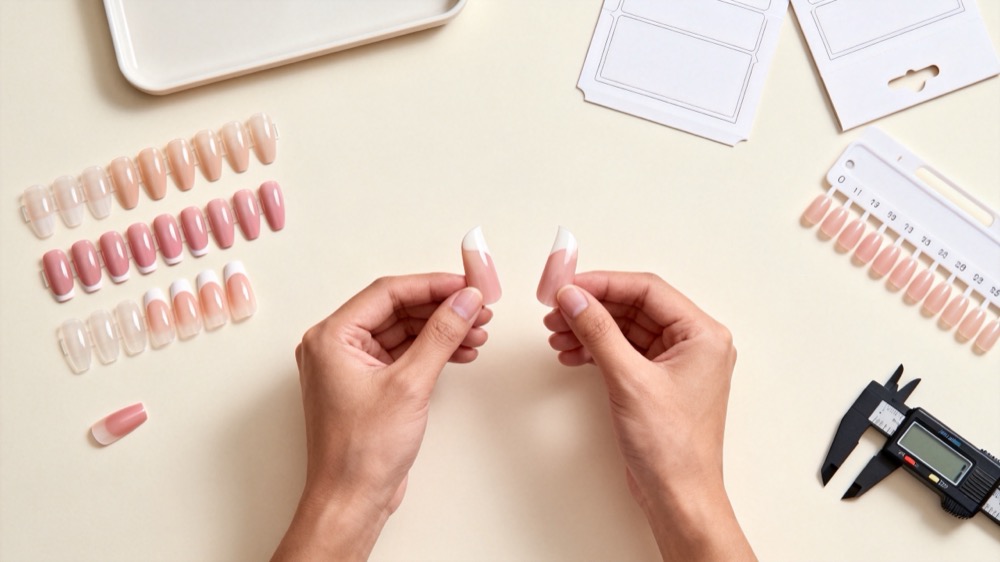
Choosing between these gel services starts with the natural nail, desired length, and maintenance plan—not the label alone.
For brands, wholesalers, and retail chains, the same principle applies: define the customer need before selecting the product format.
Dongguan YoungMei Technology Co., Ltd. offers OEM/ODM development, rapid sampling, and one-stop sourcing for press-on nails, nail stickers, and related nail products through our own factory and established supply chain.
Share your target market, preferred shapes, design direction, packaging needs, and order requirements with our team to discuss a sampling brief and a suitable development pathway.
No. A structured gel manicure is a service; builder gel is a product category that may be used within it. The exact formula and application requirements vary.
Yes. An overlay can reinforce short natural nails. Some salons simply market that service as a structured manicure instead.
Not automatically. Nail outcomes depend on preparation, application, curing, maintenance, and removal. Added reinforcement does not eliminate allergy or damage risks.
Often, provided the system supports rebalancing and the remaining product and natural nail are suitable. A technician should assess lifting and nail condition first.
Only if the specific product is designed to soak off. Some builder gels require filing. Follow the manufacturer's instructions rather than judging by appearance.
They can be an alternative for customers seeking a predesigned look without a sculpted salon application. Fit, adhesive choice, wear expectations, and removal requirements still need consideration.
1. [Paola Ponce Nails — "Structured Gel Manicure vs. Structured Gel Overlay | + Characteristics."] Practitioner perspective on overlapping terminology, length-based service distinctions, architecture, and rebalancing. These conventions are not universal definitions. [paolaponcenails]
2. [American Academy of Dermatology — "Gel manicures: Tips for healthy nails."] Dermatologist guidance on ultraviolet protection, removal, moisturizing, and persistent nail problems. [aad]
3. [U.S. Food and Drug Administration — "Nail Care Products."] Updated October 15, 2024. Guidance on labeled directions, nail-product safety, methacrylate sensitization, skin contact, and adverse reactions. [fda]
4. [Sweet Squared — "CND™ PLEXIGEL Rebalance and Removal."] Professional-system guidance illustrating product-specific rebalancing and removal pathways. [sweetsquared]
5. [Ogden Beauty Supply — "Gelish — Soak Off Structure Gel — Clear."] Commercial product information illustrating a soak-off structural gel and system-specific wear and curing claims; not independent comparative evidence. [ogdenbeauty]