
- All
- Product Name
- Product Keyword
- Product Model
- Product Summary
- Product Description
- Multi Field Search
English
Views: 220 Author: Young Mei Publish Time: 09-03-2026 Origin: Site


Content Menu
● Acryl Gel vs. Polygel at a Glance
● The Real Difference: Formula and Positioning
>> Why Product Names Can Be Misleading
● Application Experience: Which Is Easier to Use?
>> Expert Tip for Better Structure
● Strength, Flexibility, and Wear Performance
● Safety and Correct Curing Matter More Than Category Names
● How Brands Should Choose Between Acryl Gel and Polygel
● Manufacturing Considerations for OEM and ODM Buyers
● Final Verdict: Acryl Gel or Polygel?
>> Is acryl gel the same as Polygel?
>> Is acryl gel stronger than Polygel?
>> Does Polygel need a UV or LED lamp?
>> Can beginners use acryl gel or Polygel?
>> How long do acryl gel and Polygel nails last?
>> Can acryl gel or Polygel damage natural nails?
>> What should private-label buyers request from a manufacturer?
Acryl gel vs. Polygel is one of the most common comparisons in the professional nail-enhancement market. The short answer is that the two names often describe closely related hybrid systems: both are thick, moldable enhancement materials that combine the workability of gel with the structural support associated with acrylic-based systems.
However, the products are not always identical. Formula architecture, viscosity, pigment load, curing behavior, packaging, adhesion system, and intended application can differ significantly from one supplier or brand to another. For salon professionals, private-label brands, wholesalers, and retailers, the better choice depends less on the name printed on the tube and more on the product’s performance, safety documentation, consistency, and positioning.
At Dongguan YoungMei Technology Co., Ltd., we have spent more than 15 years developing and manufacturing press-on nails, nail stickers, and related nail products for global customers. From a manufacturer’s perspective, this comparison matters because a successful nail category is not built only around a trend. It is built around repeatable quality, clear product education, reliable packaging, and a formula that matches the end user’s skill level and expectations.

Acryl gel is a dense, sculptable nail-enhancement material designed to provide strength without the runny behavior of many traditional builder gels. It is usually supplied in a tube, jar, or other controlled-dispensing package and is shaped with a brush and a small amount of slip solution or compatible liquid before curing under an LED or UV nail lamp.
Unlike traditional liquid-and-powder acrylic systems, acryl gel generally does not begin hardening immediately after dispensing. This gives technicians more working time to build an apex, refine sidewalls, extend length with forms, or create an overlay on natural nails.
In practical product development, acryl gel is often positioned as a controlled application system. Its paste-like texture helps reduce flooding around the cuticle area and supports more precise shaping.
Typical uses include:
Natural-nail overlays
Short to medium sculpted extensions
Nail repairs
Reinforcement for weak or flexible nails
Ombre nail construction
French-tip structure
Reusable nail-form applications
Professional salon extension services
The term “acryl gel” is used differently across markets. Some brands use it as a general term for a hybrid gel-acrylic material, while others use it for a specific high-strength formula within a wider enhancement range. This means professional buyers should evaluate the actual product specification rather than relying on the name alone.
Polygel is commonly described as a hybrid nail-enhancement material that sits between conventional acrylic and gel systems. It is usually thick, lightweight, easy to manipulate, and cured under a compatible LED or UV lamp.
In many markets, Polygel and acryl gel are functionally very similar. Both are designed to provide a moldable texture, a longer working window than air-drying acrylic, and more structural support than thin gel polish. Some suppliers use “Polygel” as a trademark-style category name, while others use it broadly to describe hybrid extension gels.
For users, the major appeal of Polygel is simple: it can offer control without rushing. Since it stays workable before lamp curing, technicians can refine the product placement before committing to the final shape.
Polygel is often chosen for:
DIY nail-extension kits
Salon services for first-time extension clients
Lightweight overlays
Natural-looking nail lengthening
Beginner-friendly sculpting
Refill and maintenance services
Press-on nail reinforcement or customization projects
For private-label brands, Polygel is also commercially attractive because it can be sold as a complete system. A kit may include tubes, brushes, dual forms, lamp guidance, shades, prep products, and packaging designed for either salon professionals or home users.
| Comparison Factor | Acryl Gel | Polygel |
|---|---|---|
| General category | Hybrid nail-enhancement material | Hybrid nail-enhancement material |
| Texture | Usually dense, sculptable, and non-runny | Usually thick, putty-like, and moldable |
| Curing method | LED or UV lamp curing | LED or UV lamp curing |
| Working time | Flexible before curing | Flexible before curing |
| Application control | High control for apex building and sculpting | High control for shaping, forms, and overlays |
| Strength | Often positioned for high structure and reinforcement | Often positioned for lightweight strength and flexibility |
| Product naming | May refer to a formula family or high-strength hybrid gel | Often used as a consumer-friendly hybrid extension category |
| Suitable users | Professional salons, technicians, advanced DIY users | Salons, beginners, DIY kits, and retail users |
| Packaging options | Tubes, jars, professional bulk formats | Tubes, kit formats, retail-ready sets |
| Key buying factor | Structural performance and formulation consistency | Ease of use, kit experience, and final feel |
The most important takeaway is that Acryl Gel and Polygel should not be treated as universally fixed formulas. Two products with the same category name can behave very differently when applied, cured, filed, or worn.
From an industry standpoint, the biggest difference between acryl gel and Polygel is often not chemistry alone. It is how the product has been formulated, tested, packaged, and positioned for a specific user group.
A salon-grade acryl gel may prioritize:
Higher structural stability
Stronger apex retention
Controlled viscosity in warm salon environments
Efficient filing after curing
Reliable performance with extension forms
Compatibility with professional prep and top-coat systems
A retail-oriented Polygel kit may prioritize:
Easier handling for beginners
More forgiving shaping time
Lightweight finished nails
Clear shade selection
Dual forms and brushes included in the package
Step-by-step instructions for home application
This distinction is crucial for B2B buyers. A product designed for a professional nail artist working on multiple clients per day should not necessarily be marketed in the same way as a starter kit for occasional home use.
In the nail market, product names are often influenced by branding, regional habits, and consumer search behavior. One supplier may call a thick hybrid enhancement product “acryl gel.” Another may call a nearly identical material “Polygel.” A third may use terms such as “builder poly gel,” “hybrid extension gel,” or “sculpting gel.”
For this reason, brands and wholesalers should ask more detailed product questions:
What is the product’s viscosity range?
Does it self-level, stay in place, or require brush manipulation?
What lamp type and curing time are recommended?
How does the formula perform in clear, nude, glitter, and opaque shades?
Does the product need a base layer for optimal adhesion?
How does it file after full curing?
What is the recommended removal or refill process?
Is the formula supported by ingredient, safety, and stability documentation?
A strong supplier should be able to provide clear answers, samples, and practical application guidance.
For both acryl gel and Polygel, the main advantage is the ability to control product movement. Traditional builder gel may flow before curing, especially when applied too heavily or used in warm conditions. By contrast, a thicker hybrid material generally stays where the technician places it.
This makes both systems useful for people who want to work carefully around the cuticle area, build a balanced apex, or create a more precise extension.
Prepare the natural nail by cleaning, shaping, and removing surface shine as required by the system.
Apply a compatible dehydrator, primer, or base layer if the product instructions require it.
Dispense a small amount of acryl gel or Polygel.
Use a brush and appropriate slip solution to press and shape the material.
Build the desired structure, including the apex and sidewalls.
Cure fully in the recommended lamp.
File and refine the shape after curing.
Apply color, nail art, or top coat as needed.
The difference in user experience often comes down to viscosity and curing instructions. A stiffer product can be excellent for sculpting longer extensions but may feel challenging to a beginner. A softer product may be easier to spread but may require more skill to prevent uneven thickness.
A beautiful extension is not created by adding more material everywhere. It is created by placing material strategically.
For most medium-length enhancements, the strongest point should be near the stress area rather than at the free edge. The nail should have a visually balanced apex, thinner cuticle area, smooth sidewalls, and a refined tip. A good formula supports this structure, but technique remains essential.
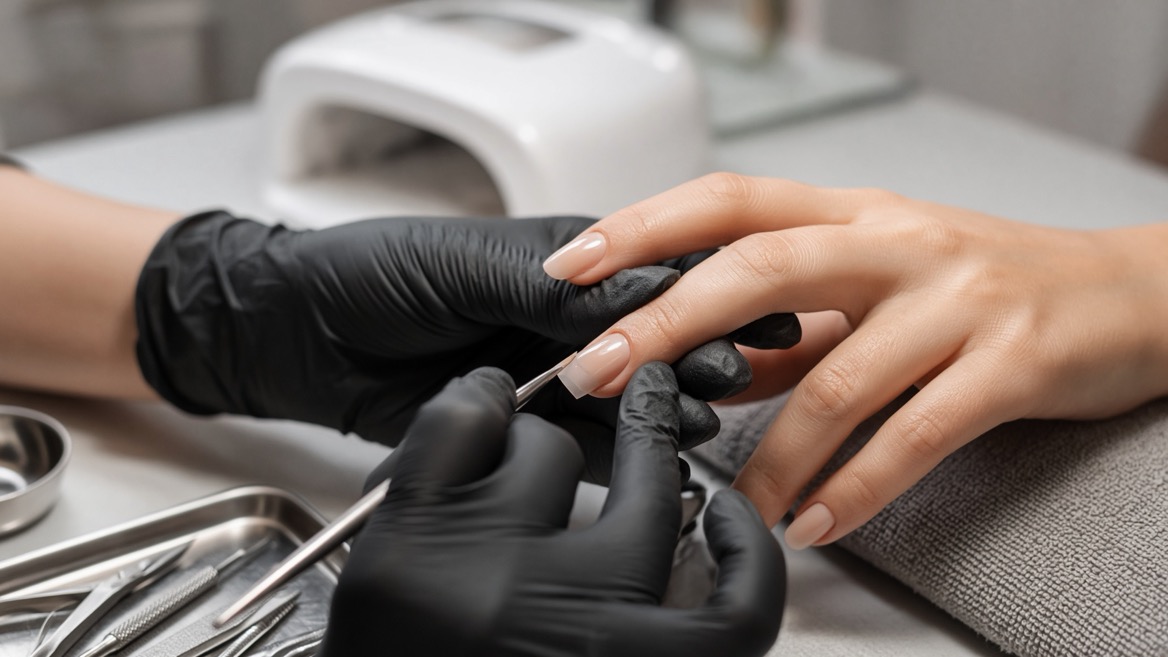
Both acryl gel and Polygel are widely valued because they can provide a balance between rigidity and flexibility. The final result should feel supportive without becoming unnecessarily thick or heavy.
However, wear performance is influenced by many factors beyond the product category:
Nail preparation quality
Correct lamp output and curing time
Product thickness
Client nail condition
Daily hand use
Exposure to water, oils, cleaning chemicals, and impact
Proper use of primer or base coat
Whether the user picks, peels, or forcefully removes the enhancement
A high-quality hybrid nail gel should cure evenly, adhere consistently when used as directed, and file without excessive crumbling or gumminess. It should also maintain a stable shade and texture during its intended shelf life.
For many clients, a professionally applied and properly maintained enhancement can remain presentable for approximately two to four weeks before a refill, removal, or redesign is needed. Actual wear time varies by individual and should not be promised as a universal result.
Whether a customer chooses acryl gel or Polygel, safe use depends on correct application, complete curing, and avoiding unnecessary skin contact with uncured material.
Uncured acrylate-containing nail products can contribute to skin sensitization in some individuals. This is why technicians and at-home users should follow product directions carefully, use a compatible lamp, avoid flooding the skin, and stop using a product if irritation occurs. The U.S. Food and Drug Administration notes that certain nail-product ingredients may pose sensitization concerns when directions to avoid skin contact are not followed.
Professional product development should include clear labels, usage instructions, compatibility guidance, and appropriate ingredient documentation. For global brands, compliance expectations may differ by destination market, so products should be assessed according to the relevant regulatory requirements before sale.
Keep uncured product off the surrounding skin.
Use the lamp type and curing time specified for the formula.
Do not assume every lamp cures every product equally.
Avoid mixing incompatible systems without testing.
Do not peel off cured enhancements.
File or remove products carefully according to instructions.
Stop use if redness, itching, swelling, or irritation develops.
Train salon staff before introducing a new enhancement line.
For brands, the decision should begin with the target customer rather than the trend name.
| Business Goal | Better Product Direction |
|---|---|
| Professional nail salon line | High-strength acryl gel with clear technical instructions |
| Beginner DIY extension kit | Easy-to-shape Polygel with dual forms and visual guidance |
| Premium private-label collection | Multiple viscosities, curated nude shades, elevated packaging |
| Wholesale distributor range | Core neutral shades, fast-moving kits, dependable replenishment |
| Nail-art retail brand | Clear, shimmer, glitter, temperature-change, and color-extension options |
| Press-on nail category expansion | Hybrid gel accessories, repair products, adhesive solutions, and coordinated nail art |
A smart product range does not have to choose only one category. Many successful brands offer both a professional acryl gel collection and a consumer-focused Polygel kit series, while maintaining clear distinctions in instructions, packaging, shade selection, and price positioning.
When sourcing acryl gel or Polygel products, buyers should look beyond the sample’s initial appearance. A product can look attractive on day one but still create problems if its viscosity changes, pigments settle, packaging leaks, or curing performance is inconsistent.
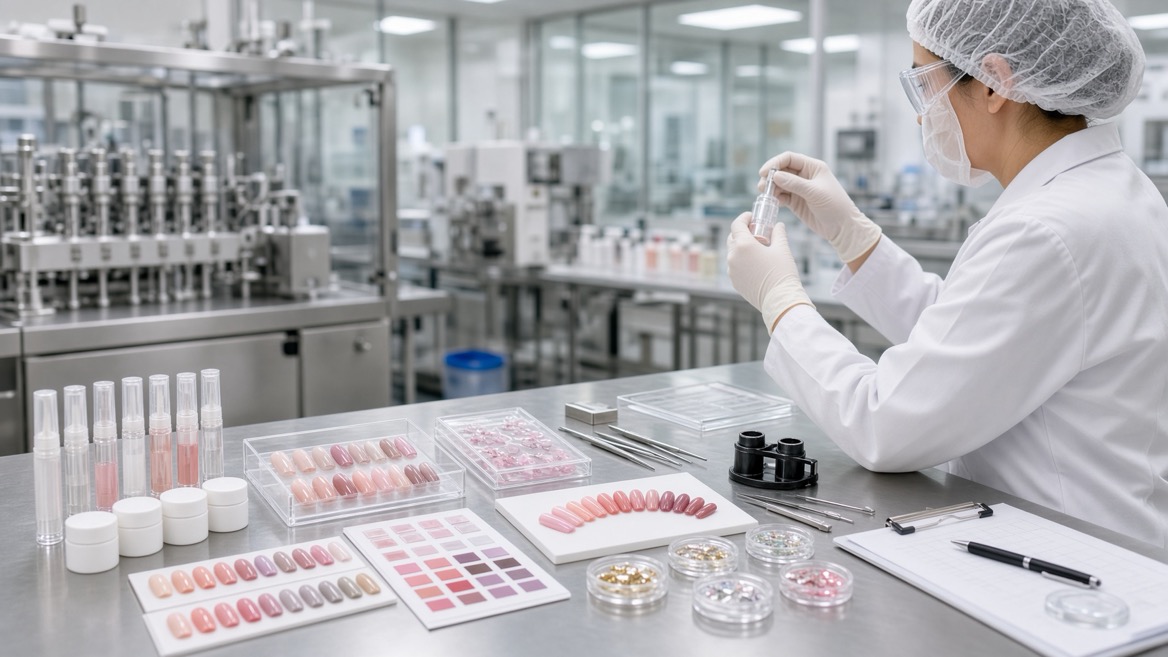
At Dongguan YoungMei Technology Co., Ltd., we understand that private-label success depends on the full supply chain, not just the formula. With more than 15 years of manufacturing experience in nail products, our approach supports global brands, wholesalers, and retail chains that need dependable production and scalable customization.
Important OEM and ODM considerations include:
Formula texture and viscosity customization
Shade matching and seasonal color development
Clear, nude, pink, white, glitter, and specialty-effect options
Tube, jar, kit, and retail display packaging
Brand logo, label, carton, and instruction customization
Sample development before mass production
Batch consistency and quality control
Product compatibility across prep, color, and top-coat systems
Export-ready packaging and one-stop procurement support
For buyers building a complete nail collection, hybrid extension gels can also be paired with press-on nails, nail stickers, nail art accessories, glue tabs, nail adhesive products, and custom retail packaging. This creates a more complete collection and can improve cross-selling opportunities.
Acryl gel vs. Polygel is not always a winner-versus-loser decision. In many cases, the two products belong to the same broad family of hybrid nail-enhancement materials and share core benefits: controlled application, lamp curing, sculptability, and strong yet wearable results.
Choose acryl gel when your focus is professional structure, controlled sculpting, reinforcement, and a salon-oriented technical range.
Choose Polygel when your focus is approachable application, lightweight extensions, beginner-friendly kits, and consumer retail appeal.
For brands and wholesalers, the strongest strategy is to define the user, test the formula, verify production consistency, and create clear product education. The right product is the one that performs reliably for its intended market and supports a complete, trustworthy customer experience.
If you are developing a private-label nail collection, sourcing hybrid extension products, or expanding into press-on nails and nail accessories, Dongguan YoungMei Technology Co., Ltd. can support your project with OEM/ODM customization, rapid sampling, stable production, and integrated sourcing services. Contact our team to discuss your product concept, packaging requirements, target market, and sample plan.
Not always, but the terms are frequently used for similar hybrid nail-enhancement products. Both are generally thick, sculptable materials that cure under a lamp. The actual difference depends on the supplier’s formula, viscosity, ingredient system, and intended market positioning.
It depends on the individual formula and how it is applied. Some acryl gel products are designed for stronger structural support, while some Polygel products prioritize flexibility and easier shaping. Product testing is more reliable than judging performance by the category name alone.
Yes. Polygel typically requires curing under a compatible LED or UV lamp. The correct curing time depends on the formula, color opacity, product thickness, and lamp specification.
Yes, especially with detailed instructions and suitable tools. Polygel is often marketed to beginners because it remains workable before curing. However, beginners should practice proper nail preparation, product placement, lamp curing, and removal techniques.
Wear time varies based on application quality, nail growth, lifestyle, product formula, and aftercare. Many users schedule maintenance, refill, removal, or redesign after around two to four weeks.
The products themselves are not automatically damaging when used correctly. Problems often occur because of over-filing, incomplete curing, poor preparation, peeling, forceful removal, or repeated skin exposure to uncured material. Proper technique and removal are essential.
Buyers should request product samples, formula specifications, curing guidance, packaging options, customization details, quality-control information, ingredient documentation where applicable, production lead times, and clear communication about destination-market requirements.