
- All
- Product Name
- Product Keyword
- Product Model
- Product Summary
- Product Description
- Multi Field Search
English
Views: 263 Author: Young Mei Publish Time: 10-25-2026 Origin: Site


Content Menu
● What Are Handmade Press-On Nails?
>> Handmade, Custom, and Private Label Are Different
● Why Choose Handmade Press-On Nails?
>> Are Handmade Nails Always Better Than Standard Sets?
● How to Recognize Quality Handmade Press-On Nails
● How to Find the Right Press-On Nail Size
● How to Apply Handmade Press-On Nails at Home
>> Step 1: Check Your Natural Nails
>> Step 2: Prepare Without Over-Filing
>> Step 3: Apply the Recommended Adhesive
● Adhesive Tabs vs. Nail Glue: Which Should You Choose?
● Safe Removal and Reuse: What Matters Most
>> When Can Handmade Press-On Nails Be Reused?
● From Customer Questions to Better Product Development
>> Build a Review-Informed Improvement Process
● Custom Handmade Press-On Nails for Brands and Retailers
>> A Clearer OEM/ODM Development Workflow
>> Documentation Matters Alongside Design
● Develop Your Next Nail Collection with YoungMei
>> 1. How long do handmade press-on nails last?
>> 2. Are handmade press-on nails reusable?
>> 3. Can I order handmade press-on nails in custom sizes?
>> 4. Are press-on nails safe for sensitive users?
>> 5. What should brands provide for an OEM/ODM inquiry?
>> 6. Does handmade production guarantee higher quality?
Beautiful handmade press-on nails offer more than an alternative to a salon appointment. They bring detailed nail art into a ready-to-apply format, giving wearers more control over their look, schedule, and occasion. For beauty brands, they also create opportunities to turn distinctive designs into carefully developed product collections.
However, "handmade" alone does not guarantee a comfortable fit, dependable wear, or reusable results. Those qualities depend on the nail base, decoration, sizing, adhesive, application, and removal.
At Dongguan YoungMei Technology Co., Ltd., our perspective comes from more than 15 years of experience in nail product development and manufacturing. Our advice is straightforward: evaluate the complete nail system, not just the photograph.
This guide explains what to look for, how to use press-ons responsibly, and how brands can develop a collection with clearer quality expectations.
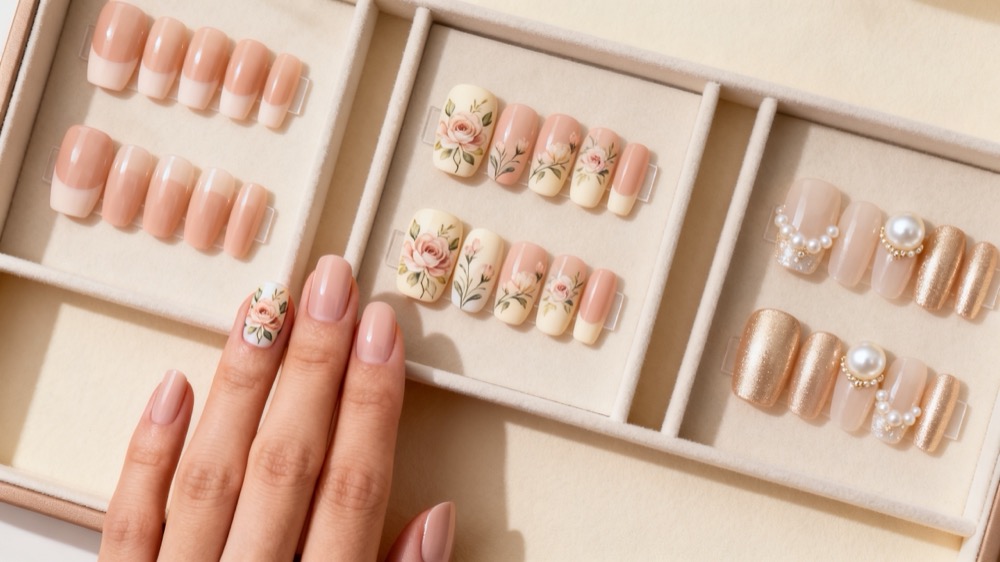
Handmade press-on nails are preformed artificial nails with some finishing or decorative work completed by hand. Depending on the collection, that work may include painting, layering colors, positioning embellishments, or creating textured details.
The underlying tips may still be manufactured using standardized processes. Consequently, "handmade" can describe the decoration rather than every production stage.
That distinction matters when comparing products. A simple hand-painted French tip and an elaborate crystal-covered set may both carry the same description, yet require different production time, packaging, and care.
These terms describe separate features:
- Handmade refers to manual work during production or finishing.
- Custom refers to an agreed modification, such as artwork, dimensions, or packaging.
- Private label refers to products sold under the buyer's brand.
A collection can combine all three, but buyers should confirm exactly what each supplier includes.
The main attraction is design flexibility. Hand-applied decoration can support distinctive color combinations, small decorative details, and coordinated collections for weddings, seasonal launches, or everyday styling.
A finished set also lets shoppers assess the overall design before application. That can make it easier to coordinate nails with clothing, accessories, or event themes.
Convenience is another advantage, although preparation and removal still require time. Press-ons should not be presented as maintenance-free.
No. A well-made standardized set may outperform a poorly finished handmade one.
The useful comparison is not "handmade versus ordinary." It is whether the product meets the wearer's expectations for fit, appearance, comfort, instructions, and value.
Likewise, handmade nails are not automatically cheaper than salon services. Compare the purchase price, adhesive, removal supplies, shipping, and any genuinely achievable reuse.
Product photographs reveal artwork, but they cannot show every detail that affects wear.
Before purchasing a set—or approving a wholesale sample—evaluate these features:
| Feature | What to examine | Why it matters |
|---|---|---|
| Fit | Width, curvature, and sidewall coverage | Affects comfort and contact with the natural nail |
| Edges | Smooth shaping without rough projections | Helps reduce snagging |
| Finish | Consistent coverage and intentional detailing | Supports a polished appearance |
| Decorations | Secure placement without uncomfortable overhang | Affects practicality and durability |
| Instructions | Clear application and removal guidance | Helps users avoid preventable mistakes |
| Packaging | Protection against movement and crushing | Helps preserve the finished design |
Hand-finishing may produce minor artistic differences. However, artistic variation should not become an excuse for missing decorations, inconsistent sizing, or unclear specifications.
For brands, agree on acceptable variation before production. An approved physical sample is more useful than a vague instruction to deliver "premium quality."
Fit deserves as much attention as color. A beautiful nail that feels tight or leaves an obvious gap is unlikely to deliver a satisfying experience.
Measure both hands rather than assuming matching fingers are identical.
1. Read the supplier's measurement instructions.
2. Measure each natural nail at its widest point using the specified method.
3. Record all ten measurements.
4. Compare the results with that particular collection's size chart.
5. Use a sizing kit when available, especially for custom orders.
Numbers printed inside tips are not necessarily interchangeable between suppliers or shapes. A size that works in one collection may not fit another.
Width is also only part of the picture. Nail curvature and length affect how a tip sits.
Do not force a tip into place. If edge adjustment is permitted, file gradually and avoid damaging decorative areas. For handmade sets, confirm whether alterations affect replacement eligibility.
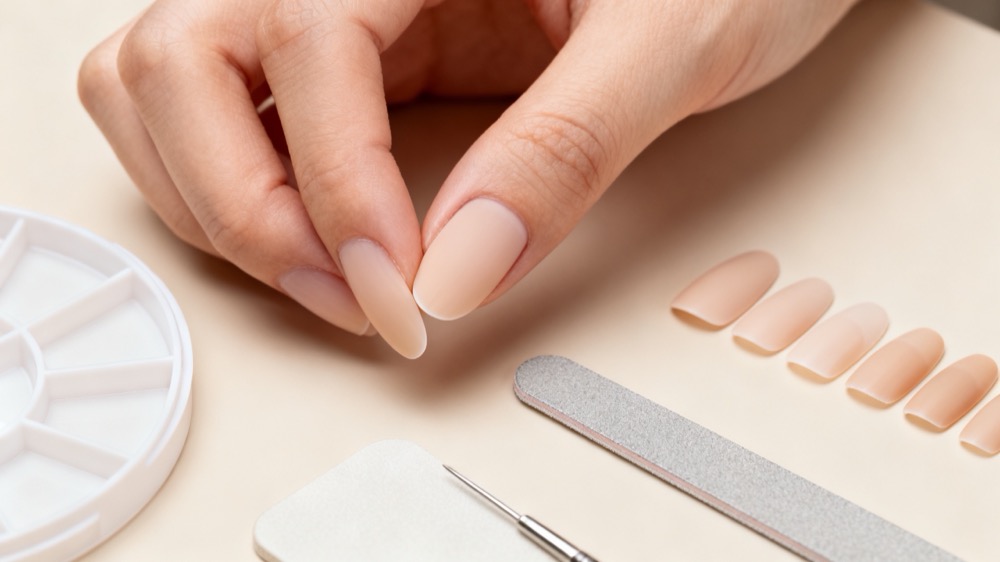
Successful application begins with the instructions for the specific adhesive and nail set. Different systems may require different preparation, pressure, or waiting periods.
Use the following sequence as a planning checklist rather than a substitute for product directions.
Avoid applying artificial nails over broken skin or nails that are painful, inflamed, or visibly abnormal. Seek professional advice about unexplained changes rather than covering them.
Arrange your selected tips in finger order before opening the adhesive.
Clean and dry your hands, then prepare the nail surface as directed.
Avoid aggressive filing or unnecessary cuticle cutting. Preparation should support adhesion without deliberately thinning the natural nail.
Use only an adhesive intended for the stated nail application. Follow its quantity, placement, and safety directions.
Keep adhesive away from surrounding skin and eyes. More adhesive is not automatically better, and excess can make application harder to control.
Place each tip carefully and apply pressure for the instructed duration. Check alignment before the adhesive sets.
Observe the manufacturer's aftercare guidance, including any restrictions on water exposure immediately after application.
The best choice depends on the specific product, intended wear, removal preferences, and individual sensitivities.
Adhesive tabs may suit users seeking temporary attachment or simpler changes. Nail glue may suit applications requiring a different level of hold, but performance varies by formulation and use.
Neither option is automatically suitable for everyone. Tabs can also contain ingredients that cause skin reactions.
| Consideration | Adhesive tabs | Nail glue |
|---|---|---|
| Intended use | Often selected for temporary wear | Often selected when stronger attachment is desired |
| Preparation | Follow the tab system's instructions | Follow the glue system's instructions |
| Removal | Use the specified tab-removal method | Use a compatible adhesive-removal method |
| Reuse | Depends on clean removal and nail condition | Depends on removal chemistry and nail condition |
| Sensitivity | Check adhesive materials and warnings | Check ingredients and warnings |
Avoid universal wear-time promises. Fit, preparation, daily activities, and adhesive choice all influence results.
Removal is part of the product experience, not an afterthought.
Never pull or pry off a firmly attached nail. Forceful removal can damage the natural nail surface.
Use the removal method specified for both the adhesive and the finished tip. A product that dissolves adhesive may also affect color, decoration, or the nail base.
Do not assume warm water and oil will release every glue system.
Consider reuse only when:
- The nail remains structurally intact.
- Decorations are secure.
- Adhesive residue can be removed without damage.
- The set can be cleaned and dried as instructed.
- The manufacturer permits reuse.
Store suitable nails in a clean, dry container. Do not share previously worn sets.
If itching, swelling, pain, or another reaction develops, stop using the product and seek medical advice. Artificial nails and associated products can cause allergic reactions; "handmade" does not mean allergy-free.
A useful collection answers practical questions before purchase.
For consumers, ask whether the product page explains sizing, included accessories, adhesive compatibility, removal, and realistic limitations.
For brands, make those same questions part of development. Attractive artwork cannot compensate for unclear instructions or confusing size options.
When authentic customer feedback becomes available, organize it into actionable categories:
- Fit: Which fingers or sizes cause difficulty?
- Application: Which steps create confusion?
- Wear: What activities accompany early lifting?
- Appearance: Does the delivered product match expectations?
- Removal: Can customers follow the instructions successfully?
Separate verified product problems from preference differences and application errors. Request order details and photographs where appropriate.
Use genuine feedback to improve specifications and instructions—not to manufacture testimonials or imply results that have not been demonstrated.
For a commercial collection, the challenge is translating a design concept into a product that can be ordered, packed, explained, and replenished consistently.
Dongguan YoungMei Technology Co., Ltd. develops and manufactures press-on nails, nail stickers, and related nail products. With our own factory and established supply chain, we support global brands, wholesalers, and chain retailers through OEM/ODM customization, rapid sampling, and one-stop sourcing.
Project-specific details should still be confirmed individually.
1. Define the customer: Identify the intended wearer, occasion, selling channel, and target price.
2. Specify the product: Confirm shape, length, size assortment, finish, decoration, and accessories.
3. Approve samples: Review physical appearance, fit, packaging, and instructions.
4. Agree on quality criteria: Document acceptable variation and handling of defects.
5. Confirm commercial terms: Establish minimum quantities, production timing, packaging, and shipping responsibilities.
6. Review launch feedback: Use actual customer experience to guide improvements and replenishment.
Sampling time and bulk production time are different milestones. Buyers should request both rather than relying on a single "fast delivery" statement.
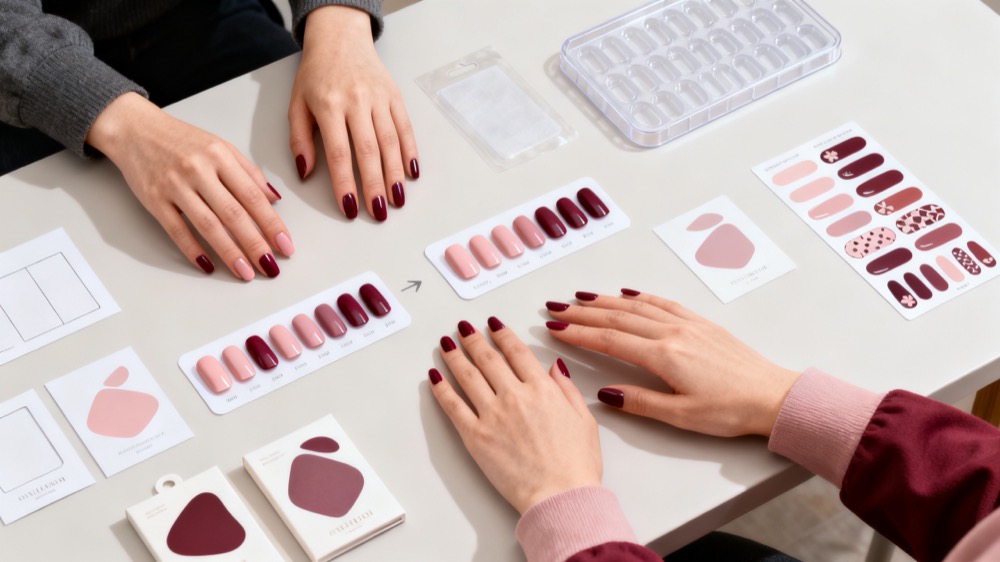
Ask suppliers which material information, adhesive instructions, warnings, traceability records, and relevant test reports are available for the proposed product and destination market.
Do not treat a general certificate as proof that every component or claim is covered. Confirm the document's product scope and applicability.
A successful handmade press-on nail collection combines appealing design with suitable sizing, practical instructions, and clearly agreed quality standards.
Send YoungMei your design references, preferred shapes and lengths, target market, estimated quantities, packaging requirements, and intended launch date.
Our team can discuss customization options, prepare a sampling proposal, and clarify the specifications needed to move your concept toward production.
There is no universal duration. Adhesive, fit, preparation, activities, and product construction affect wear. Follow the specific supplier's guidance rather than assuming every set offers the same performance.
Some are, but reuse depends on the manufacturer's instructions, removal method, and condition after wear. Discard damaged nails or sets that cannot be cleaned appropriately.
Some suppliers offer custom sizing or sizing kits. Confirm the measurement method, available widths, curvature options, and replacement policy before ordering.
No artificial nail system is guaranteed suitable for everyone. Check adhesive ingredients and warnings. People with previous nail-product reactions should seek medical advice before trying another system.
Provide artwork references, preferred shapes, size assortment, quantities, target market, packaging needs, and launch timing. These details help the manufacturer assess feasibility and prepare a relevant proposal.
No. Handmade describes a production characteristic, not a complete quality standard. Evaluate samples, fit, finishing, instructions, and consistency before making a purchasing decision.
1. [The Nailest — "The Beauty of Handmade Press-On Nails"]. Original article used to identify the topic, design-focused positioning, and opportunities for a more practical, balanced rewrite. Its pricing comparisons and production timelines have not been adopted as YoungMei claims. [thenailest]
2. [U.S. Food and Drug Administration — "Nail Care Products"]. Content current as of October 15, 2024. Supports the discussion of following labeled directions, ingredient and warning information, potential allergic reactions, and responsible use of nail products. [fda]
3. [British Toxicology Society — "Possible Allergic Reactions to Ingredients in Some Types of Nails and Polishes"]. Public statement directing readers to clinical literature on nail-cosmetic allergy and recommending consultation with a healthcare professional. [thebts]
4. [Oregon Health & Science University research record — "Screening Allergens for Acrylate Dermatitis Associated with Artificial Nails"]. Clinical research concerning acrylate allergy in selected patients; used for background context, not to estimate allergy rates among all press-on nail users. [ohsu.elsevierpure]