
- All
- Product Name
- Product Keyword
- Product Model
- Product Summary
- Product Description
- Multi Field Search
English
Views: 220 Author: Young Mei Publish Time: 09-08-2026 Origin: Site


Content Menu
● What Is the Difference Between Base Coat and Top Coat?
>> Main Functions of a Base Coat
>> Main Functions of a Top Coat
● Base Coat vs. Top Coat: Why They Cannot Be Used Interchangeably
>> If You Use Top Coat as Base Coat
>> If You Use Base Coat as Top Coat
● The Correct Application Order
>> Traditional Nail Polish Routine
● Expert Manufacturing Insight: Performance Starts With System Matching
● How Base Coat and Top Coat Support Press-On Nails and Nail Stickers
● Safety and Responsible Product Use
● Choosing the Right Products for Your Nail Brand
● FAQ
>> 1. Is base coat or top coat more important?
>> 2. Can I wear nail polish without a base coat?
>> 3. Can I use a top coat as a base coat?
>> 4. How many coats of base coat should I apply?
>> 5. Does top coat prevent nail polish from chipping?
>> 6. What is the difference between a gel top coat and regular top coat?
>> 7. Can top coat be used over nail stickers?
>> 8. Should a nail brand sell base coat and top coat separately or as a set?
Base coat and top coat are not interchangeable. A base coat is the first layer applied to the natural nail to support adhesion and help create a more even surface, while a top coat is the final protective layer that seals color, improves the finished appearance, and helps reduce visible wear.
For salon brands, wholesalers, retailers, and private-label buyers, understanding the difference between base coat vs. top coat is essential. These two products may both look clear in a bottle, but they perform different jobs in a complete nail-color system. When they are properly matched, the result is a smoother application, stronger color performance, and a more reliable consumer experience.

The simplest way to understand the comparison is this:
- Base coat prepares the nail.
- Top coat protects the manicure.
A base coat is designed to go directly onto a clean nail before color. Its main role is to create a consistent surface and promote the attachment of the color layer. A top coat is applied after the color layers and is designed to form a protective finishing film. It can create gloss, a matte effect, faster surface drying, or added resistance to scratches and chips, depending on the formula.
| Feature | Base Coat | Top Coat |
|---|---|---|
| Application order | First layer | Final layer |
| Main role | Creates a foundation for color | Seals and protects the manicure |
| Applied over | Clean natural nail | Dried or cured color layer |
| Key performance target | Adhesion, surface leveling, stain barrier | Gloss or matte effect, wear resistance, color protection |
| Typical finish | Often clear and slightly tacky or flexible | Glossy, matte, gel-like, quick-dry, or strengthening finish |
| Main buyer benefit | Helps color apply more evenly | Helps the finished manicure look polished for longer |
| Can it replace the other? | No | No |
Although both products are usually clear, their resin balance, solvent system, flexibility, viscosity, and intended film properties can be very different. A well-designed manicure system needs both: one layer that connects to the natural nail and another that protects the decorative layers above it.
A base coat is the primer layer of a manicure. It is applied before traditional nail polish, gel color, certain nail-art systems, or related decorative products.
From a formulation perspective, base coats are engineered to create a thin, even, flexible film that supports the next coating. Industry guidance describes base coats as products with relatively high resin content and lower-viscosity plasticizers, helping them form an adhesive and uniform layer on the nail surface.
A quality base coat generally helps with the following areas:
- Improving adhesion between the natural nail and the color layer
- Smoothing minor surface irregularities for a more even color application
- Reducing the risk of staining from deeply pigmented polish shades
- Helping color look more consistent, especially with sheer, neon, red, blue, or dark formulas
- Supporting wear time by creating a more stable foundation
- Providing a targeted treatment benefit, such as ridge filling, strengthening, moisturizing, or peel-off removal, depending on the product concept
The base coat is particularly important when color polish is highly pigmented. Dark burgundy, black, cobalt, red, and neon shades can make unevenness or staining more noticeable. A suitable base layer helps separate the color from the natural nail and gives the pigment a more controlled surface to sit on.
Not every consumer needs the same base coat. For brands building a nail-care collection, segmentation is often more valuable than offering only one universal formula.
| Base Coat Type | Best Use | Product Positioning Opportunity |
|---|---|---|
| Classic clear base coat | Everyday polish application | Essential entry-level nail-color product |
| Ridge-filling base coat | Nails with visible texture or ridges | Smoothing and polished-looking finish |
| Strengthening base coat | Fragile or easily splitting nails | Care-focused nail treatment range |
| Rubber base coat | Flexible gel manicure systems | Professional and long-wear gel category |
| Peel-off base coat | Glitter polish, nail art, temporary wear | Easy-removal and trend-focused consumers |
| Color-correcting base coat | Uneven-looking or discolored nails | Natural-looking manicure and nail-care hybrid |
| Adhesion-focused gel base | Gel polish and professional applications | Salon-grade system performance |
For a private-label nail brand, this creates an opportunity to develop a clear product ladder. A basic base coat can serve mass-market users, while specialized versions can target salon professionals, beauty retailers, and consumers seeking treatment-oriented benefits.
A top coat is the final layer of a manicure. It is applied over colored nail polish, nail art, decals, or finished gel color to seal the design and create the intended surface appearance.
Top coats are commonly formulated with high-solids resins and lower-boiling-point solvents to create a durable final film and support quicker drying. Their job is not simply to add shine. A strong top coat protects the visual result that the customer spent time creating.
A well-performing top coat can help:
- Protect color from everyday abrasion
- Reduce visible chipping and tip wear
- Add high gloss, soft satin, or a matte finish
- Enhance the depth and clarity of nail color
- Help seal nail stickers, striping, glitter, and simple nail art
- Support faster surface dry time in quick-dry formulas
- Maintain a cleaner, more finished appearance during wear
A top coat is especially useful for consumers who want their manicure to look freshly applied for longer. It acts as the outermost protective layer, meaning it is the coating most exposed to water, handwashing, household friction, keyboards, packaging, and daily contact with surfaces.
Top coats can be divided by both performance and finish.
| Top Coat Type | Main Benefit | Ideal Customer |
|---|---|---|
| High-gloss top coat | Creates a bright, polished shine | Everyday manicure users |
| Quick-dry top coat | Speeds up the finishing step | Busy consumers and salons |
| Matte top coat | Converts glossy color into a velvety finish | Trend-led beauty consumers |
| Gel-effect top coat | Gives a fuller, plumper visual effect | Consumers seeking salon-style results |
| Long-wear top coat | Focuses on chip resistance and durability | Frequent polish wearers |
| No-wipe gel top coat | Final cured layer for gel systems | Professional salons and gel users |
| Glitter-sealing top coat | Helps smooth textured nail art | Nail-art brands and creators |
| UV-protective top coat | Helps support color appearance under light exposure | Bright-color and seasonal collections |
A top coat can also become a major merchandising tool. For example, a brand can launch one color collection and create multiple finish options—high shine, matte, glitter, and gel-effect—without needing to develop a completely new shade range.
Some consumers ask whether a top coat can be used as a base coat, or whether base coat can be applied as a finishing layer. In most cases, the answer is no.
The products may appear similar because both are clear coatings, but they are created for opposite ends of the manicure process. Base coats focus on interaction with the natural nail and the color layer. Top coats focus on creating a resilient outer surface and desired visual finish. Sally Beauty also advises that they should not be used interchangeably because they are made to do different jobs.
Using top coat underneath color may lead to:
- Less reliable color adhesion
- A surface that is too slick for certain color formulas
- Uneven application
- Earlier peeling or chipping
- Reduced stain-protection performance
Using base coat on top of color may lead to:
- Lower shine than expected
- Reduced scratch resistance
- A less durable final surface
- Slower or less predictable finish performance
- No meaningful matte, gel-effect, or fast-dry benefit
The most dependable manicure routine is still simple: base coat, color, then top coat.
Whether using regular nail polish or a professional gel system, application order matters. A good formula cannot perform at its best if it is applied over oil, moisture, dust, or an uncured layer.
1. Prepare the nail surface. Remove old polish, wash and dry hands, and ensure the nail plate is free from lotion or oil.
2. Apply one thin layer of base coat. Cover the nail evenly without flooding the cuticle area.
3. Apply the first color coat. Use a thin, controlled layer.
4. Apply the second color coat. Build opacity rather than applying one thick coat.
5. Apply one thin top coat. Seal the full nail surface and lightly cap the free edge.
6. Allow sufficient drying time. Avoid pressing, washing dishes, or placing nails under pressure too soon.
For gel systems, the process must follow the specific product instructions and curing requirements:
1. Prepare and cleanse the natural nail.
2. Apply the compatible gel base coat.
3. Cure according to the product's stated lamp requirements.
4. Apply gel color in thin layers, curing each layer as directed.
5. Apply the matching gel top coat.
6. Cure fully and complete any required wipe step.
Gel products typically involve a sequence of base coat, two color coats, and top coat, with UV or LED curing after each layer.
Important: Do not assume that any lamp, base coat, color, or top coat will work identically across brands. For professional product development, full system compatibility testing matters. This includes adhesion, curing behavior, flexibility, gloss retention, shrinkage, odor profile, bottle stability, brush performance, and removal behavior.
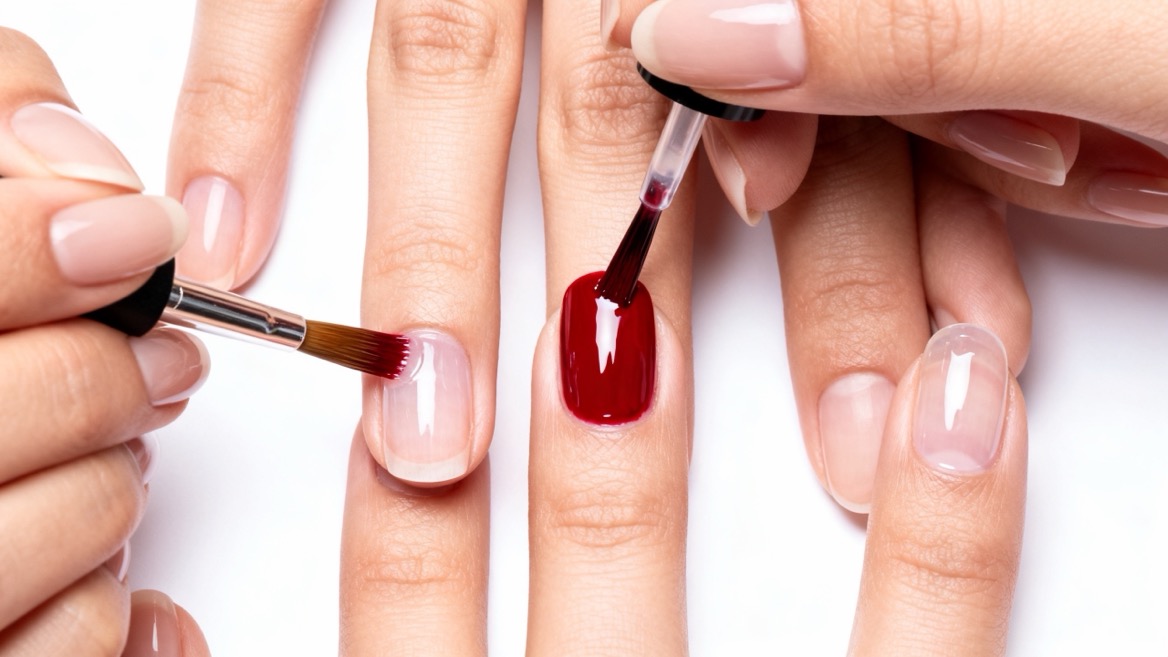
From a product-development and manufacturing viewpoint, a base coat and top coat should not be selected independently. They must be evaluated as part of a complete coating system.
A successful manicure depends on the relationship between:
- The natural nail surface
- The base coat
- The color polish or gel color
- The top coat
- The user's preparation and application method
- The expected wear environment
For example, a very flexible base coat paired with an overly brittle top coat may create uneven wear. A quick-dry top coat may perform beautifully with one color formula but may cause shrinkage or dragging with another if compatibility is not properly tested. A matte top coat must deliver a consistent matte effect without patchiness, streaks, or loss of durability.
This is why brands, importers, and retail buyers should ask a manufacturer about more than color cards. They should also review:
- Raw-material selection and formula standards
- Viscosity and brush-application control
- Adhesion and wear testing
- Gloss or matte consistency
- Filling compatibility with bottles, caps, and brushes
- Stability under transport and storage conditions
- Packaging customization and labeling support
- Compliance documentation for target markets
For Dongguan YoungMei Technology Co., Ltd., this system-oriented approach is central to private-label development. With more than 15 years of nail-product experience, an in-house factory, and integrated supply-chain capabilities, the company can support brands with OEM/ODM development for press-on nails, nail stickers, base coats, top coats, and coordinated nail-color accessories.
The base coat vs. top coat discussion also matters beyond liquid nail polish.
For press-on nails, a compatible top coat may be used at the manufacturing stage to create a glossy, matte, glitter, or protective surface over printed designs. The finishing layer should be selected based on desired flexibility, scratch resistance, visual clarity, and curing process.
For nail stickers, top coats can help seal the edges and reduce lifting after application. However, users should apply a thin coat and avoid repeatedly brushing over the sticker edge, especially when the sticker design is delicate.
For semi-cured gel strips and gel nail wraps, the base layer, adhesive design, and top surface coating must work together. The product should feel comfortable, look even, cure correctly when applicable, and remove without unnecessary damage to the natural nail when used as instructed.
This is an important opportunity for brands that want to build a coordinated nail collection. Instead of selling individual items, they can offer a complete routine:
- Nail-prep product
- Base coat
- Color polish or nail stickers
- Press-on nail collection
- Top coat in gloss or matte
- Removal product
- Cuticle-care product
A system-based product range can make the buying decision easier for consumers and can encourage repeat purchase across several related items.
Nail products should always be used according to labeled directions and warning statements. The U.S. Food and Drug Administration notes that consumers should pay attention to product instructions and warnings; it also identifies formaldehyde-containing nail products as possible causes of skin irritation or allergic reactions for some people.
For brands and manufacturers, responsible development includes clear labeling, accurate product claims, ingredient review, production controls, and testing appropriate to the target market.
For consumers, practical precautions include:
- Use products in a well-ventilated area.
- Avoid applying polish to irritated, broken, or infected skin.
- Stop using a product if redness, burning, itching, swelling, or other reactions occur.
- Keep products away from flames and heat sources when flammable solvents are present.
- Close bottles tightly after use to help preserve formula performance.
- Follow curing guidance carefully for gel products.
- Keep nail products out of reach of children.
Nail-polish formulas commonly include film-forming polymers, resins, plasticizers, solvents, pigments, and suspending agents. A 2025 review described approximate conventional composition ranges of around 70% solvents, 15% film-forming polymers, 7% thermoplastic resins, and 7% plasticizers, although actual formulations vary by product type and intended performance.
When sourcing base coats and top coats, buyers should begin with the target customer rather than choosing products based only on appearance.
Prioritize:
- Easy brush application
- Clear instructions
- Good shelf stability
- Fast dry time
- High-gloss visual impact
- Accessible packaging and price positioning
Prioritize:
- Reliable batch consistency
- Compatible full-system products
- Efficient curing or drying
- Durable wear performance
- Professional-size packaging
- Technical support and sampling
Prioritize:
- Refined sensory experience
- Custom bottle and cap design
- Distinctive finish options
- Carefully reviewed ingredient positioning
- Premium label design
- Strong color and collection storytelling
Prioritize:
- Matte and high-shine dual-finish options
- Press-on nail compatibility
- Nail-sticker sealing performance
- Seasonal color concepts
- Social-media-friendly visual results
- Quick sample development
A strong supplier should be able to translate these commercial needs into practical manufacturing decisions. That includes formula selection, finish design, packaging sourcing, color matching, sampling, testing, production scheduling, and quality checks.
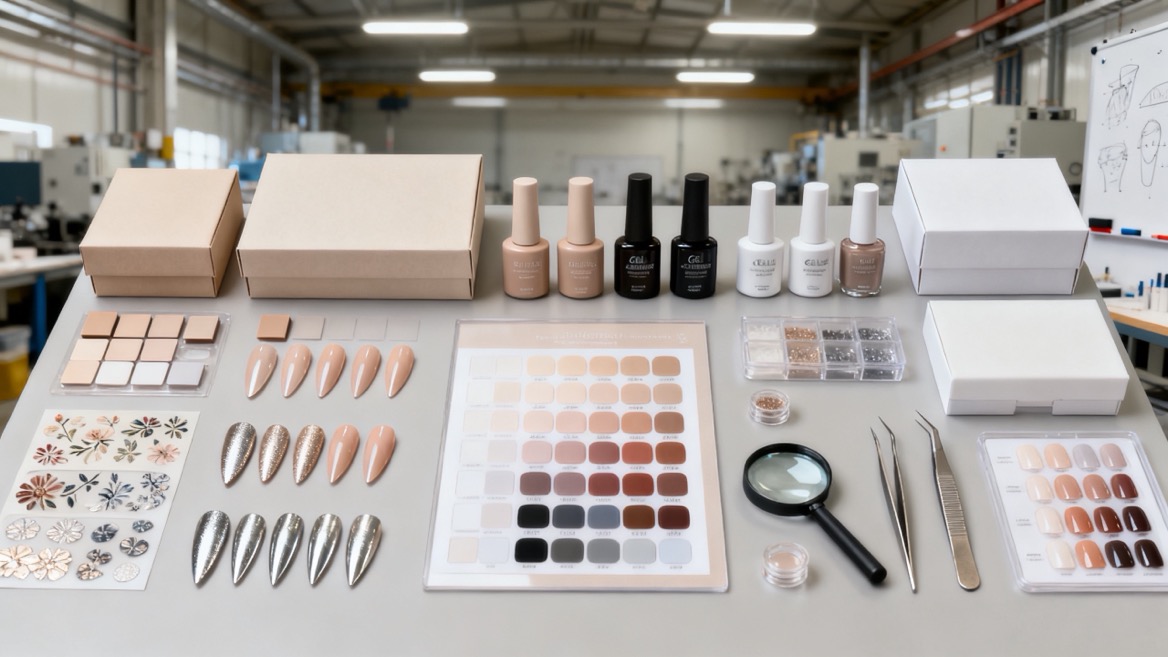
The real difference in base coat vs. top coat comes down to position and purpose. Base coat builds the foundation. Top coat protects the final look.
Using both products correctly can improve application quality, help color appear more even, support longer wear, and create the gloss, matte, or salon-style finish consumers expect. For nail brands, retailers, and wholesalers, the best opportunity is to develop these products as part of a complete, compatible nail-care system rather than as isolated items.
Looking for a reliable OEM/ODM nail-product partner? Dongguan YoungMei Technology Co., Ltd. supports global brands, wholesalers, and chain retailers with custom press-on nails, nail stickers, base coats, top coats, rapid sampling, stable production, packaging customization, and one-stop sourcing solutions. Contact our team to discuss your next nail-product collection.
Both are important because they solve different problems. Base coat supports adhesion and helps prepare the nail surface, while top coat protects the color and determines the final finish. Skipping either layer may reduce overall manicure performance.
Yes, but the manicure may be more likely to apply unevenly, stain the natural nail, or wear less consistently. A base coat is especially useful under dark, highly pigmented, or bold color polishes.
It is generally not recommended. A top coat is designed as a final protective layer rather than a foundation for color. Using it underneath polish may reduce adhesion or lead to less predictable wear.
For most products, one thin coat is enough. Thick application can make drying slower and may increase the chance of uneven layering. Always follow the directions for the specific product.
A quality top coat can help reduce visible chipping, scratching, and tip wear by creating a protective outer film. It cannot completely prevent wear because durability also depends on nail preparation, formula compatibility, application thickness, lifestyle, and exposure to water or friction.
A gel top coat is generally designed to cure under a compatible UV or LED lamp as part of a gel system. A regular top coat usually air-dries. Each should be used with compatible products and according to the manufacturer's directions.
Yes. A thin top coat can help seal many nail stickers and improve their finished appearance. Apply gently, especially around the sticker edges, to help avoid lifting or dragging the design.
Offering both options is often effective. Individual products give customers flexibility, while a coordinated set encourages complete-routine purchasing and helps ensure compatibility across the manicure system.
1. U.S. Food and Drug Administration. "[Nail Care Products]."
2. de Paula, A. C., et al. "[Nail Polishes: A Review on Composition, Presence of Toxic Components, and Their Effects on Human Health]." *Toxics*, 2025.
3. Cosmetics & Toiletries. "[Deciphering Nail Polish Formulas]."
4. Sally Beauty. "[Can I Use a Topcoat as a Basecoat or Vice Versa?]"
5. Michigan State University Center for Research on Ingredient Safety. "[Trending – Nail Polish]."
6. Yin, X. J., et al. "[Safety Assessment for Nail Cosmetics: Framework for the Evaluation of UV-Cured Nail Products]." *Regulatory Toxicology and Pharmacology*, 2024.
7. Beetles Gel Polish. "[Base Coat vs Top Coat Explained: Nail Basics You Need to Know]."
8. The GelBottle Inc. "[Nail Tech Tips: Common Gel Polish Application Mistakes]."
9. Missgel. "[Base Coat vs. Top Coat: The Ultimate Guide to Nail Polish Essentials]."