
- All
- Product Name
- Product Keyword
- Product Model
- Product Summary
- Product Description
- Multi Field Search
English
Views: 257 Author: Young Mei Publish Time: 09-09-2026 Origin: Site


Content Menu
● Carbide vs. Ceramic Nail Bits at a Glance
● What Is a Carbide Nail Drill Bit?
>> Why professionals use carbide bits
>> When carbide is the better choice
● What Is a Ceramic Nail Drill Bit?
>> Why ceramic bits are popular for gel nails
>> When ceramic is the better choice
● The Most Important Difference: Removal Speed vs. Control
● Which Nail Drill Bit Is Best for Gel Nails?
● Grit, Shape, and Flute Direction Matter
>> Select the correct flute direction
● How to Reduce Heat and Protect the Natural Nail
>> A practical heat-control checklist
● Cleaning, Disinfection, and Storage Standards
>> Recommended bit-care process
● A Smarter Product Strategy for Nail Brands
● FAQ
>> 1. Are ceramic nail drill bits better than carbide bits for gel polish removal?
>> 2. Can a carbide nail bit damage the natural nail?
>> 3. Do ceramic nail bits create less heat?
>> 4. What grit ceramic bit should I use for gel nails?
>> 5. Are ceramic nail drill bits easy to break?
>> 6. How often should professional nail drill bits be replaced?
>> 7. Can I use the same nail drill bit for every client?
Choosing between carbide and ceramic nail drill bits is not simply a matter of preference. For gel nail services, the right bit affects removal speed, client comfort, natural-nail protection, dust management, technician efficiency, and the consistency of every appointment.
As a professional nail product manufacturer with more than 15 years of production experience, Dongguan YoungMei Technology Co., Ltd. works with nail brands, wholesalers, salons, and retail chains that need reliable press-on nails, nail stickers, accessories, and private-label solutions. In product development discussions, one question appears repeatedly: Which nail drill bit is best for gel nails—carbide or ceramic?
The practical answer is that both can be valuable. A tungsten carbide nail bit is usually the faster option for reducing thick product, while a ceramic nail drill bit is often preferred for controlled gel removal and lower perceived heat. The better choice depends on the product being removed, the technician's skill level, the bit's grit and shape, the e-file's performance, and the service workflow.
This guide explains the real differences, identifies the best use cases, and offers practical selection advice for professionals and nail-product buyers.

Both carbide and ceramic bits are reusable e-file accessories designed to remove or refine artificial nail material. However, they remove material differently and behave differently during use.
| Feature | Tungsten Carbide Nail Drill Bit | Ceramic Nail Drill Bit |
|---|---|---|
| Primary material | Tungsten carbide metal | Technical ceramic, commonly alumina-based |
| Removal speed | Very fast | Moderate to fast, depending on grit |
| Best for | Acrylic, hard gel, polygel, bulk reduction | Gel polish, soft gel, refining and controlled removal |
| Heat behavior | Can heat up more quickly if misused | Often feels cooler during controlled use |
| Weight | Heavier | Lighter |
| Cutting action | Sharp flutes cut and shave product | Teeth or flutes remove product in a more gradual manner |
| Beginner suitability | Requires stronger technique and pressure control | Often easier to control for gel-focused work |
| Fragility | Highly durable, but cutting edges can wear | May chip or crack if dropped |
| Typical buyer profile | High-volume salons and enhancement specialists | Gel salons, mobile technicians, training-focused brands |
Neither material is automatically safer. Safety depends on correct grit, bit design, machine quality, cleaning procedures, technician training, pressure, movement, and communication with the client.
A carbide nail drill bit is usually made from tungsten carbide, an exceptionally hard material used in many high-wear cutting applications. In nail services, the bit contains flutes—precision-cut grooves that shave artificial product away as the e-file rotates.
Tungsten carbide has strong wear resistance and high hardness. That makes it well suited to professional nail services involving dense enhancements, including acrylic, builder gel, hard gel, and polygel. Engineering material references also show tungsten carbide has very high hardness and a high resistance to wear under demanding conditions.
A carbide bit is often selected when a technician needs to remove substantial product efficiently. Instead of spending excessive time filing by hand, the right carbide bit can reduce bulk in a controlled, repeatable workflow.
Key advantages include:
- Fast product reduction for acrylic, hard gel, and thick overlays
- Efficient bulk removal before switching to a finer finishing bit
- Long working life when made with stable material quality and precise flute geometry
- Smooth cutting performance when the flute direction matches the technician's hand position and machine rotation
- Suitable for high-volume services where time consistency matters
For a salon performing frequent extensions, infills, or hard-gel removals, carbide bits can help standardize service time. However, speed must never become an excuse for excessive pressure or prolonged contact in one area.
Choose a carbide bit when the service involves:
- Thick hard gel overlays
- Acrylic enhancements
- Polygel or acrygel structures
- Reducing length and thickness
- Removing bulk before a detailed refinement step
- Professional technicians trained in e-file technique
A medium or coarse carbide barrel bit is commonly used for bulk reduction. A fine carbide bit may be used for refinement, but it still requires care because carbide flutes can remove material quickly.
A ceramic nail drill bit is typically made from a hard technical ceramic material. Many ceramic bits used in professional nail applications are associated with alumina-based ceramics, which are valued for hardness, electrical insulation, and wear resistance.
Ceramic nail bits are popular with gel-focused technicians because they are lightweight, effective on soak-off products, and often perceived as producing less uncomfortable heat when used with light pressure and continuous movement.
Gel polish and soft gel products usually do not require the same aggressive cutting performance as thick acrylic or hard-gel extensions. For this reason, a ceramic bit can provide a more controlled removal experience.
Benefits include:
- Comfortable gel removal when used correctly
- Lower perceived heat compared with some metal-bit workflows
- Lightweight handling, which can reduce fatigue during repetitive services
- Useful grit options for product removal, surface smoothing, and detailed work
- Good fit for gel salons and technicians building e-file confidence
Ceramic bits should not be treated as harmless. A coarse ceramic bit can still remove gel and natural keratin quickly. The material may feel more forgiving than a fast-cutting carbide bit, but the technician must still use correct angle, speed, pressure, and movement.
Choose a ceramic nail drill bit when the service involves:
- Soak-off gel polish removal
- Soft-gel overlays
- Press-on nail preparation or removal support
- Controlled refinement near the product base
- Clients who are sensitive to heat sensation
- Gel-focused salons and beginner-to-intermediate e-file users
For many gel services, a medium ceramic barrel bit can remove the topcoat and color efficiently while leaving a thin product layer for a soak-off process, if that is the brand's recommended removal method.
The most useful way to compare carbide and ceramic nail drill bits is not "good versus bad." It is speed versus control.
Carbide bits generally prioritize fast removal. Their cutting flutes can reduce dense material quickly, which is highly valuable when removing acrylic or thick hard gel. However, the same efficiency means a technician must maintain a stable hand, light touch, and consistent movement.
Ceramic bits generally prioritize controlled removal. They can still remove gel effectively, especially at the right grit, but they are often more comfortable for technicians who prefer a lighter bit and a slower, more deliberate working rhythm.
A professional workflow may use both:
1. Use a carbide bit to reduce thick acrylic, hard gel, or builder-gel bulk.
2. Stop before reaching the natural nail plate.
3. Switch to a fine ceramic bit, hand file, or a suitable finishing tool for controlled refinement.
4. Use a gentle manual file or buffer where precise natural-nail work is needed.
5. Follow the product brand's removal instructions, especially for soak-off systems.
This mixed-bit approach supports efficiency without treating the natural nail as a surface for aggressive drilling.
For most standard gel polish and soft-gel removal services, a medium ceramic nail drill bit is often the most balanced option. It provides effective product reduction while supporting a more controlled technique.
For thick builder gel, hard gel, polygel, or acrylic removal, a tungsten carbide nail drill bit is usually more efficient. It is particularly useful for reducing bulk before moving to a finer bit or hand file.
| Nail Service | Recommended Bit Type | Suggested Approach |
|---|---|---|
| Gel polish removal | Fine or medium ceramic | Remove top layers carefully; do not over-file the natural nail |
| Soft gel overlay | Medium ceramic | Use light pressure and keep the bit moving |
| Builder gel removal | Medium carbide or medium ceramic | Select based on thickness and technician skill |
| Hard gel extension removal | Medium or coarse carbide | Reduce bulk, then finish with a finer tool |
| Acrylic removal | Medium or coarse carbide | Use controlled passes; avoid prolonged contact |
| Polygel removal | Medium carbide | Efficient for dense product layers |
| Press-on nail adjustment | Fine ceramic or manual file | Avoid aggressive removal near natural nails |
| Surface refinement | Fine ceramic or fine carbide | Use only with a precise, trained technique |
The correct bit is always influenced by grit. A fine bit is not merely a slower version of a coarse bit. It changes the cutting action, dust behavior, heat risk, finish quality, and margin for error.
Material selection is only one part of the decision. A well-designed bit must also have the right grit, shape, and flute direction for the intended use.
- Fine grit: Surface refinement, thinner gel layers, detailed finishing
- Medium grit: General gel removal, builder gel reduction, common salon workflows
- Coarse grit: Thick acrylic, hard gel, polygel, and faster bulk reduction
- Extra-coarse grit: Specialist bulk removal only; best reserved for trained professionals
For a brand developing a nail drill bit assortment, medium grit is often the most versatile starting point. It suits a broad range of professional gel-removal tasks while reducing the need for highly aggressive pressure.
Common nail drill bit shapes include:
- Barrel bits: Bulk removal and surface leveling
- Safety barrel bits: Rounded top designed to reduce accidental contact risk near the cuticle area
- Cone bits: Sidewall and detail work
- Flame bits: Cuticle-area detailing and lifting product around the perimeter
- Under-nail cleaner bits: Cleaning beneath extensions
- Mandrels: Hold disposable sanding bands
For gel removal, a safety-top barrel bit is often an excellent commercial choice. The rounded top gives technicians more confidence around the proximal nail fold while still providing a broad working surface.
Carbide bits may be available in:
- Right-handed cut
- Left-handed cut
- Bi-directional cut
The direction should match the e-file rotation and the technician's dominant hand. An incorrect flute direction can cause dragging, vibration, poor cutting, and uncomfortable pulling on the product surface.
For private-label buyers, flute direction should be clearly marked on packaging and product instructions. This small detail can significantly improve user satisfaction and reduce unnecessary returns.
Heat during e-file work is primarily a friction issue. It can increase when the technician presses too hard, stays in one area too long, uses a worn bit, operates at an unsuitable speed, or works with an unstable hand position.
Professional nail safety guidance consistently emphasizes light pressure, continuous movement, appropriate bit condition, and stopping immediately if a client reports heat or pain.
- Use light pressure. Let the bit cut; do not force it into the product
- Keep the bit moving. Avoid pausing in one location
- Use long, controlled passes instead of short repetitive scrubbing motions
- Match grit to product thickness. Do not use an overly fine bit for heavy bulk removal
- Replace worn bits. Dull cutting surfaces create more friction
- Check e-file vibration. Excess vibration can reduce control and increase discomfort
- Ask the client for feedback. Heat, pain, pulling, or vibration should be addressed immediately
- Leave a thin product layer when the product system and service protocol call for soak-off removal
A client should not experience burning. If they report a heat sensation, the technician should stop, reassess the bit, reduce pressure, adjust speed, and check whether the product thickness or bit condition is creating excessive friction.
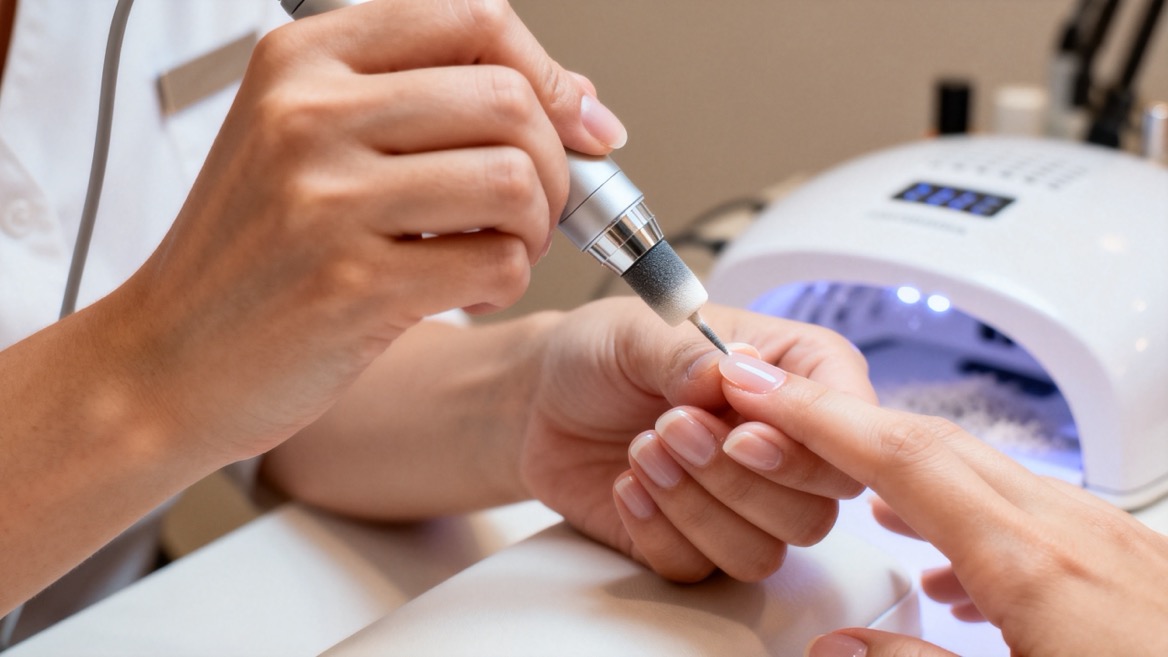
Bit performance is not only about material. It also depends on hygiene and maintenance.
Reusable nail drill bits should first be cleaned to remove visible dust and residue. They should then be disinfected according to the applicable local regulations and the disinfectant manufacturer's instructions. Professional guidance commonly recommends complete immersion in an appropriate disinfectant after thorough cleaning, while emphasizing the required contact time shown on the product label.
1. Remove visible dust using a dedicated cleaning brush.
2. Wash reusable bits with soap or detergent and water where permitted by the product and local regulations.
3. Rinse and inspect flutes, edges, and shafts for trapped debris, corrosion, bending, chips, or wear.
4. Disinfect fully using a suitable registered disinfectant and the exact label contact time.
5. Dry completely before storage.
6. Store in a clean, covered container to prevent recontamination.
7. Discard damaged bits immediately, especially chipped ceramic bits or carbide bits with damaged flutes.
Disposable sanding bands should be single-use. Reusable tools should never be placed into disinfectant while still covered in product dust, because disinfection is less effective when debris remains on the surface.
For nail brands, wholesalers, and retail chains, the strongest assortment is usually not a single "best" bit. It is a clear, easy-to-understand system that helps customers choose the right product for their service.
A practical starter collection may include:
- Medium ceramic safety barrel bit for gel removal
- Fine ceramic bit for gentle refinement
- Medium tungsten carbide barrel bit for hard gel and acrylic
- Coarse tungsten carbide bit for professional bulk reduction
- Cuticle-detail bit for trained technicians
- Disposable sanding-band system
- Clear color-coded grit identification
- Usage, cleaning, and safety instructions in the target market's language
For an OEM or ODM project, buyers should also evaluate shaft accuracy, flute sharpness, balance at operating speed, coating consistency, packaging durability, labeling, and quality-control standards. A visually attractive bit is not enough. Stable rotation, reliable cutting performance, and clear user guidance are what build repeat orders.
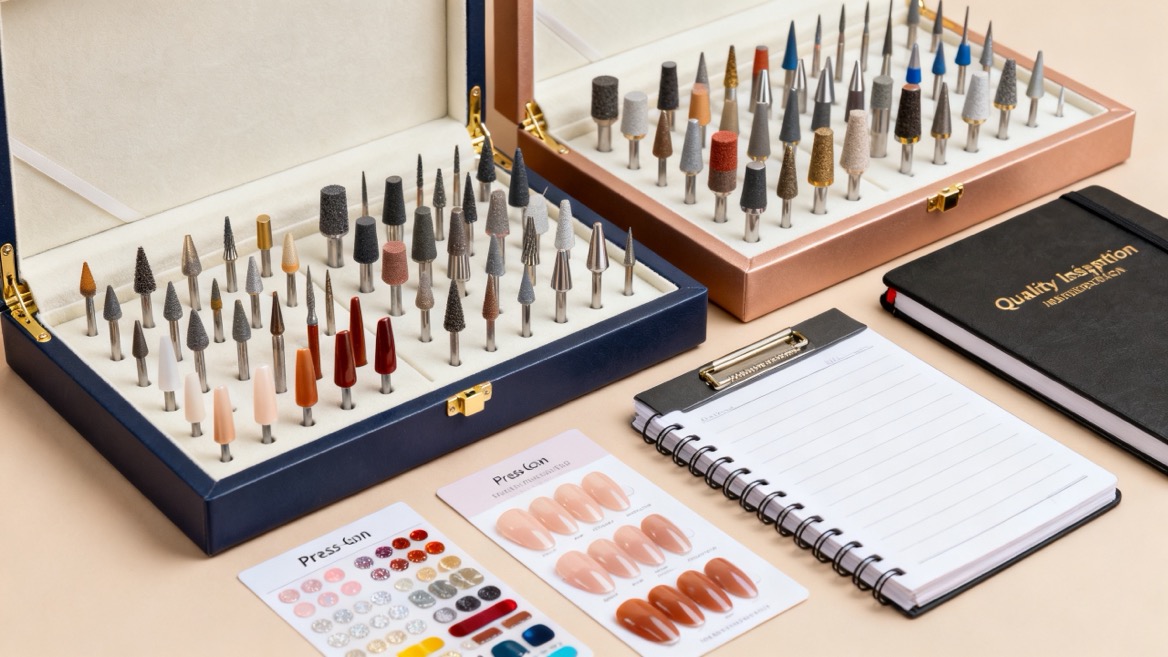
For gel nails, ceramic bits are often the preferred choice when the priority is controlled removal, lightweight handling, and a lower-heat working feel. For thick hard gel, acrylic, polygel, or high-volume bulk removal, carbide bits are usually the more efficient professional tool.
The best result comes from using the correct material, grit, shape, and technique for each stage of the service. A skilled technician does not rely on one bit for every job. They build a workflow that protects the natural nail, respects client comfort, and delivers consistent salon-quality results.
Dongguan YoungMei Technology Co., Ltd. supports nail brands, wholesalers, salons, and retailers with OEM/ODM nail product development, custom press-on nails, nail stickers, accessory sourcing, rapid sampling, dependable production, and integrated supply-chain support. Contact our team to discuss your private-label nail product collection, custom packaging requirements, and wholesale sourcing plan.
For many gel polish and soft-gel services, ceramic bits are a practical choice because they offer controlled removal and a lightweight feel. However, carbide bits may be more efficient when the gel is thick, heavily built up, or combined with hard-gel structure.
Yes. A carbide bit can remove natural nail material quickly if it is used incorrectly. Damage may occur through excessive pressure, poor angle, incorrect speed, staying in one area too long, or using a coarse bit too close to the natural nail. Proper training and a controlled technique are essential.
Ceramic bits are often perceived as producing less heat during gel removal, but any bit can create friction heat if it is pressed too hard or held in one position. Light pressure, continuous movement, and a sharp, clean bit are more important than material alone.
A medium-grit ceramic bit is commonly suitable for general gel removal. Fine grit is better for refinement and thinner product layers. Coarse grit should be reserved for thicker product and experienced professional use.
Ceramic bits are hard but can be more brittle than carbide. They may chip or crack if dropped onto a hard floor or knocked against another metal tool. Inspect ceramic bits before every use and discard them if they are damaged.
Replacement frequency depends on usage volume, product type, cleaning method, and bit quality. Replace a bit when it becomes dull, damaged, chipped, bent, corroded, or difficult to clean. A worn bit can create excess heat and reduce service quality.
Reusable bits can be used across clients only after proper cleaning and disinfection according to local regulations and the disinfectant manufacturer's instructions. Disposable sanding bands should be used for one client only and discarded afterward.
1. [Carbide Or Ceramic Bits | Which Is Best for Gel Nails? — Paola Ponce Nails]
2. [What Types of Engineering Ceramics Are There? — TWI]
3. [Tungsten Carbide vs Silicon Carbide: Differences Explained — GGS Ceramic]
4. [Electric File Safety and Use for Nail Technicians — Salon Exam]
5. [Electric Nail File: The Ultimate Guide for Professionals — Medicool]
6. [Nail Technicians: Workplace Safety and Health — CDC/NIOSH]
7. [Health Hazards in Nail Salons: Chemical Hazards — OSHA]
8. [Selected EPA-Registered Disinfectants — U.S. Environmental Protection Agency]