
- All
- Product Name
- Product Keyword
- Product Model
- Product Summary
- Product Description
- Multi Field Search
English
Views: 257 Author: Young Mei Publish Time: 09-16-2026 Origin: Site


Content Menu
● Why Weak and Bendy Nails Lift
● Can You Use Hard Gel on Weak Nails?
>> The Support Principle: Flexibility Below, Structure Above
● Hard Gel vs. Builder Gel vs. Full-Cover Tips
>> Full-Cover Tips and Press-On Nails
● A Professional Application Method for Weak Nails
>> 1. Assess the Nail Before Choosing Product
>> 2. Perform Gentle, Precise Preparation
>> 3. Build Structure Instead of Adding Random Thickness
>> 4. Cure With a Compatible Professional Lamp
>> 5. Maintain and Remove Without Damage
>> Choosing "More Flexible" for an Extremely Flexible Nail
>> Using a Hard Product Without Correct Architecture
>> Over-Prepping the Nail Plate
>> Ignoring Curing Compatibility
● Safety Considerations for Gel Services
● Product Development Insights for Nail Brands
● Build a Better Nail Collection
● FAQ
>> 1. Is hard gel good for weak and bendy nails?
>> 2. Why does gel lift on thin nails?
>> 3. Is builder gel better than hard gel for damaged nails?
>> 4. Can press-on nails help protect weak natural nails?
>> 5. Should I use a dehydrator and primer on every client?
>> 6. How can I prevent damage when removing gel nails?
>> 7. How often should weak nails take a break from gel services?
Weak, bendy nails can make even a beautiful gel manicure lift, crack, or feel unstable within days. The answer is not automatically "more primer" or "more dehydrator." In many cases, the real issue is a mismatch between the natural nail's flexibility and the level of structure provided by the enhancement.
For nail professionals, private-label brands, wholesalers, and wearers of press-on nails, hard gel, builder gel, and structured nail systems should be selected according to nail condition, length, lifestyle, and curing requirements. When used correctly, a hard or semi-hard gel system can help reduce excessive bending, protect length, and create a more durable manicure without treating the natural nail as if it were a rigid surface.

Natural nails are flexible keratin plates. They move throughout the day when hands are exposed to water, temperature changes, typing, opening packaging, cleaning, and normal pressure. Some flexibility is healthy. Problems start when a nail bends so easily that the cured product on top cannot move with it.
This is why a client may experience lifting at the cuticle area, sidewalls, or free edge even when the application appears neat.
Common causes of weak, thin, or bendy nails include:
- Repeated peeling, picking, or forceful removal of gel products
- Over-filing during preparation or removal
- Frequent handwashing, sanitizer use, water exposure, and detergents
- Long natural nails with insufficient structural support
- Dryness, aging, environmental stress, or physical trauma
- Underlying skin, nutritional, medication-related, or medical factors
Frequent exposure to water, sanitizer, and dry air can make nails more brittle, while cosmetic use and longer nail length can increase the chance of splitting, cracking, and breakage.
A key professional insight is this: lifting is not always an adhesion-product problem. A manicure can have excellent surface preparation yet still fail if the enhancement does not give a highly flexible nail enough support.
When the nail plate repeatedly bends downward or sideways, the cured coating experiences mechanical stress. Eventually, the product may separate from the nail plate, especially at high-stress points.
Yes, hard gel can be used on weak and bendy nails when it is selected and applied as part of a balanced system. However, hard gel is not a universal solution, and it should not be applied heavily to every thin nail without considering flexibility, nail length, and the client's daily habits.
The goal is not to make the nail completely rigid. The goal is to create controlled support.
A well-designed structured manicure often combines:
1. A properly prepared natural nail
2. A compatible base layer
3. A builder or strengthening layer appropriate for the nail condition
4. Correct apex placement and thickness
5. Full curing in a lamp compatible with the product system
6. Gentle maintenance and professional removal
For very flexible nails, a flexible base layer can help maintain contact with the natural nail, while a semi-hard builder gel, hard gel, or full-cover tip can reduce excessive movement above it.
Think of the enhancement as a support structure rather than a heavy shell. If the nail is too flexible and the product is too soft, the entire system may bend too much. If the product is overly rigid without an appropriate base and structure, stress may concentrate at the adhesion points.
A weak nail often needs two different performance characteristics:
| Nail System Layer | Primary Role | Why It Matters |
|---|---|---|
| Flexible base layer | Helps maintain contact with the natural nail | Supports natural movement and product compatibility |
| Semi-hard builder gel | Adds moderate reinforcement | Suitable for short-to-medium nails needing extra stability |
| Hard gel builder | Creates stronger structure | Better for longer lengths, frequent breakage, or high-stress use |
| Full-cover tip | Acts as an external brace | Can provide immediate shape, length, and rigidity |
| Top coat | Seals and protects the finished design | Helps preserve gloss, color, and surface durability |
The correct choice depends on the individual nail. A short nail that bends slightly may only need a thin structured overlay. A client with long, thin nails who frequently breaks free edges may require a stronger hard-gel architecture or a well-fitted full-cover tip.
Not every client with weak nails needs the same enhancement. Nail brands and professional buyers should clearly explain product behavior, viscosity, flexibility, removal method, and recommended nail length.
Semi-hard builder gel is often a practical middle ground. It offers more support than a soft rubber base while remaining less rigid than traditional file-off hard gel.
It may be a suitable option for:
- Short or medium natural nails
- Clients transitioning away from peeling or over-filing damage
- Nails that feel thin but do not need major length
- Wearers who want reinforcement without a very thick overlay
- Press-on nail brands creating reusable structured nail sets
Use a controlled amount of product. The structure should support the stress area without making the nail bulky.
Hard gel builder is generally more suitable when greater strength and shape retention are required. It can be especially helpful for longer nail lengths, extensions, or clients whose nails repeatedly bend under pressure.
Hard gel may be appropriate for:
- Medium-to-long natural nails
- Sculpted extensions
- Clients with active lifestyles or hands-on work
- Wearers who frequently experience free-edge cracking
- Nail sets requiring a pronounced apex and stronger architecture
Hard gel is usually designed to be filed off rather than soaked off. That means removal technique is especially important. Excessive filing or trying to force the product off can further weaken the natural nail.
A full-cover tip can act like a brace over a flexible nail. It provides pre-built shape and structure while allowing the natural nail to remain shorter underneath. For private-label press-on nail brands, this makes full-cover systems especially relevant for customers who want a polished result without repeatedly sculpting extensions.
High-quality press-on nails should be evaluated for:
- Tip fit across multiple nail widths
- Consistent thickness from cuticle to free edge
- Comfortable cuticle contour
- Durable but not overly brittle plastic material
- Stable color and surface finish
- Adhesive compatibility
- Packaging that protects shape during shipping
For consumers, the most important rule is simple: a press-on nail should fit the natural nail without forcing the sidewalls or pressing painfully into the cuticle area.
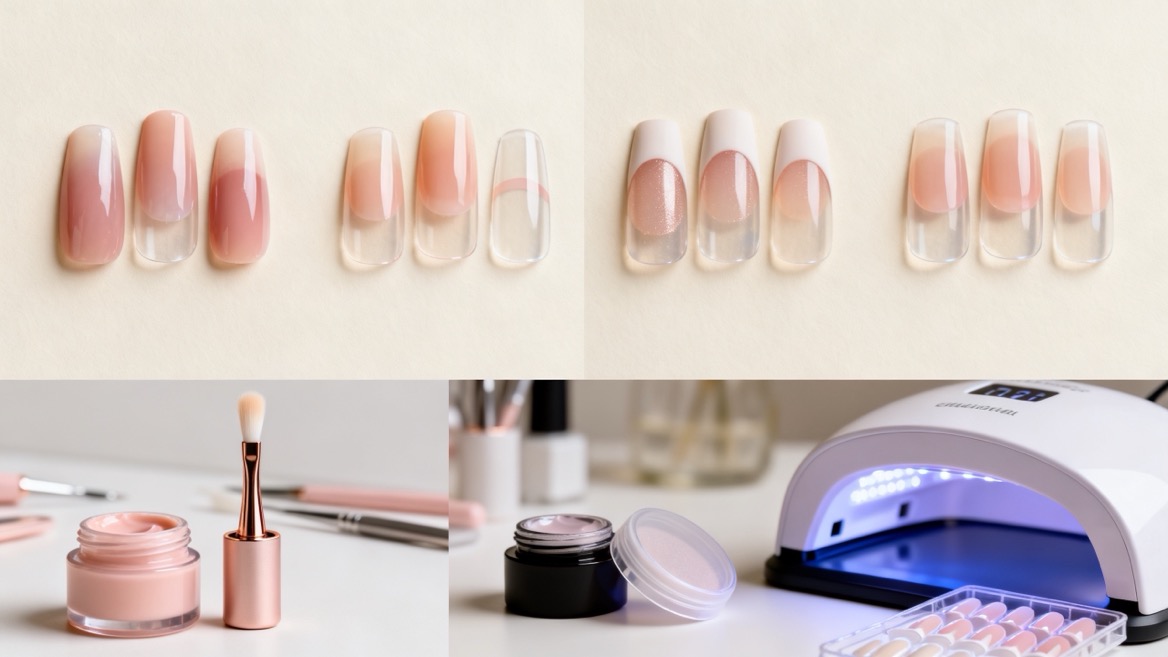
The following method helps create support while reducing unnecessary stress on thin, flexible nails.
Do not select a builder solely because it is marketed as "strong." Look at the nail's condition first.
Check for:
- Peeling layers or surface damage
- Cracks near the free edge
- Excessive flexibility
- Length and shape
- Signs of irritation, redness, swelling, or infection
- Repeated lifting patterns
- The client's work and lifestyle demands
If there is pain, discoloration, separation of the nail plate, suspected infection, or a sudden significant change in nail appearance, pause cosmetic application and advise the client to seek guidance from a qualified healthcare professional.
Preparation should be thorough but conservative. The natural nail should not be aggressively thinned in the name of adhesion.
A reliable preparation routine includes:
- Sanitizing hands and tools
- Gently pushing back the cuticle area
- Removing non-living tissue from the nail plate
- Lightly refining surface shine only when the product system requires it
- Removing dust completely
- Applying primer, bonder, or dehydrator only according to the product manufacturer's instructions
Do not assume every system needs the same prep products. Some systems are designed to work with a specific base gel and may not require additional bonding agents. Product compatibility matters more than layering every available prep liquid.
A thick product layer is not automatically a stronger manicure. Proper structure means placing support where the nail receives the most stress.
For a short structured manicure:
- Keep the cuticle area thin and clean
- Build moderate reinforcement through the center
- Avoid a bulky free edge
- Cap the edge only if the system and nail length allow it
For medium or longer nails:
- Use a balanced apex appropriate for the length
- Keep sidewalls symmetrical
- Avoid flat, unsupported extensions
- Ensure the free edge is not too thin for the intended length
The best structure is one that looks refined while resisting routine bending pressure.
Under-curing can affect performance and safety. Every gel system should be cured in the lamp specified or recommended by its manufacturer, following the stated time and application thickness.
Do not mix curing instructions casually. A lamp that looks similar may not deliver the same wavelength, output, or curing performance.
The U.S. Food and Drug Administration advises users to follow product labeling and warning statements when using nail products.
For brands developing private-label gel products, product documentation should clearly state:
- Recommended lamp type
- Required curing time
- Suggested application thickness
- Compatible base and top coat
- Removal method
- Ingredient and safety information required for the intended market
Clear instructions reduce misuse, improve customer confidence, and support more consistent results across salons and at-home users.
A structured manicure should not be peeled off. Peeling can remove layers from the natural nail and may create the thin, perforated, bendy condition that the enhancement was meant to help manage.
Encourage clients to:
- Return for maintenance before major lifting occurs
- Use cuticle oil regularly
- Wear gloves for cleaning and prolonged water exposure
- Avoid using nails as tools
- File down lifted or overgrown length only when appropriate
- Arrange professional removal or follow the product's recommended removal process
For brittle nails, regular moisturization, reduced exposure to harsh detergents, and protective gloves during wet work are commonly recommended supportive measures.
Even premium gel products can fail when the system is poorly matched to the nail or used incorrectly.
A soft base is valuable, but a very weak nail may need additional structural reinforcement above it. If both the nail and enhancement flex too much, repeated movement can contribute to lifting or cracking.
Hard gel placed flat and thin over a long nail may not provide meaningful support. Structure must follow nail length, shape, and stress distribution.
Aggressive buffing, electric-file misuse, and repeated filing can thin the nail plate. The result may be temporary adhesion improvement followed by a more fragile nail over time.
A gel product can look cured on the surface while still being inadequately cured underneath. Use the correct lamp, respect the recommended layer thickness, and do not improvise curing times.
Picking, peeling, biting, or prying off gel and press-ons can damage the natural nail surface. Removal should be gradual, controlled, and compatible with the material used.
Gel services involve cosmetic products and curing lamps, so safety should be built into both salon practice and product development.
For hands placed under curing lamps, ultraviolet exposure is generally considered low during typical use, but it is still sensible to reduce unnecessary exposure. Current research does not establish a direct causal link between nail lamps and skin cancer, though evidence remains incomplete and long-term exposure questions continue to be studied.
Practical precautions include:
- Follow the curing instructions for the product system
- Avoid repeated unnecessary curing cycles
- Apply broad-spectrum SPF 30 or higher to the backs of hands before a service when appropriate
- Consider UV-protective fingerless gloves for regular gel users
- Avoid applying gel over irritated, broken, or infected skin
- Stop use if burning, itching, redness, swelling, or persistent sensitivity occurs
People with recurring reactions to gel products should avoid self-testing multiple products and should seek professional medical advice. A reaction may be linked to ingredients, incomplete curing, repeated skin contact, or other causes that need proper assessment.
For a manufacturer serving global brands, wholesalers, and retail chains, the market opportunity is not simply "stronger gel." It is better-matched nail systems.
A useful product line can include:
- Flexible base gels for natural-nail compatibility
- Semi-hard builder gels for everyday reinforcement
- Hard gels for extensions and high-structure applications
- Full-cover soft-gel tips in inclusive size ranges
- Pre-designed press-on nails with stable shape and durable finishes
- Adhesive tabs and nail glue options for different wear preferences
- Clear instructions for preparation, curing, aftercare, and removal
- Custom packaging designed for retail, e-commerce, subscription boxes, and salon distribution
At Dongguan YoungMei Technology Co., Ltd., our team works with brands, wholesalers, and chain retailers that need more than a standard catalog. With over 15 years of manufacturing experience, in-house production capabilities, and an integrated supply chain, we support OEM and ODM projects from concept development and fast sampling to quality control, packaging, and scalable production.
Whether you are building a structured gel collection, a reusable press-on nail brand, or a customized nail sticker range, product performance must be aligned with the end user's expectations: easy application, secure wear, attractive design, reliable consistency, and clear care instructions.
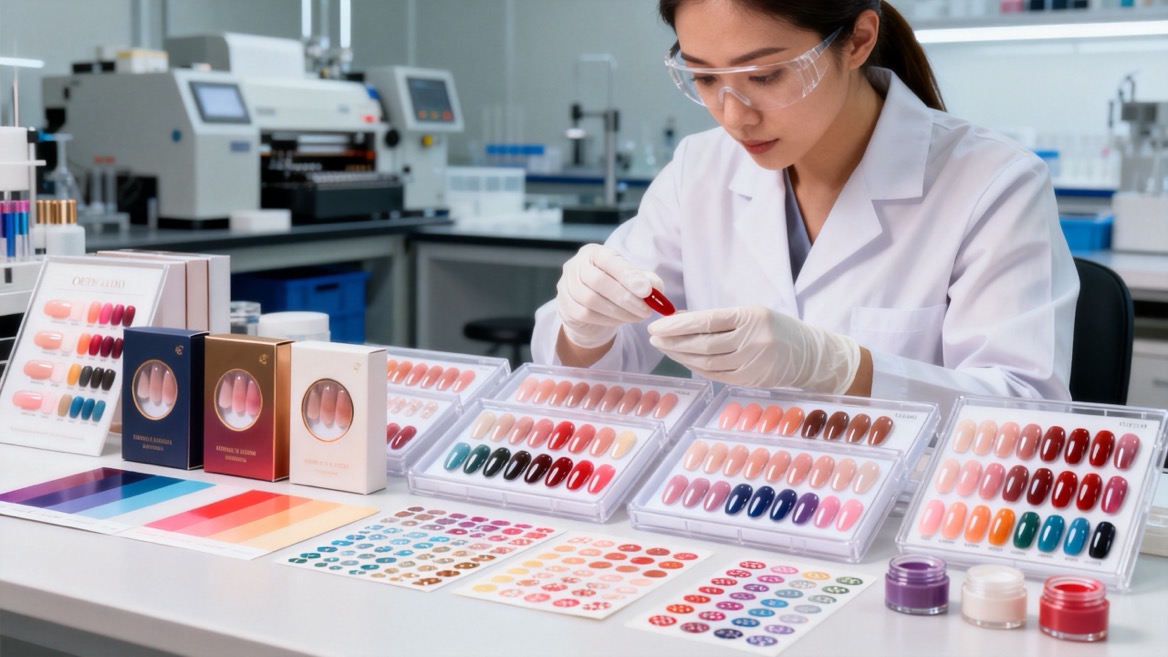
Weak and bendy nails need thoughtful support, not unnecessary product layers. The most reliable results come from matching the natural nail's condition with the right base, builder, tip, structure, curing method, and removal process.
If your business is developing custom press-on nails, nail stickers, builder gels, or complete nail-care collections, Dongguan YoungMei Technology Co., Ltd. can help transform your concept into a market-ready product line. Contact our team to discuss OEM/ODM customization, rapid samples, packaging options, and one-stop sourcing for your next nail project.
Hard gel can be a good option when weak nails need more structural support, especially at medium or longer lengths. It should be selected based on the nail's flexibility, desired length, and the wearer's lifestyle. A flexible base layer may still be useful beneath a stronger builder layer.
Gel can lift when the natural nail bends more than the enhancement can tolerate. Other common factors include incomplete cuticle removal, product touching skin, incorrect curing, incompatible layers, over-filing, and moisture or oil left on the nail plate.
It depends on the condition and desired result. A semi-hard builder gel may be more appropriate for short or medium nails that need moderate reinforcement. Hard gel may be better for longer nails, extensions, or nails that require stronger shape retention.
Well-fitted press-on nails can provide an external protective layer and allow the wearer to keep the natural nail shorter during recovery. However, improper sizing, excessive glue, rough removal, or repeated peeling can still cause damage.
No. Use preparation products according to the instructions of the specific nail system. Some brands require a primer or bonder, while others are designed to work without additional adhesion liquids. Correct preparation is more important than using every available product.
Do not peel, scrape aggressively, or pry off cured gel. Follow the product's removal method, such as controlled filing for file-off hard gel or appropriate soaking for soak-off products. Finish with moisturizing care for the nails and cuticle area.
There is no single schedule for everyone. If nails are dry, peeling, sore, thin, or repeatedly breaking, pause cosmetic enhancements and focus on gentle care. Persistent nail changes, pain, discoloration, or nail separation should be evaluated by a healthcare professional.
- Paola Ponce Nails. [Hard Gel On Weak And Bendy Nails?]
- U.S. Food and Drug Administration. [Nail Care Products]
- Cleveland Clinic. [Brittle Nails: Causes and Treatment Tips]
- Cleveland Clinic. [Nails: Fingernail & Toenail Anatomy]
- Piraccini BM, et al. [Pathogenesis, Clinical Signs and Treatment Recommendations in Brittle Nails: A Review]
- Beylin D, et al. [Assessing the Health Implications of UV/LED Nail Lamp Exposure]
- Harvard Health Publishing. [Safety of LED Nail Lamps]