
- All
- Product Name
- Product Keyword
- Product Model
- Product Summary
- Product Description
- Multi Field Search
English
Views: 241 Author: Young Mei Publish Time: 09-06-2026 Origin: Site


Content Menu
● Why Japanese-Style Gel Appeals to Nail Professionals
>> Better Control for Detailed Nail Art
>> Rich Pigmentation and Coverage
>> A More Customizable Service
● The Professional Application Workflow
>> Step 1: Assess the Natural Nail
>> Step 2: Perform Gentle Preparation
>> Step 3: Apply Thin, Controlled Layers
>> Step 4: Cure With the Correct Lamp
● Can Japanese Gel Damage Natural Nails?
● Safe Removal: Soak-Off vs. File-Off Systems
● Building a Japanese-Style Nail Product Collection
>> A Strong Collection May Include
>> What Brand Buyers Should Ask a Manufacturer
● FAQ
>> Is Japanese gel the same as gel polish?
>> Is every Japanese gel soak-off?
>> Can beginners use potted gel?
>> Why does gel lift at the cuticle area?
>> Can gel products cause an allergic reaction?
>> What should a private-label nail brand customize first?
>> Are press-on nails and Japanese-style gel products suitable for the same brand?
Japanese gel nails are valued for their creamy control, dense pigmentation, versatile structure, and artistic potential. For nail professionals, beauty brands, and retailers, the category is not simply about where a product is made—it is about selecting a well-designed soft-gel system, applying it correctly, and building a product range that delivers reliable results for real customers.
Japanese-style potted gel systems have helped shape a more detail-oriented approach to manicures. Compared with a thin bottle gel polish, these gels are often designed for controlled brushwork, overlays, textured art, encapsulation, and selected extension services. The result can be a refined, durable manicure—but only when the formula, lamp, preparation, application thickness, and removal method work together.
At Dongguan YoungMei Technology Co., Ltd., we have spent more than 15 years developing and manufacturing press-on nails, nail stickers, and related nail products for global brands, wholesalers, and chain retailers. From our manufacturing perspective, the strongest Japanese-gel-inspired product lines pair a clear market position with stable quality control, realistic product claims, and packaging that makes the system easy to use.

"Japanese gel" is commonly used in the nail industry to describe a professional-style gel system associated with Japanese nail artistry, particularly soft potted gel packaged in jars rather than bottles. It is often chosen for its thicker, more workable consistency and rich color payoff.
However, the term should not be treated as a single technical formula or universal quality guarantee. A gel product can be made in Japan, inspired by Japanese salon techniques, or simply marketed in a Japanese-style aesthetic. For buyers and professionals, the more useful questions are:
- Is it a soak-off soft gel, a hard gel, or a hybrid system?
- Is it intended for color application, base adhesion, overlays, sculpting, or nail art?
- What curing lamp and curing time does the manufacturer specify?
- Does the viscosity suit the intended service?
- Has the brand provided ingredient, safety, labeling, and batch-control documentation for its target market?
In practical salon use, Japanese-style gel systems often emphasize precision over speed alone. Potted packaging allows technicians to pick up a controlled amount of product, place it accurately, and work with the gel's self-leveling behavior. That can be useful for thin structured overlays, detailed art, and elevated salon services.
Gel polish and Japanese-style potted gel are not interchangeable categories. Both may cure under a compatible nail lamp, but they usually serve different professional needs.
| Feature | Japanese-Style Potted Gel | Bottle Gel Polish |
|---|---|---|
| Typical texture | Medium to thicker viscosity | Usually thinner and more fluid |
| Packaging | Pot or jar | Bottle with built-in brush |
| Best suited for | Overlays, nail art, controlled shaping, detailed design | Fast color services and familiar polish-style application |
| Product pickup | Controlled with a separate gel brush | Applied with the bottle brush |
| Structure potential | Can vary from flexible overlay to builder-style support | Usually focused on color rather than structure |
| Learning curve | Higher, especially for shaping and art | Generally easier for basic color application |
| Removal | Depends on formula; some are soak-off | Many are designed for soak-off removal |
A bottle gel polish remains an excellent solution for customers who want a thin, polished finish with a familiar manicure workflow. A potted gel system can offer more flexibility where a technician needs to build an apex, refine the nail surface, create raised details, or apply a highly pigmented shade in a controlled way.
The important point is that thicker does not automatically mean stronger, and "soft gel" does not automatically mean every product can be removed in exactly the same way. Each formula has its own intended use.
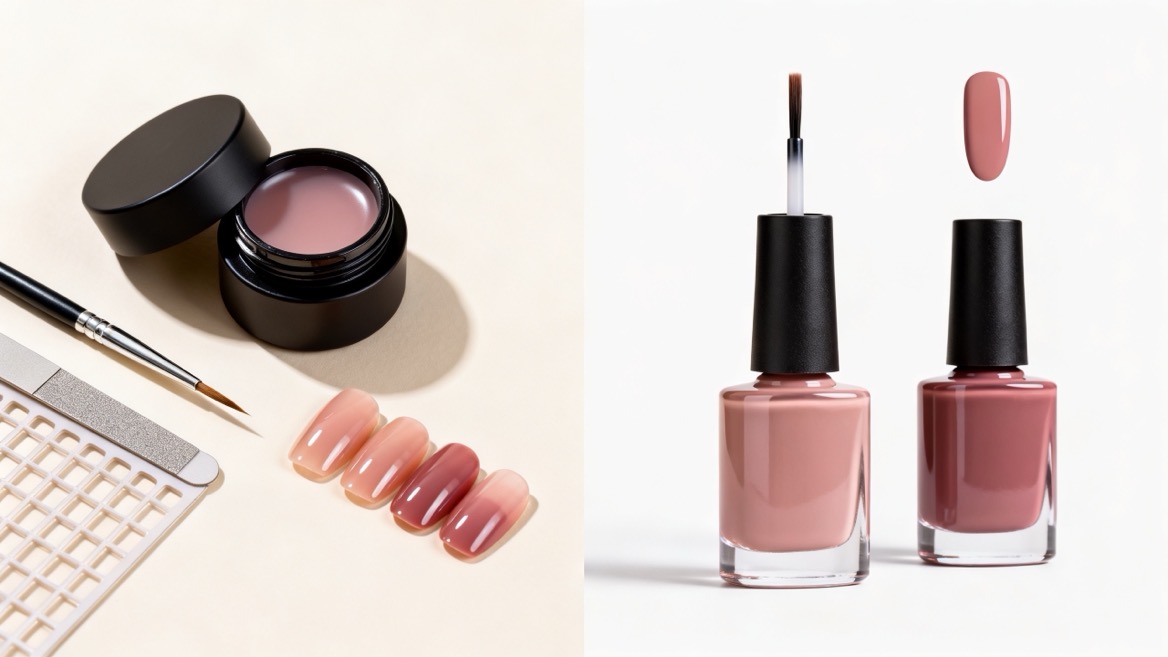
The appeal of Japanese-style gel is closely connected to professional technique. Nail artists often want a product that follows the brush, stays where it is placed, and supports precise creative work without flooding the cuticle area.
A more viscous potted gel can be easier to control for:
- Chrome and texture bases
- Character art and fine line work
- 3D-inspired embellishments
- Encapsulated glitter and flakes
- Gradient effects and layered color
- French tips and micro-details
- Raised patterns and dimensional accents
For a salon, that control can translate into a more premium service menu. For a product brand, it creates opportunities to sell curated systems rather than isolated colors: art gels, base gels, overlay gels, brushes, charms, stickers, press-on nail collections, and aftercare accessories.
Highly pigmented gel colors can reduce the need for excessive layering. This matters because very thick application can make curing less reliable, especially with dark, white, neon, glitter-heavy, or opaque shades.
A good professional color gel should provide even coverage in controlled thin layers. Technicians should never assume that a highly opaque color can be applied in one oversized layer. The correct number of coats depends on the formula, pigmentation, lamp output, and manufacturer's instructions.
Japanese-style gel can support a personalized manicure experience. A technician may use one formula for adhesion, another for a natural nail overlay, and a separate art gel for decoration. This modular approach allows professionals to tailor services to different nail conditions and client preferences.
For example, a client with short natural nails may need a flexible overlay and a simple neutral finish. Another client may request a structured almond shape, reflective art, and a coordinated press-on nail set for travel or emergency replacements. A well-planned product range can meet both needs.
The best gel manicure is based on preparation, product compatibility, and disciplined curing—not aggressive filing or excessive product.
Before applying any gel, check the nail plate and surrounding skin. Do not apply gel over broken skin, visible infection, unexplained nail separation, or a suspected allergy. Clients with repeated irritation, swelling, itching, blistering, or nail lifting should stop using the product and seek advice from a qualified healthcare professional.
A professional consultation should also identify:
- Previous product sensitivity
- Frequent handwashing or chemical exposure
- Nail-biting or picking habits
- Existing lifting from a previous service
- The client's desired length, shape, and maintenance schedule
Preparation should be purposeful, not aggressive. Remove surface shine only as needed for the chosen system, clean away dust, and follow the product system's instructions for dehydration, primer, or base gel.
Over-filing can thin the natural nail plate and contribute to discomfort. The objective is to create a clean, properly prepared surface—not to grind down the nail.
Use a separate, clean gel brush for potted products. Pick up only the amount needed and keep material away from skin and cuticles.
For a basic structured manicure:
1. Apply the recommended base layer and cure as directed.
2. Add a thin slip layer if the system requires it.
3. Place a small bead of overlay or builder gel in the stress area.
4. Guide the gel into shape without overloading the free edge.
5. Turn the hand briefly if appropriate to encourage self-leveling.
6. Cure fully in the compatible lamp.
7. Apply color, art, and top coat according to the product instructions.
Uncured gel should never remain on the skin. Repeated skin contact with uncured acrylate-based nail products can increase the risk of sensitization and allergic contact dermatitis. Professional technique is therefore a safety issue as well as a beauty issue.
A gel is not "fully cured" simply because the surface feels dry. Cure performance depends on the formula, pigment load, layer thickness, lamp design, lamp condition, and specified curing time.
Brands should provide clear curing instructions for every product category, especially for highly pigmented shades and builder-style gels. Private-label buyers should ask manufacturers to document compatibility testing for the recommended lamp and packaging claims.
When people say gel "damaged" their nails, the problem is often not the concept of gel itself. It is more commonly linked to over-prep, incorrect curing, product misuse, picking, peeling, or improper removal.
Potential causes of nail and skin problems include:
- Filing the natural nail too aggressively
- Applying gel too thickly
- Using a lamp that does not match the product system
- Allowing uncured gel to touch the skin
- Pulling or peeling off the manicure
- Using forceful removal tools
- Wearing a lifting service for too long
- Continuing use after signs of irritation
Gel manicure products are generally regulated as cosmetics in the United States, and cosmetics typically do not require premarket approval before sale. This makes responsible supplier selection, formula documentation, accurate labeling, and appropriate product testing especially important for brand owners.
For end users, comfort matters. A properly applied manicure should not burn, itch, swell, or create persistent redness around the nail. If a client experiences these symptoms, remove the product carefully and discontinue use until the cause has been assessed.
Many soft gels are designed to soften in acetone, but the removal approach should always follow the specific product instructions. Some structured or builder systems may require a different approach, including leaving a thin base layer for a fill service or filing down bulk before soaking.
For a standard soak-off process:
1. Shorten the free edge if needed.
2. File off the glossy top layer and reduce bulk carefully.
3. Place acetone-soaked wraps on each nail.
4. Wait for the manufacturer's recommended time.
5. Remove one wrap at a time.
6. Gently push away softened product with minimal pressure.
7. Re-wrap if product remains firmly attached.
8. Finish with cuticle oil and hand care.
Do not scrape aggressively or pry off attached gel. That can remove layers of the natural nail plate. One Japanese gel education resource recommends reducing bulk, using acetone wraps, waiting about 15 minutes, and working one nail at a time rather than forcing material off.
For retailers and beauty brands, removal education should be included on inserts, QR-code guides, product pages, and social content. A good product experience does not end at application—it includes an honest, clear removal plan.
For private-label brands, Japanese-style gel is an opportunity to create a higher-value collection rather than competing only on color count. The most commercially effective ranges combine professional performance with accessible consumer guidance.
- Adhesion-focused base gel
- Flexible overlay gel
- Builder or sculpting gel
- High-pigment color gels
- Sheer jelly gels
- Cat-eye and magnetic effect gels
- Art gels for line work and texture
- Gloss, matte, glitter, and no-wipe top coats
- Nail stickers and decals
- Coordinated press-on nail sets
- Nail glue tabs, adhesive glue, and removal accessories
- Branded brushes, swatch displays, and gift packaging
This creates a full purchase path. A customer may begin with ready-to-wear press-on nails, then buy nail stickers for personalization, and later progress to a curated gel kit. A salon can use the same visual identity across professional products, retail accessories, and seasonal sets.
Before developing a private-label gel or nail accessory program, ask practical questions:
- What are the available formulas and viscosities?
- Which products are soak-off, file-off, flexible, or structural?
- What lamp and cure-time specifications are recommended?
- Can the supplier provide batch consistency and quality-control processes?
- What packaging sizes, jar styles, labels, and carton options are available?
- What minimum order quantity applies to stock formulas versus custom development?
- Can the supplier support color matching and fast samples?
- What documentation is available for the destination market?
- Can the supplier bundle press-on nails, stickers, tools, and gel products into one coordinated collection?
At Dongguan YoungMei Technology Co., Ltd., our factory and integrated supply chain help global brands, wholesalers, and retail groups develop practical nail-product programs—from rapid sampling and customized packaging to stable production and one-stop procurement. The goal is not merely to put a label on a jar. It is to develop a collection that customers can understand, use, repurchase, and recommend.
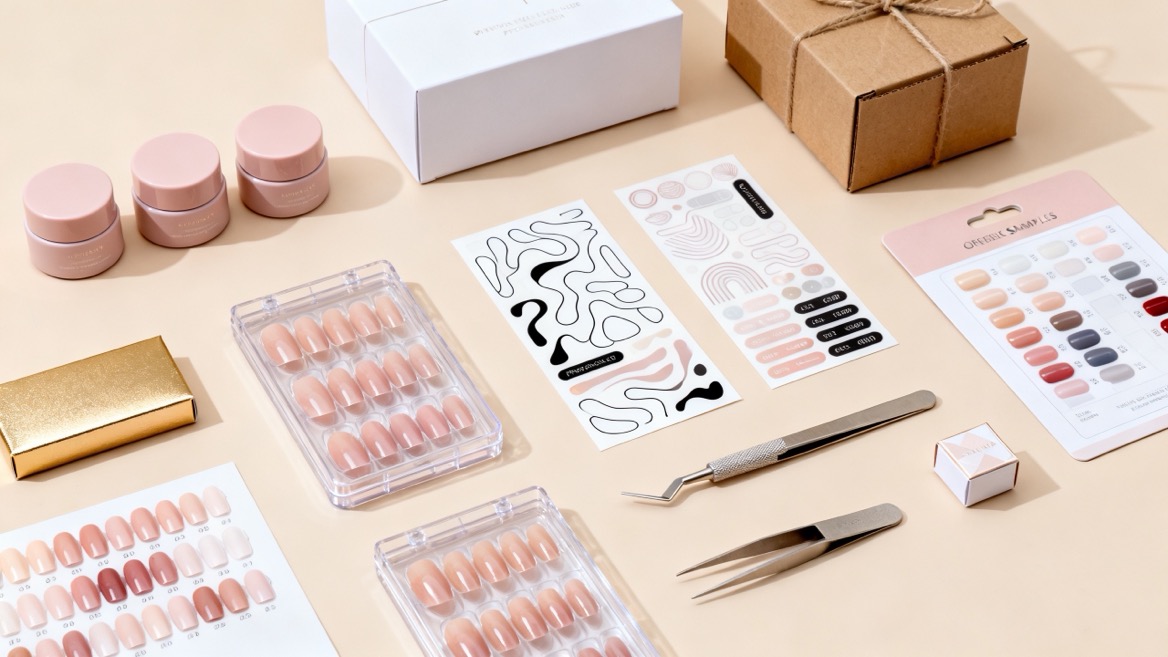
Japanese gel nails represent a professional approach to texture, precision, and creative control. The category can support elegant natural overlays, detailed nail art, structured salon services, and premium retail collections—but results depend on the full system: appropriate formula selection, correct curing, careful application, and gentle removal.
For beauty brands, the strongest position is built on clear product education, stable manufacturing, realistic claims, and a collection that solves more than one customer need.
If you are building a private-label nail collection—including press-on nails, nail stickers, gel products, accessories, custom packaging, or retail-ready sets—contact Dongguan YoungMei Technology Co., Ltd. to discuss OEM/ODM development, rapid samples, and scalable manufacturing support.
Not exactly. Japanese-style gel often refers to professional soft gel in pots or jars, frequently used for controlled overlays, detailed art, and structured applications. Gel polish is usually thinner, comes in a bottle, and is primarily designed for polish-style color services.
No. Some soft gels are designed to soak off with acetone, while builder, structural, or hard-gel products may need to be filed down or maintained through fills. Always follow the specific manufacturer's removal guidance.
Yes, but potted gel requires brush control, correct product pickup, and careful curing. Beginners should start with thin applications, avoid skin contact, use a compatible lamp, and follow the supplier's system instructions.
Lifting may result from incomplete preparation, product touching the skin, overly thick application, incompatible layers, under-curing, exposure to water or chemicals, or picking at the manicure. Identifying the real cause is more effective than simply applying more product.
Yes. Uncured acrylate-based gel products can contribute to allergic contact dermatitis in sensitive individuals, especially when they contact the skin repeatedly. Symptoms can include itching, redness, swelling, blistering, or nail changes. Stop use and seek professional medical guidance if symptoms occur.
Start with a clear customer segment and product system. For example, choose whether the brand focuses on salon professionals, beginner-friendly home kits, fashion press-on nails, nail art enthusiasts, or retail gift sets. Then customize formula selection, colors, packaging, instructions, and complementary accessories around that position.
Yes. They can work well together when they share a unified color story, packaging design, and customer promise. Press-on nails provide a fast, accessible option, while gel products can serve customers who want longer-term creative manicure services.
- [U.S. Food and Drug Administration: Nail Care Products]
- [U.S. Food and Drug Administration: Cosmetic Products Containing Methylene Chloride]
- [American Academy of Dermatology: Gel Manicures—Tips for Healthy Nails]
- [KOKOIST USA: What Is Japanese Gel?]
- [KOKOIST USA: Japanese Gel vs. Gel Polish]
- [KOKOIST USA: How to Remove a Japanese Gel Nail Manicure]
- [Paola Ponce Nails: All the Things to Know About Japanese Gel]