
- All
- Product Name
- Product Keyword
- Product Model
- Product Summary
- Product Description
- Multi Field Search
English
Views: 269 Author: Young Mei Publish Time: 09-18-2026 Origin: Site


Content Menu
● How Japanese Gel Differs From Standard Gel Products
>> 1. Potted Gel Is Common, but Not Universal
>> 2. Japanese Gel Systems Often Prioritize Control
>> 3. Soft Gel Does Not Mean Weak Gel
● Formula Safety Requires More Than "Free-From" Claims
>> Practical Application Rules for Safer Services
● Why Small-Batch Control Can Matter
● A Better Way to Source Japanese-Inspired Gel Products
>> Step 1: Define the Service Scenario
>> Step 2: Build a Formula Matrix
>> Step 3: Test Real-World Application
>> Step 4: Confirm Documentation Before Production
● From Gel Ideas to a Complete Nail Collection
● Build a More Reliable Nail Product Line
>> Is Japanese gel always soak-off gel?
>> Is Japanese gel better than other gel nail products?
>> Can a soft gel be used for structured overlays?
>> Why does gel sometimes lift or peel?
>> Are HEMA-free gels risk-free?
>> What should I ask an OEM/ODM gel nail manufacturer?
>> Can gel colors be customized for a private-label brand?
Japanese gel nails are often associated with refined textures, highly controlled application, and salon-level education. But "Japanese gel" is not a regulated product category or a guarantee of quality by itself—it is a market term that usually describes gel systems developed for precision work, layered application, and professional technique.
For nail brands, distributors, salons, and buyers developing a private-label collection, the more useful question is not simply whether a gel is Japanese. It is: Does the formula, packaging, production process, documentation, and education support the service experience your customers expect?

Japanese gel generally refers to professional gel nail products associated with Japanese nail-art culture and salon techniques. These products are commonly sold in pots or jars, although bottles are also widely used for base gels, builders, colors, and top coats.
The category is often linked to:
- Fine-detail nail art
- Controlled viscosity
- Thin, layered application
- Soft-gel or soak-off removal options
- Builder and overlay services
- Curated color systems
- Professional education and technique-driven use
However, buyers should avoid assuming that every product marketed as Japanese gel has identical chemistry, durability, removal behavior, or compliance status. Country association is not a substitute for reviewing the actual product specification.
A strong gel collection should be evaluated through measurable criteria:
| Buying factor | What to verify | Why it matters |
|---|---|---|
| Viscosity | Self-leveling speed, brush control, non-runny performance | Affects application accuracy and nail-art usability |
| Cure compatibility | Recommended lamp type, cure time, layer thickness | Helps prevent under-curing and service failures |
| Removal method | Soak-off, file-off, refill-compatible, or hybrid | Determines salon workflow and customer expectations |
| Adhesion | Base-coat performance on different nail types | Influences lifting, chipping, and retention |
| Formula documentation | Ingredient list, SDS, technical guidance | Supports responsible sourcing and market readiness |
| Batch control | Batch code, QC process, retained samples | Helps brands investigate complaints and maintain consistency |
| Packaging | Pot, bottle, brush, opacity, leak resistance | Shapes user experience and transport performance |
The biggest difference is often not a single ingredient. It is the system philosophy behind the product line.
Many professional Japanese-inspired gel systems are designed as coordinated collections: base gel, builder gel, color gel, art gel, top gel, and accessories are intended to work together. This approach can make application more predictable, especially when technicians follow the recommended preparation, layer thickness, curing method, and removal instructions.
Potted gel is one of the most recognizable features of Japanese-style nail products. A pot gives technicians direct access to the formula and makes it easier to select different brushes for different tasks.
For example:
- A flat oval brush can help apply color close to the cuticle.
- A short liner brush can create fine lines and outlines.
- A detail brush can place glitter, chrome gel, or raised accents.
- A round brush can help form controlled builder-gel structure.
Potted formats are particularly useful for nail art because the brush is chosen separately from the container. The technician can switch tools without changing the product, allowing more precision for ombré effects, texture work, marbling, encapsulated designs, and hand-painted details.
That said, bottles offer major advantages for high-volume salon services and retail-friendly products. A bottle with an integrated brush can improve speed, reduce handling steps, and create a familiar format for first-time users.
The best packaging format depends on the end user. Nail artists may prefer pots; chain salons and home-use customers may prioritize bottle convenience.
Professional technicians frequently describe Japanese gel as controlled rather than overly fluid. This does not mean every Japanese-origin gel is thick. Instead, many products are developed with a texture that supports intentional placement.
A well-balanced gel should help the technician:
- Apply a smooth, even layer without flooding the sidewalls.
- Keep pigment distributed consistently.
- Build a structured overlay without excessive product movement.
- Create nail art without losing line definition.
- Level sufficiently without becoming difficult to control.
For a manufacturer or private-label buyer, viscosity should never be treated as a vague marketing statement. It should be translated into a product brief.
For example, instead of asking for "medium-thick gel," specify:
- Desired flow level after 10 to 20 seconds.
- Recommended application thickness.
- Whether the gel should self-level.
- Whether it must hold a raised 3D texture.
- Whether it is for full-color coverage, liner art, extensions, or overlays.
- Suitable cure conditions and compatible lamps.
This is especially important during OEM/ODM development. A beautiful color chart cannot compensate for a formula that floods the cuticle area, shrinks after curing, wrinkles under the lamp, or feels difficult for the target user to apply.
A common misconception is that soak-off gel cannot provide structure or support. In practice, gel systems can be designed for different levels of flexibility and strength.
A soft gel may be appropriate for:
- Thin color application
- Short natural nails
- Flexible nails that need movement
- Easy soak-off removal
- Quick salon services
A stronger builder-style gel may be used for:
- Structured overlays
- Apex building
- Reinforcement for longer natural nails
- Repairs
- Short extensions, depending on the formula and technique
The correct choice depends on the client's nail condition, lifestyle, desired length, and maintenance plan. A person who types all day, works with water frequently, or has highly flexible natural nails may need a different system from someone seeking a rigid, long-wear extension.
For brands, this creates a useful assortment strategy. Instead of selling one generic "builder gel," consider building a clear service architecture:
| Product type | Primary purpose | Suggested customer |
|---|---|---|
| Rubber base gel | Flexible adhesion and light reinforcement | Natural-nail clients and short services |
| Builder gel | Structure, apex, and overlays | Professional salons and advanced users |
| Color gel | Pigmented decorative layers | Salons, artists, and retail collections |
| Art gel | Fine lines, raised textures, design work | Nail artists and training studios |
| Non-wipe top gel | Gloss and finishing | High-efficiency salon services |
| Matte top gel | Velvet or soft-focus finish | Trend collections and nail-art finishes |
Formula Safety Requires More Than "Free-From" Claims
Nail products are often marketed with phrases such as "non-toxic," "hypoallergenic," "HEMA-free," or "low odor." These statements can be useful only when they are specific, substantiated, and aligned with the target market's requirements.
A more responsible approach is to communicate what the product is, how it should be used, and which professional practices reduce preventable exposure.
The U.S. Food and Drug Administration notes that artificial nail products use acrylic chemistry and that reactive monomer traces can contribute to adverse reactions in people who have become sensitive to methacrylates. It emphasizes avoiding skin contact to reduce the chance of allergic reaction.
The European Scientific Committee on Consumer Safety has also stated that HEMA and Di-HEMA TMHDC can pose sensitization risks when products are misused or when material contacts the skin around the nail. Its assessment highlights proper application to the nail plate and avoidance of adjacent skin exposure.
Whether a salon uses Japanese gel, Korean gel, European gel, or a private-label system, professional handling matters.
1. Keep uncured gel off the skin. Clean accidental contact before curing.
2. Use the lamp recommended for the formula. A random lamp may not deliver the intended cure performance.
3. Apply thin layers unless the product instructions specifically allow a thicker layer.
4. Do not mix systems casually. A base, color, top, and lamp designed together generally provide a more predictable workflow.
5. Do not use damaged, leaking, or unlabeled products.
6. Maintain batch records for salon and wholesale purchasing.
7. Stop use and seek appropriate medical guidance if a customer develops swelling, itching, pain, rash, or nail changes.
For European Union distribution, nail products containing HEMA or Di-HEMA TMHDC are restricted to professional use and require specific warning language, including "For professional use only" and "Can cause an allergic reaction."
Small-batch production is often presented as a premium feature, but the real value is traceability—not scarcity alone.
A reliable manufacturer should be able to connect a finished product to a clear production record. This matters when a distributor needs to investigate a color inconsistency, packaging issue, odor change, viscosity variation, or customer complaint.
A useful batch-control process may include:
- Raw-material identification and incoming inspection
- Formula version control
- Batch coding
- In-process viscosity and appearance checks
- Cure and adhesion testing under defined conditions
- Packaging inspection
- Retained reference samples
- Finished-goods release records
Cosmetic good manufacturing practice guidance under ISO 22716 covers production, control, storage, and shipment, which are all essential areas for a scalable nail-products supply chain.
For a growing nail brand, this is where an experienced manufacturing partner becomes valuable. At Dongguan YoungMei Technology Co., Ltd., the goal of OEM/ODM development should not be limited to adding a logo to a standard item. A stronger project process connects formula selection, color development, packaging, sample approval, quality expectations, and delivery planning before mass production begins.
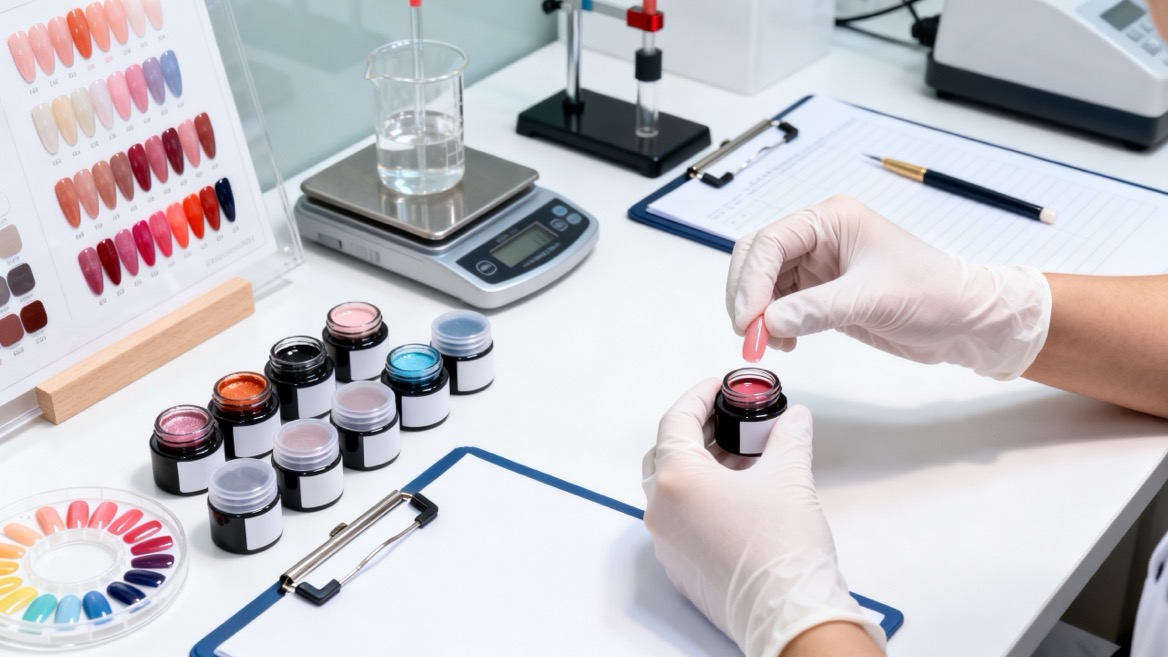
If you are building a gel line for a salon chain, e-commerce brand, distributor, or beauty retailer, use a structured sourcing process.
Start with the end use, not the trend name.
Ask:
- Is the collection for professional salons, retail consumers, or both?
- Is the main need nail art, everyday color, overlays, extensions, or press-on nail decoration?
- Will the collection be used with a specific lamp?
- Is soak-off removal required?
- Which markets will the products enter?
- What label language, warnings, and documentation are needed?
Do not approve a product solely from a single display swatch. Request samples across the actual collection.
Evaluate:
- Opacity after one, two, and three coats
- Brush marks
- Shrinkage near the sidewalls
- Self-leveling behavior
- Cure feel and surface finish
- Gloss retention
- Compatibility with base and top coats
- Removal behavior
- Storage stability
- Color repeatability between sample and production
A product can look excellent in a factory sample but perform differently in a working salon. Test it with trained nail technicians and collect structured feedback.
Useful reviewer questions include:
- Did the gel flood the cuticle area?
- Was it easy to control with the intended brush?
- Did the color cover consistently?
- Did it wrinkle under the recommended cure conditions?
- Was removal predictable?
- Did the top coat maintain gloss?
- Would the technician reorder it?
This type of feedback is more useful than general comments such as "nice texture" or "beautiful color."
Before placing a bulk order, confirm the documents appropriate for your market and product category. Depending on the destination and commercial arrangement, this may include:
- Ingredient information
- Safety Data Sheet
- Product specification sheet
- Certificate of analysis where applicable
- Packaging details
- Batch coding plan
- Label artwork review
- Transport and storage guidance
- Testing or compliance documentation required by the destination market
In the United States, the responsible person for a cosmetic product has obligations related to product safety substantiation, and manufacturers or processors may be subject to facility registration and product listing requirements under the Modernization of Cosmetics Regulation Act framework.
A successful gel line is not just a set of colors. It is a connected customer experience.
A balanced launch collection may include:
- Everyday nude, red, black, white, and sheer shades
- Seasonal trend colors
- A high-pigment art gel range
- Base, builder, and top coat options
- Swatch cards or color charts
- Brush recommendations
- Application and removal instructions
- Clear professional-use warnings where relevant
- Product videos and technician education
For brands that also sell press-on nails, nail stickers, and accessory products, the collection can be organized around coordinated looks. For example, one seasonal theme can include a gel color palette, matching press-on nail designs, sticker accents, packaging visuals, and salon display materials.
This creates a more coherent buying experience for retailers and helps customers understand how products work together.
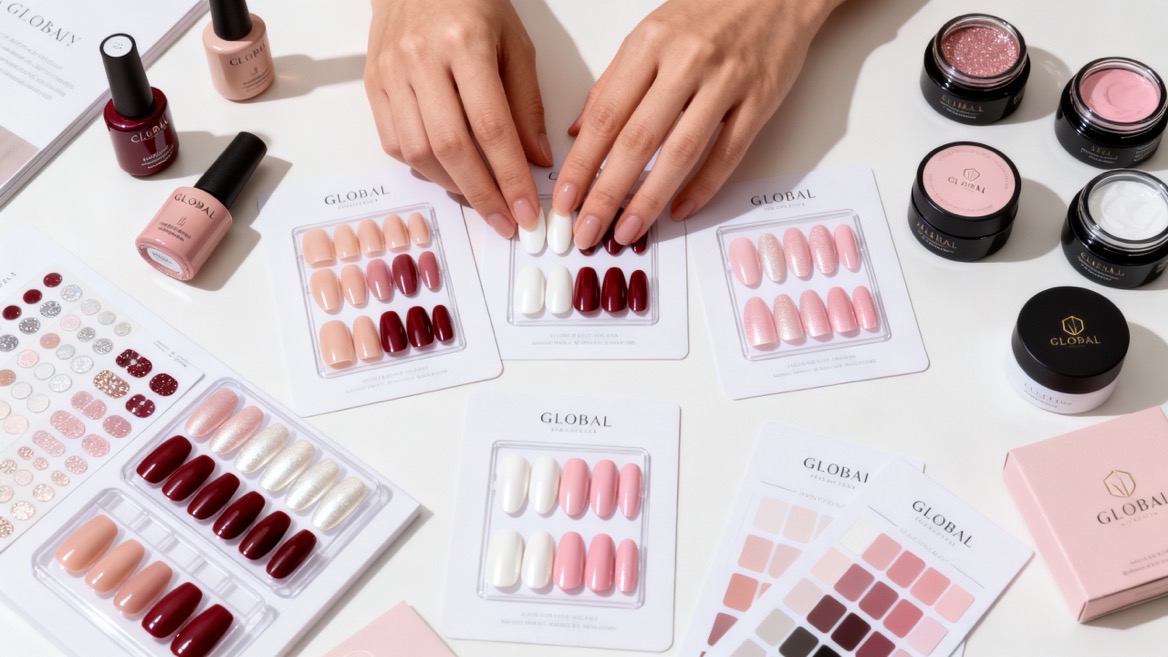
Japanese-inspired gel products can be a strong foundation for a professional nail collection when they are supported by clear specifications, controlled production, responsible application guidance, and an end-user-focused product strategy.
Dongguan YoungMei Technology Co., Ltd. brings more than 15 years of experience in nail-product development and manufacturing. With in-house production capabilities and an integrated supply chain, we support global brands, wholesalers, and retail chains with OEM/ODM customization, rapid sampling, stable quality control, press-on nails, nail stickers, gel-related products, and one-stop sourcing solutions.
Contact YoungMei today to discuss your custom nail collection, request samples, and turn your product concept into a scalable market-ready range.
No. Many Japanese-style gel systems are associated with soak-off or soft-gel formats, especially in pots and bottles, but removal behavior depends on the specific formula. Always check the manufacturer's application and removal instructions.
Not automatically. Japanese gel is often valued for control, nail-art performance, and professional education, but the best option depends on formula quality, cure compatibility, documentation, application technique, and the needs of the end user.
Yes, some soft or soak-off builder gels are formulated for overlays and light structure. However, the appropriate product depends on nail length, flexibility, desired apex, maintenance schedule, and the manufacturer's instructions.
Common causes include incomplete preparation, product touching skin, incompatible layers, incorrect cure time, a mismatched lamp, overly thick coats, moisture or oil on the nail plate, and using a formula unsuitable for the client's nail type.
No cosmetic claim can eliminate every possibility of irritation or allergy. "HEMA-free" only indicates that HEMA is not included in the formula; other ingredients may still cause sensitivity in some individuals. Proper application, avoiding skin contact, and following product instructions remain important.
Ask about formula options, viscosity, cure requirements, lamp compatibility, removal method, color development, sample timeline, minimum order quantity, packaging choices, batch traceability, stability testing, documentation, labeling support, and quality-control procedures.
Yes. A manufacturer can often support custom color matching, glitter selection, finishes, packaging, private labels, and product-set design. The project should include approved color standards and production tolerances to reduce variation between samples and mass production.
1. [Paola Ponce Nails: How Are Japanese Gels Different Than Other Gels?]
2. [U.S. Food and Drug Administration: Nail Care Products]
3. [European Commission Scientific Committee on Consumer Safety: Safety of HEMA and Di-HEMA TMHDC]
4. [EUR-Lex: Commission Regulation (EU) 2020/1682]
5. [ISO: ISO 22716—Good Manufacturing Practices for Cosmetics]
6. [U.S. Food and Drug Administration: Modernization of Cosmetics Regulation Act of 2022]