
- All
- Product Name
- Product Keyword
- Product Model
- Product Summary
- Product Description
- Multi Field Search
English
Views: 269 Author: Young Mei Publish Time: 09-11-2026 Origin: Site


Content Menu
● What Are Full-Coverage Nail Tips?
● Soft Gel Tips vs. ABS Plastic Tips
● The Real Difference Is Product Engineering
● Application Method and Wear Expectations
>> Soft Gel Full-Coverage Nail Tips
>> ABS Plastic Full-Coverage Nail Tips
● Why Fit Matters More Than Material Claims
● Pre-Etched, Sanded, or Smooth Inner Surfaces
>> Smooth Tips
>> Why Surface Treatment Needs Clear Instructions
● Removal, Reuse, and Product Positioning
● Safety and Responsible Product Development
● How to Choose the Right Full-Cover Nail Product
● Work With an Experienced Nail Product Manufacturer
>> Are soft gel nail tips better than ABS plastic nail tips?
>> Can soft gel nail tips be used with regular nail glue?
>> Why do full-cover nail tips pop off?
>> Are pre-etched nail tips easier to apply?
>> Can ABS plastic full-cover nail tips be reused?
>> What should a private-label press-on nail kit include?
>> What information should I provide for a custom nail OEM project?
Choosing between soft gel full-coverage nail tips and ABS plastic full-cover nail tips is not simply a matter of following a trend. For nail brands, salons, wholesalers, and retail buyers, the decision affects application speed, wear expectations, fit range, removal method, packaging requirements, and ultimately customer satisfaction.
At Dongguan YoungMei Technology Co., Ltd., we have spent more than 15 years developing and manufacturing press-on nails, full-cover nail tips, nail stickers, and related nail products for global brands, wholesalers, and chain retailers. From a manufacturing and product-development perspective, the "soft gel vs. plastic tip" debate is often oversimplified. The best option depends on the intended customer, application system, nail shape, retail position, and after-sales expectations.
This guide explains the practical differences between soft gel nail tips, ABS plastic nail tips, and ready-to-wear press-on nail systems—so you can choose, source, customize, or develop the right product with confidence.
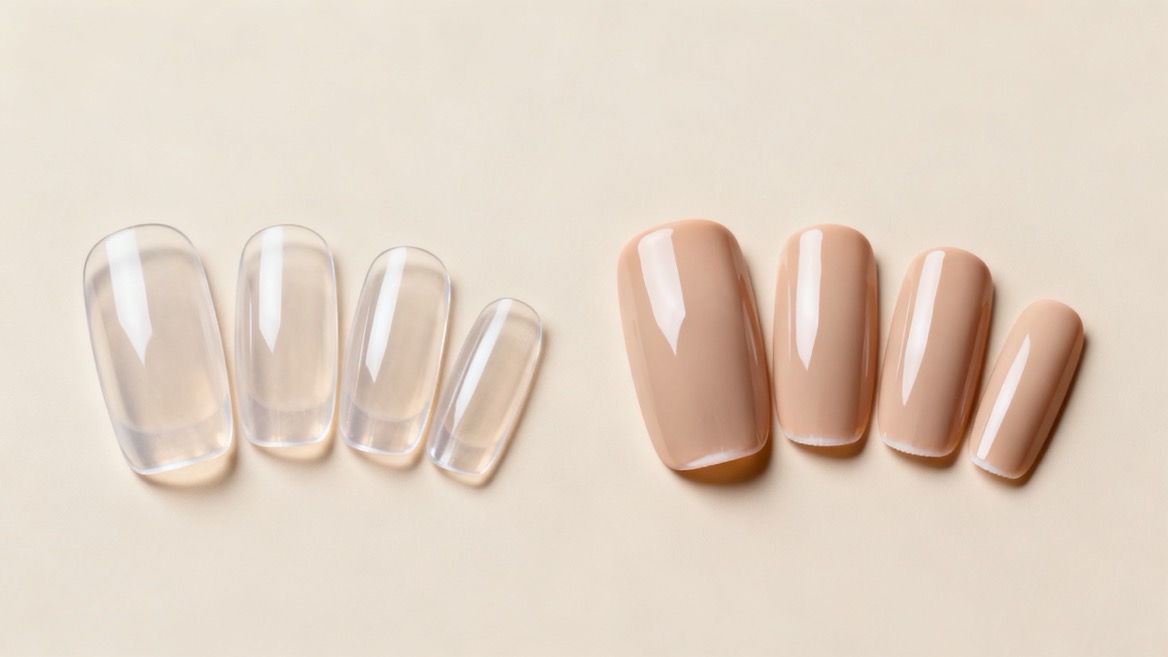
Full-coverage nail tips are pre-formed artificial nail extensions designed to cover the entire natural nail plate, from the cuticle area to the free edge. Unlike traditional half-cover nail tips, which extend only from the nail edge and require a builder overlay, full-cover tips create the complete nail shape in one piece.
They are widely used in several product categories:
- Soft gel extension systems for salon and professional use
- ABS full-cover tips for gel overlays, nail art, and refillable extensions
- Press-on nails for direct-to-consumer retail and e-commerce
- Pre-glued or adhesive-tab nail sets for temporary wear
- Custom-branded nail kits for beauty retailers, subscription boxes, and private-label brands
The key point is that a full-cover tip is a product format, not a single material category. A supplier may describe a tip as "soft gel," "gel tip," "plastic tip," "ABS tip," "resin tip," or "press-on nail." Buyers should therefore look beyond the label and evaluate the actual material, flexibility, thickness, pre-treatment, fit profile, and intended application method.
Although both types can create a polished extension quickly, they differ in how they are designed, applied, maintained, and marketed.
| Feature | Soft Gel Full-Coverage Tips | ABS Plastic Full-Coverage Tips |
|---|---|---|
| Common use | Gel extension systems | Nail art, overlays, press-on nails, salon extensions |
| Typical application | Applied with gel adhesive and cured under a lamp | Applied with gel, glue, adhesive tabs, or an overlay system |
| Cuticle placement | Usually designed for close cuticle placement | May be placed close to the cuticle or slightly away depending on the system |
| Flexibility | Often flexible and lightweight | Can range from flexible to firm depending on ABS formulation and thickness |
| Inner surface | May require etching, sanding, or pre-etching | Can be supplied smooth, pre-etched, matte, or adhesive-ready |
| Maintenance | Often marketed as a soak-off replacement service | Can be removed, replaced, overlaid, or refilled depending on design |
| Shape options | Natural and sculpted profiles are common | Wide shape and curvature customization is possible |
| Best for | Professional gel-extension systems | OEM/ODM press-on nails, salon tips, retail kits, and versatile applications |
Neither material is automatically "better." A product becomes successful when the material and design match the user's actual routine.
For example, a salon technician focused on fast, lamp-cured extensions may prefer a soft gel-style system. A retailer selling reusable press-on nail kits may need a more durable ABS-based nail with a carefully engineered curve, reinforced stress area, smooth sidewalls, and a finish that accepts color, printing, chrome, decals, or hand-painted artwork.
The term "soft gel" is often used as a marketing shorthand, but professional buyers should ask more specific questions.
A well-designed full-cover nail tip is the result of several technical choices:
- Material formulation
- Thickness distribution
- Apex and stress-point design
- C-curve and sidewall profile
- Cuticle-edge contour
- Inner-surface treatment
- Size range
- Mold precision
- Color and decoration compatibility
- Adhesive compatibility
- Packaging protection
In manufacturing, tiny changes to these details can substantially change user experience.
A tip that is too rigid may feel uncomfortable on highly curved natural nails. A tip that is too thin may flex excessively or crack during shipping. A tip with a thick cuticle edge can look artificial. A tip with an overly deep curve may leave a visible air gap beneath the natural nail. A product with inadequate sizing—especially in wider thumb sizes—can lead to lifting, pressure, sidewall gaps, or customer returns.
That is why brands should not select a full-cover nail only by looking at a sample photo or requesting a standard catalog item. Fit, finish, flexibility, and attachment method must be evaluated together.
Soft gel tips are typically used with a compatible gel adhesive. The technician prepares the natural nail, applies the adhesive gel, positions the tip, removes trapped air, flash-cures it, and then completes a full cure under the appropriate lamp.
Because these tips are commonly designed for a seamless cuticle-area application, they can save time compared with traditional sculpted extensions. After curing, the technician may proceed directly to color, nail art, top coat, or additional reinforcement.
A professional soft gel tip system usually requires careful control of:
1. Natural nail preparation
2. Tip size selection
3. Inner-surface etching or pre-etch condition
4. Adhesive gel amount
5. Air-bubble removal
6. Flash curing
7. Full curing according to the gel system instructions
The most important practical point is compatibility. The tip, adhesive gel, lamp, and curing instructions should work as one validated system. An adhesive that performs well with one tip material or lamp output may not produce the same result with another.
ABS plastic tips are highly versatile. Depending on the product design, they may be used for salon overlays, DIY extension kits, glue-on nails, or reusable press-on nail sets.
ABS is often valued because it can be engineered to balance strength and flexibility. It can also be produced with different surface finishes, including glossy, matte, frosted, pre-etched, or printed finishes. This makes it especially suitable for private-label press-on nail programs.
A brand can develop ABS full-cover nails for different market positions:
- Budget retail sets with glue and adhesive tabs
- Premium reusable press-on nails with thicker construction and detailed artwork
- Professional nail art tips for gel overlays and salon customization
- Kids' nail sets with shorter lengths, rounded edges, and gentler temporary-wear solutions
- Seasonal collections for holidays, weddings, festivals, and fashion launches
For many buyers, the biggest advantage is flexibility in customization. Shape, length, thickness, transparency, base color, finish, packaging, and accessory combinations can all be adapted for the target market.
A common customer complaint is that a nail tip "pops off," flips up near the cuticle, or feels uncomfortable after one or two days. While the adhesive matters, poor fit is often the underlying cause.
When a tip is too small, it puts pressure on the sidewalls and may lift. When it is too large, the edges may extend onto the skin or collect moisture and debris. When the curvature does not match the natural nail, the space beneath the tip can make adhesion inconsistent.
For this reason, a reliable full-cover nail assortment should include:
- A broad size range, including wider thumbnail sizes
- Clearly marked size numbers
- Consistent dimensions from batch to batch
- Shape-specific curvature options
- Accurate sidewall and cuticle contours
- Enough duplicate sizes for both hands
The consumer feedback included with the original discussion highlights a real retail issue: some wearers need size 00 or extra-wide thumbnail tips, yet cannot easily find them across all product categories. For private-label brands, offering extended thumbnail sizing is not a minor detail—it can be a meaningful point of differentiation.
A nail kit that fits more users reduces customer frustration and helps brands earn better reviews, repeat orders, and lower return rates.
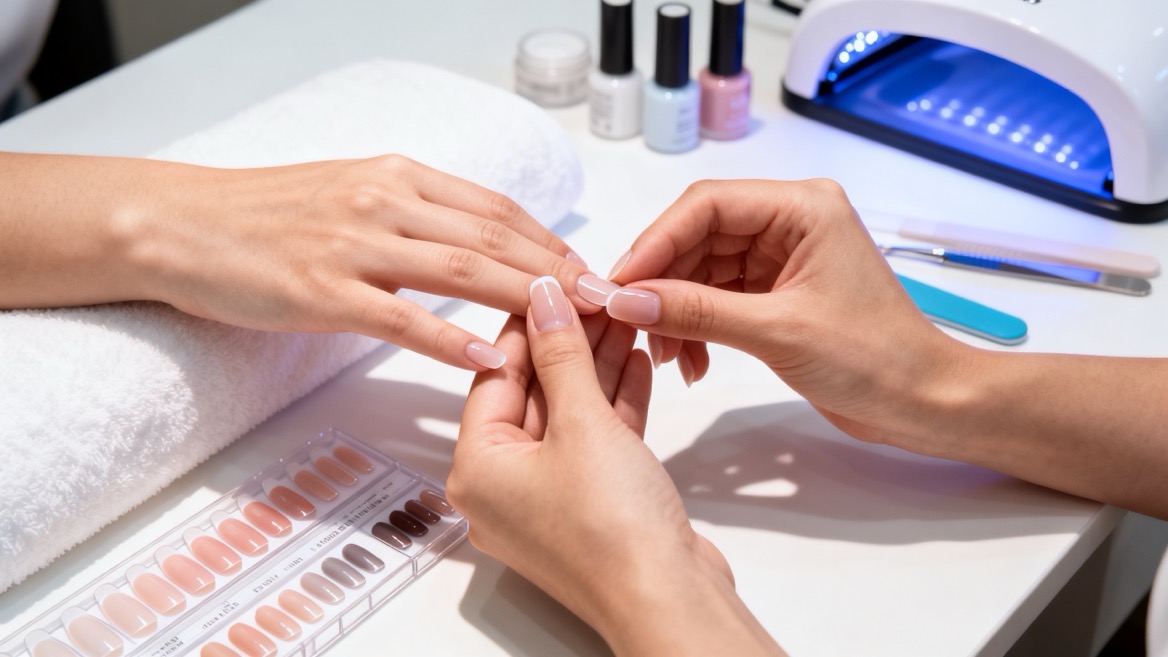
The inside of the nail tip plays a direct role in adhesion performance.
Pre-etched tips have a lightly roughened inner surface. This texture can improve mechanical grip when used with compatible gel adhesives or nail glue. They are convenient because the user does not need to manually file the contact area before application.
For professional and consumer products, pre-etching can improve convenience, reduce application time, and create a more consistent experience. However, the treatment must be durable enough to survive handling, packaging, and cleaning instructions.
Smooth inner surfaces may be appropriate for products intended for adhesive tabs, removable wear, or specific glue formulas. They can also offer a cleaner finish for certain manufacturing processes.
However, a smooth surface generally requires more attention to adhesive selection and nail preparation. If a tip is intended for long wear with gel adhesive, the product instructions should clearly state whether users need to etch or lightly buff the inner contact area.
Brands should avoid vague claims such as "no prep needed" unless the system has been thoroughly tested. Clear directions are more valuable than exaggerated promises.
A good instruction card should explain:
- Which adhesive types are compatible
- Whether the natural nail needs light buffing
- Whether the inner tip surface is pre-etched
- How long to press or cure
- Whether adhesive tabs are intended for temporary wear only
- How to remove the product without force
Removal expectations should match the product type.
Soft gel extension systems are commonly positioned as professional services that may be removed through controlled filing and soak-off procedures. ABS full-cover tips, especially those used as press-on nails, may be designed for short-term wear, reusable wear, or a longer-lasting glue-on application.
A brand should decide early which promise it wants to make:
| Product Position | Typical Wear Expectation | Recommended Attachment |
|---|---|---|
| Temporary fashion press-ons | One day to several days | Adhesive tabs |
| Everyday press-on nail kits | Several days to around one week | Nail glue or tabs |
| Premium reusable press-ons | Multiple uses with careful removal | Adhesive tabs or controlled glue use |
| Professional extensions | Multi-week salon wear | Compatible gel adhesive and full curing |
| Nail art practice tips | Display or training use | Stand, putty, or temporary adhesive |
A reusable press-on nail should not be marketed in the same way as a salon-cured extension. The user journey is different, the safety guidance is different, and the expected aftercare is different.
Artificial nail systems should be developed with consumer safety, accurate labeling, and practical instructions in mind. Adhesives and uncured gel products require particular care because contact with skin can contribute to irritation or sensitization in susceptible users.
Industry and dermatology sources note that acrylate-based materials may be associated with allergic contact dermatitis, especially when uncured material contacts the skin or products are not fully cured. Cyanoacrylate-based nail glues can also cause adverse reactions in some users. This does not mean all users will have problems, but it does mean that brands should design products and instructions responsibly.
For a well-developed nail kit, include guidance such as:
- Avoid contact between adhesive and skin.
- Do not apply to irritated, damaged, or infected nails.
- Stop using the product if redness, itching, burning, swelling, or discomfort occurs.
- Follow the curing time specified for gel systems.
- Do not use a damaged lamp or an unverified lamp for a lamp-cured system.
- Keep adhesive away from eyes, mouth, and children.
- Remove nails gently; never force or tear them off.
- Seek medical advice for persistent or severe reactions.
For B2B buyers, responsible manufacturing also means discussing ingredient documentation, packaging warnings, market-specific labeling, stability testing, quality inspection, and compliance needs before mass production.
Before sourcing soft gel tips, ABS tips, or custom press-on nails, answer these questions:
1. Who is the end user?
Professional nail technicians, salon clients, beauty retailers, online shoppers, or teenagers will have different needs.
2. What is the application method?
Gel adhesive, nail glue, adhesive tabs, or a multi-option kit?
3. What wear duration are you promising?
One-night fashion wear, one-week convenience, multi-use press-ons, or salon-level extensions?
4. What nail shapes will you offer?
Almond, coffin, square, oval, stiletto, squoval, short round, or custom profiles?
5. What fit range do customers need?
Consider wide thumbs, petite nails, flatter nail beds, and highly curved nails.
6. What level of customization is required?
Custom color, French tips, chrome, 3D decoration, hand-painted designs, logo printing, branded packaging, glue, tabs, tools, or instruction cards?
7. What quality standard will define your brand?
Surface smoothness, color consistency, decoration adhesion, anti-scratch top coat, packaging durability, and batch consistency should all be specified.
The difference between a successful nail collection and a product that generates complaints often comes down to development detail. The right manufacturer can help you translate a trend idea into a product with proper fit, stable quality, retail-ready packaging, and a realistic user experience.
Dongguan YoungMei Technology Co., Ltd. provides OEM/ODM manufacturing support for global nail brands, wholesalers, and retailers. With more than 15 years of industry experience, our team supports product development from concept to shipment, including:
- Custom press-on nail design and production
- Soft gel-style and ABS full-cover nail tip solutions
- Nail sticker and nail accessory development
- Fast sampling for new collections
- Customized shapes, lengths, sizes, finishes, and artwork
- Private-label packaging and branded kits
- Quality-control support and stable supply-chain coordination
- One-stop sourcing for nail products and accessories
Whether you are building a premium reusable press-on nail line, a professional full-cover tip system, or a high-volume retail collection, we can help you create a product that fits your market—not just a generic catalog design.
Contact Dongguan YoungMei Technology Co., Ltd. today to discuss your OEM/ODM nail product project, request samples, and develop a full-cover nail collection tailored to your brand.
Not necessarily. Soft gel tips are often preferred for lamp-cured extension systems and fast salon application. ABS plastic tips are highly versatile and can work well for press-on nails, glue-on nails, nail art tips, overlays, and customized retail kits. The better choice depends on the intended application, fit profile, adhesive system, and customer expectations.
Some soft gel-style tips may adhere temporarily with nail glue, but performance can vary based on the tip material, inner-surface texture, nail curvature, and glue formula. For a product line, it is best to test the exact tip and adhesive combination before making wear-time claims.
Common causes include incorrect sizing, poor natural nail preparation, oil or moisture on the nail plate, air bubbles, an unsuitable adhesive, incomplete curing, or a curvature mismatch between the tip and the natural nail. A properly fitted tip should cover the nail from sidewall to sidewall without pressing into the skin.
Yes. Pre-etched tips can reduce preparation steps because the inner contact area has already been textured to help adhesion. They are especially useful for professional gel-tip systems and consumer products that prioritize convenient application. Users should still follow the specific preparation and adhesive instructions for the product.
Many ABS press-on nails can be reused if they are removed carefully, cleaned properly, and remain undamaged. Reusability depends on the thickness of the tip, the decoration method, the adhesive used, and the removal technique. Adhesive tabs generally make reuse easier than strong glue applications.
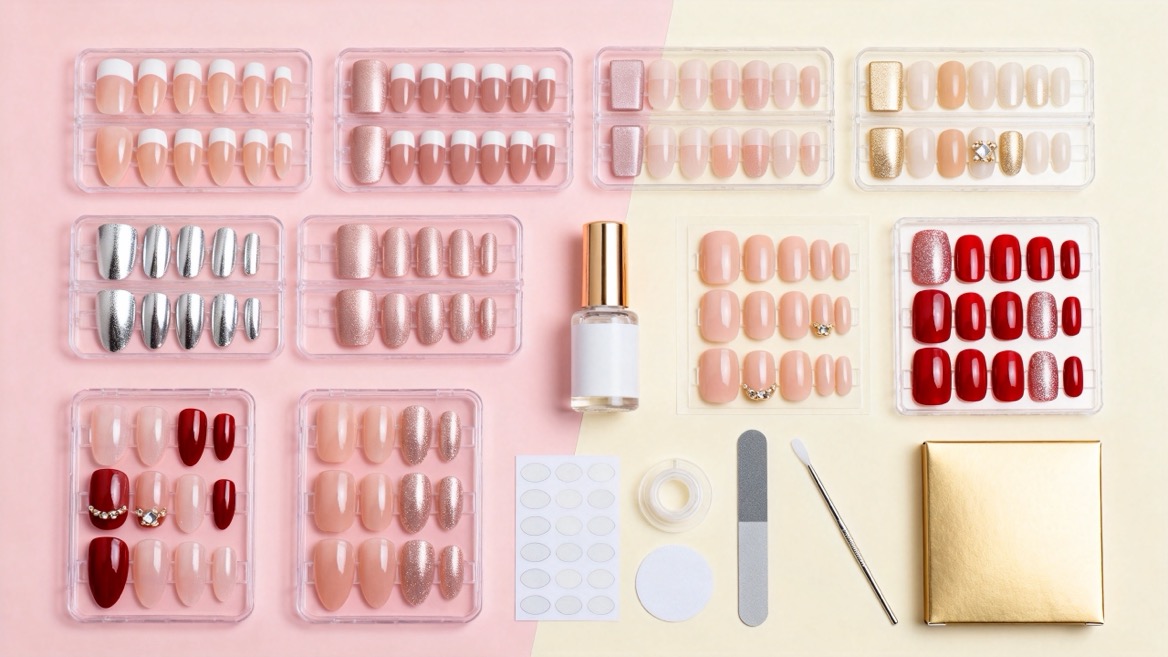
A complete kit may include press-on nails in multiple sizes, nail glue, adhesive tabs, a mini nail file, a cuticle stick, a prep pad, an instruction card, and branded outer packaging. The ideal contents depend on the target price point, retail channel, and intended wear duration.
Provide your preferred nail shape, length, material direction, color or artwork, finish, quantity, packaging concept, accessory requirements, target market, and preferred delivery schedule. If possible, share reference photos, Pantone colors, artwork files, and examples of competitor products you want to improve upon.
1. [Paola Ponce Nails — Difference Between Soft Gel & Plastic Full Coverage Tips]
2. [U.S. Food and Drug Administration — Allergens in Cosmetics]
3. [American Academy of Dermatology — Gel Manicures: Tips for Healthy Nails]
5. [National Library of Medicine — Exposure to Nail and False Eyelash Glue: A Case Series Study]