
- All
- Product Name
- Product Keyword
- Product Model
- Product Summary
- Product Description
- Multi Field Search
English
Views: 238 Author: Young Mei Publish Time: 09-17-2026 Origin: Site


Content Menu
● Press-On Nails vs. Fake Nails: Quick Comparison
● Application Process: Convenience vs. Professional Technique
>> How Press-On Nails Are Applied
>> How Traditional Fake Nails Are Applied
>> How Long Do Press-On Nails Last?
>> How Long Do Fake Nails Last?
● Customization: Where Press-On Nails Win
● Nail Health and Safer Product Use
>> Practical Nail-Care Guidance
● Cost Comparison for Consumers and Retailers
● A Product Developer's View: Fit Is the Hidden Quality Factor
● How Brands Should Choose Between Press-On Nails and Fake Nails
● Why Private-Label Press-On Nails Need Strong Manufacturing Support
● Build Your Next Press-On Nail Collection
>> Are press-on nails considered fake nails?
>> Are press-on nails better than acrylic nails?
>> Do press-on nails damage natural nails?
>> How long do press-on nails last with nail glue?
>> Can press-on nails be reused?
>> What should a private-label press-on nail kit include?
>> What is the best press-on nail shape for everyday wear?
Press-on nails and fake nails are often discussed as if they are the same product, but they serve different consumer needs, require different application methods, and create very different business opportunities for beauty brands. For retailers, salon chains, wholesalers, and private-label buyers, understanding the difference is essential for building a profitable, reliable, and consumer-friendly nail collection.
At Dongguan YoungMei Technology Co., Ltd., we have spent more than 15 years developing and manufacturing wearable nail products, including custom press-on nails, nail stickers, and related manicure accessories. From a product-development perspective, the best choice is rarely about which option is "better" in every situation. It is about matching the product format, finish, wear time, price point, and target customer to the right market position.
This guide compares press-on nails vs. fake nails in detail, covering application, durability, customization, nail comfort, safety considerations, cost, retail strategy, and private-label sourcing decisions.

Press-on nails are pre-made artificial nails designed to be attached directly to natural nails. They are usually sold as complete sets in multiple sizes, shapes, lengths, colors, and designs.
Depending on the product concept, consumers can apply them with:
- Nail glue
- Adhesive tabs
- Pre-glued backing
- Reusable adhesive systems
A press-on nail set is designed for convenience. The wearer selects the correct nail sizes, prepares the natural nails, applies adhesive, and presses each nail into place. A full manicure can often be completed at home in a relatively short time.
Modern press-on nails are no longer limited to simple plastic tips. Higher-quality collections can include:
- French-tip press-on nails
- Chrome press-on nails
- Cat-eye press-on nails
- Ombre press-on nails
- 3D charm press-on nails
- Short square press-on nails
- Almond-shaped press-on nails
- Extra-long coffin press-on nails
- Custom logo press-on nail sets
For brands, the major attraction is flexibility. A single collection can offer many designs without requiring a salon appointment, technician skill, or liquid-and-powder application system.
The phrase fake nails is broad. It can describe almost any artificial nail enhancement, including press-on nails. However, in everyday consumer language, fake nails often refer to longer-wear nail extensions such as acrylic nails, gel extensions, sculpted nails, and salon-applied artificial nail systems.
This distinction matters.
Acrylic and gel-based nail enhancements are generally created or applied through a more technical process. The natural nail may be filed, prepared, and covered with layers of product. In many cases, the process involves professional tools, curing lamps, liquid monomers, powders, gels, forms, or extension tips.
Common products included under the "fake nails" category include:
- Acrylic nail extensions
- Builder-gel extensions
- Gel nail tips
- Salon-applied false nails
- Sculpted artificial nails
- Full-cover gel extensions
- Decorative artificial nail tips
Because "fake nails" is an umbrella term, brands should use product names carefully. A product listing titled "fake nails" may attract broad search interest, but the product description should clearly state whether it is a glue-on press-on nail set, acrylic extension, gel nail tip, or another type of artificial nail product.
| Feature | Press-On Nails | Traditional Fake Nails |
|---|---|---|
| Main format | Pre-made, ready-to-wear nail set | Broad category including acrylic, gel, and salon extensions |
| Application | Usually home application with glue or tabs | Often salon-based or requires more technical application |
| Application time | Usually fast | Often longer |
| Wear duration | Short-term to medium-term, depending on adhesive and use | Often longer-term with regular maintenance |
| Design changes | Easy to change frequently | Usually requires removal or a salon visit |
| Customization | High design variety before purchase | High artistic flexibility during salon service |
| Upfront cost | Usually lower | Usually higher |
| Maintenance | Minimal for short wear | Fill-ins, repairs, or professional removal may be needed |
| Best for | DIY users, trend-driven buyers, gifting, travel, retail | Consumers seeking a longer-wear enhancement |
| Brand opportunity | Strong for private label, collections, seasonal launches | Strong for salons and professional product systems |
The most important point is simple: press-on nails are a specific, convenient product category, while fake nails are a broader term that may include press-ons, acrylic nails, gel nails, and other artificial nail options.
One reason press-on nails continue to attract consumers is that they simplify the manicure routine. A typical application process includes:
1. Select the correct nail size for each finger.
2. Clean natural nails to remove oil, lotion, and moisture.
3. Gently push back cuticles if needed.
4. Lightly buff only when product instructions recommend it.
5. Apply an adhesive tab or a controlled amount of nail glue.
6. Align the press-on nail near the cuticle.
7. Press firmly for several seconds.
8. Avoid water exposure immediately after application if advised by the adhesive instructions.
For a brand, application instructions are not a minor packaging detail. They directly affect customer satisfaction, wear time, returns, reviews, and repeat purchase rates.
A well-designed press-on nail kit should include clear instructions, properly sized nail pieces, an adhesive solution, a mini nail file, a cuticle stick, and removal guidance. Premium sets may also include alcohol wipes, spare nails, glue stickers, or decorative accessories.
Traditional fake nails can involve a more complex process. Acrylic nails, for example, may require product mixing, shaping, filing, curing, or professional finishing. Gel extensions can require nail preparation, bonding products, lamps, gel layers, and controlled removal.
This process can create a more durable result, but it also demands more time and technical knowledge.
From a customer-experience standpoint, traditional fake nails are often selected by consumers who want:
- A long-lasting manicure
- A salon-finished appearance
- Customized nail art created by a technician
- Nail length or structure beyond their natural nail shape
- Ongoing maintenance and fill-in services
For many consumers, the question is not whether they like press-on nails or acrylic nails more. The real question is whether they need a fast, flexible manicure or a longer-wear salon enhancement.
Wear time depends on several variables:
- Adhesive type
- Nail preparation
- Nail size accuracy
- Daily activity level
- Exposure to water, oils, heat, and chemicals
- Nail length and shape
- Application technique
Adhesive tabs are usually suited to temporary wear, events, photo shoots, travel, or customers who want easy removal. Nail glue generally provides a stronger hold but requires more careful removal.
A high-quality press-on nail set can offer attractive wear performance when the nails fit properly and the user follows instructions. However, brands should avoid making unrealistic durability claims. Consumers use their hands differently. A customer working at a keyboard may experience a different result from someone who frequently washes dishes, handles packages, works in healthcare, or performs manual labor.
Acrylic and gel extensions can last longer than a typical press-on manicure. However, long wear does not mean zero maintenance. As natural nails grow, a visible gap can appear near the cuticle. Many artificial nail systems require periodic maintenance, fills, repairs, or removal.
The American Academy of Dermatology notes that artificial nails may require touch-ups every two to three weeks as the natural nail grows, and repeated maintenance can contribute to nail dryness, brittleness, or thinning when not managed carefully.
For consumers who want a manicure for a wedding weekend, vacation, influencer campaign, or retail impulse purchase, press-on nails may be the more practical choice. For consumers who want continuous extensions for several weeks, salon-applied systems may be more suitable.
Customization is one of the strongest advantages of press-on nails.
In a salon, a customer may choose a color, shape, and nail-art design during an appointment. With press-on nails, a beauty brand can offer dozens or hundreds of ready-to-buy style options across multiple collections.
This creates a powerful retail advantage.
A brand can organize press-on nail collections by:
- Season
- Color family
- Nail shape
- Occasion
- Fashion trend
- Age group
- Price tier
- Region-specific preferences
- Collaboration theme
For example, a brand may launch:
- Neutral office nail sets for professional buyers
- Valentine's Day heart-themed press-on nails
- Summer vacation tropical designs
- Bridal French-tip nail collections
- Halloween 3D nail art sets
- Holiday glitter and metallic nail sets
- Short wearable nails for everyday use
- Luxury hand-painted press-on nail collections
For private-label buyers, this means the product is not only a nail accessory. It becomes a fast-moving fashion category.
At YoungMei, custom press-on nail development can include shape selection, length adjustment, color matching, graphic design, finish development, 3D decorations, packaging design, logo application, and kit configuration. This gives wholesalers and brands more control over their market position.
Neither press-on nails nor traditional fake nails should be treated as risk-free. Product quality, adhesive formulation, proper application, proper removal, and consumer behavior all matter.
Artificial nail systems may contain acrylic polymers, adhesives, and other materials that can cause irritation or allergic reactions in sensitive individuals. The U.S. Food and Drug Administration notes that reactive monomers in artificial nail products can cause adverse reactions such as redness, swelling, and nail-bed pain in people who become sensitive to methacrylates.
Consumers can reduce avoidable damage by following responsible use practices:
- Do not apply artificial nails over irritated, injured, infected, or damaged nails.
- Avoid aggressively peeling off press-on nails.
- Use the recommended removal method.
- Do not over-file the natural nail surface.
- Keep adhesives away from surrounding skin.
- Stop using a product if redness, swelling, itching, pain, or nail discoloration occurs.
- Allow natural nails time to recover if they become dry, brittle, or weak.
- Keep products and nail glue away from children.
A major issue is not necessarily the press-on nail itself. It is often incorrect application or forced removal. Pulling off a strongly bonded nail can remove layers of the natural nail plate. Excess glue can also create unnecessary product contact with the skin.
For brands, clear safety guidance is a sign of product responsibility. It also reduces complaints and helps customers use products more confidently.
Press-on nails generally offer a lower upfront cost than salon enhancements. Consumers can purchase a complete look, apply it at home, and change styles without booking an appointment.
Traditional fake nails can cost more because the service may include:
- Salon labor
- Application products
- Nail art
- Removal
- Repairs
- Fill-ins
- Tips or extensions
- Ongoing appointments
This cost difference is one reason press-on nails are attractive to students, trend-focused shoppers, travelers, gift buyers, and consumers who want variety without a long-term commitment.
For brands and retailers, press-on nails can create a flexible product model. They are suitable for:
- E-commerce stores
- Beauty supply stores
- Drugstores
- Fashion retailers
- Subscription boxes
- Gift shops
- Social-commerce campaigns
- Influencer collaborations
- Private-label beauty brands
A strong press-on nail assortment can combine affordable entry products with premium sets. This creates opportunities for tiered pricing, bundle offers, seasonal releases, and higher-margin packaging upgrades.
Many brands focus heavily on nail art, but fit is often the real driver of customer satisfaction.
A beautiful press-on nail design can still receive poor reviews if the sizes do not suit the target market. When a nail is too narrow, it may leave exposed edges. When it is too wide, it may press against the skin or look unnatural. When the curvature does not match the user's nail bed, adhesion may be less reliable.
This is why serious product development should consider:
- Nail width range
- Curvature profile
- Thickness balance
- Apex and structure
- Cuticle-line shape
- Sidewall comfort
- Length practicality
- Surface finish
- Adhesive compatibility
- Spare nail quantity
For a global brand, it is often beneficial to test size assortments with real users in the target market before placing large-scale orders. A U.S. customer base, European retail chain, Japanese beauty audience, and Middle Eastern fashion market may have different preferences for shape, length, decoration level, and packaging style.
The best product strategy depends on your target customer, sales channel, budget, and brand promise.
| Business Goal | Recommended Direction |
|---|---|
| Launch a fast, trend-led beauty collection | Press-on nails |
| Sell seasonal and holiday beauty products | Press-on nails |
| Build an accessible at-home manicure brand | Press-on nails |
| Offer a premium salon-service system | Acrylic or gel-based fake nails |
| Create products for frequent style changes | Press-on nails |
| Develop professional-use nail enhancement supplies | Traditional fake nail systems |
| Sell giftable beauty products | Press-on nails |
| Build recurring salon maintenance revenue | Acrylic or gel extensions |
For most retail and private-label brands, press-on nails provide a particularly attractive balance of design freedom, convenience, manageable pricing, and rapid product refresh cycles.
A press-on nail brand succeeds when design creativity is supported by reliable production.
A professional manufacturing partner should be able to support:
- OEM and ODM customization
- Fast sample development
- Multiple nail shapes and lengths
- Color and design matching
- Custom packaging
- Logo printing
- Adhesive and accessory selection
- Consistent quality control
- Flexible order planning
- Stable supply-chain coordination
- Export-ready packaging support
At Dongguan YoungMei Technology Co., Ltd., our role is not limited to producing nail sets. We help brand owners turn a concept into a market-ready collection. Whether you need minimalist short nails for a pharmacy channel, luxury 3D nails for online beauty buyers, or custom nail stickers for a seasonal campaign, the development process should begin with your customer profile and commercial goals.
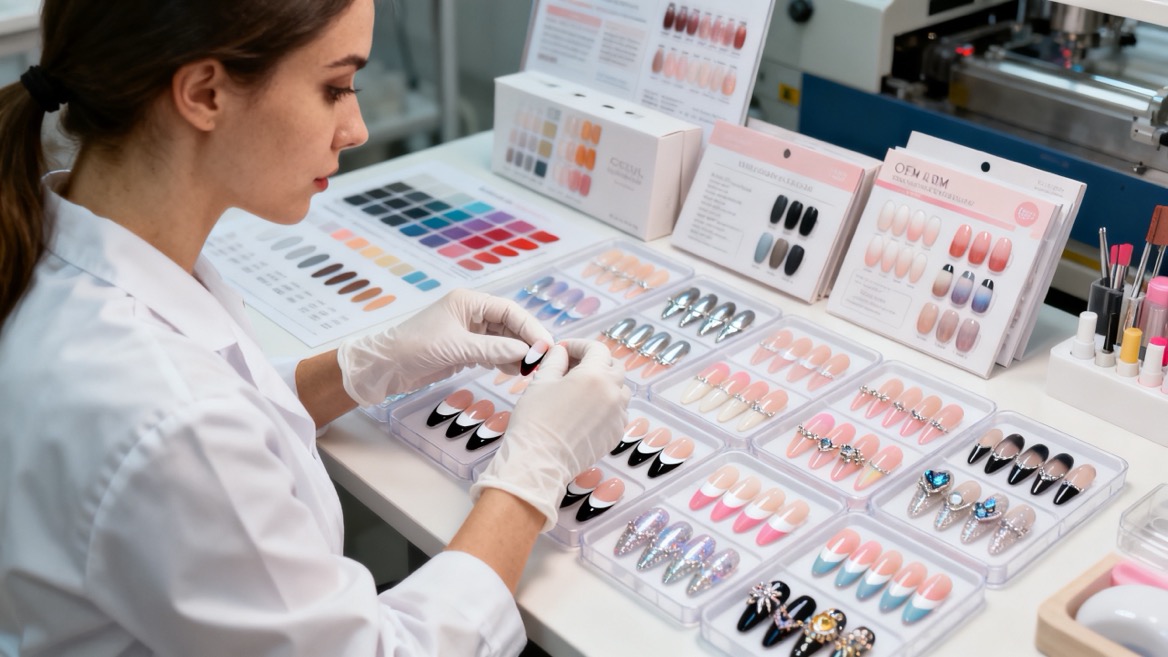
Press-on nails are not simply a temporary alternative to salon nails. They are a scalable, customizable, retail-ready beauty category with strong potential for private-label brands, distributors, and fashion-led retailers.
If you are developing a custom press-on nail line, nail sticker collection, or complete private-label manicure range, Dongguan YoungMei Technology Co., Ltd. can support your project from concept development and fast sampling to production, packaging, and one-stop sourcing.
Contact our team to discuss your target market, preferred nail styles, packaging requirements, and OEM/ODM project goals.
Yes. Press-on nails are a type of fake nail because they are artificial nails applied over natural nails. However, "fake nails" is a broad term that can also include acrylic nails, gel extensions, sculpted nails, and salon-applied artificial nail systems.
They are better for different needs. Press-on nails are usually better for convenience, quick design changes, home application, and lower upfront cost. Acrylic nails may be better for consumers who want a longer-wear enhancement and are willing to maintain it.
Press-on nails can be used with less stress on natural nails when they fit properly, are applied carefully, and are removed gently. Damage is more likely when users over-file the nail surface, use too much adhesive, force nails off, or repeatedly apply sets without allowing time for nail recovery.
Wear time varies by adhesive, nail preparation, fit, daily activities, and water exposure. Glue-on press-on nails generally last longer than adhesive-tab applications, but brands should provide realistic instructions rather than promise identical results for every user.
Some press-on nails can be reused if they are removed carefully, cleaned properly, and remain in good condition. Reusability depends on the nail material, the adhesive used, whether the nails bend or crack during removal, and the amount of glue residue left on the underside.
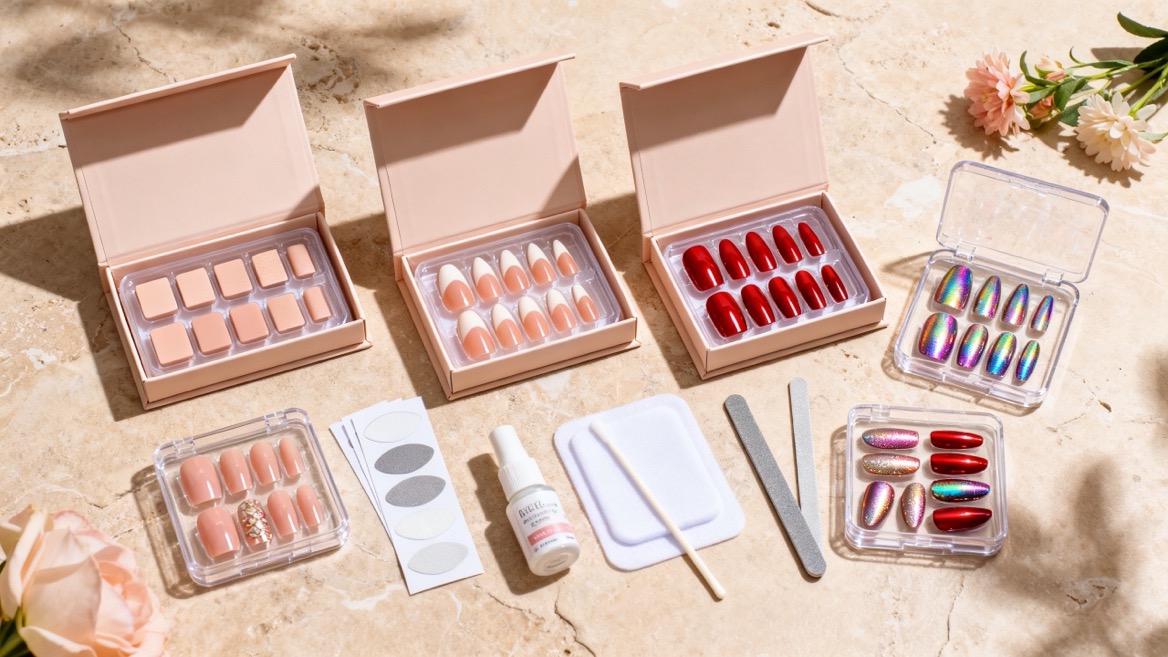
A complete kit commonly includes assorted nail sizes, nail glue or adhesive tabs, a mini nail file, a cuticle stick, and application and removal instructions. Premium kits may include alcohol wipes, spare nails, additional adhesive tabs, or upgraded gift-style packaging.
Short square, short oval, and short almond shapes are often practical for everyday use because they are less likely to interfere with typing, household tasks, and active routines. The best shape also depends on the wearer's natural nail bed and personal style.
1. [American Academy of Dermatology: Artificial Nails—Dermatologists' Tips for Reducing Nail Damage]
2. [U.S. Food and Drug Administration: Nail Care Products]
3. [U.S. Centers for Disease Control and Prevention: Nail Salons—Control of Ethyl Methacrylate Exposures]
4. [Cleveland Clinic: Potential Risks of Using Press-On Nails]
5. [Grand View Research: Press-On Nails Market Size and Share Report]
6. [Missgel: Press-On Nails vs. Fake Nails—A Comprehensive Comparison]