
- All
- Product Name
- Product Keyword
- Product Model
- Product Summary
- Product Description
- Multi Field Search
English
Views: 219 Author: Young Mei Publish Time: 10-23-2026 Origin: Site


Content Menu
● 1. Choose an Independent Nail Tech Business Model
● 2. Confirm Nail Business Licenses, Registration, and Insurance
>> Check Your Location Before Signing a Lease
>> Match Insurance to Your Actual Activities
● 3. Price Nail Services Around Profit, Not Competitors
>> Calculate the Full Appointment Cost
● 4. Set Up Booking, Payments, and Client Policies
>> Make Policies Visible Before Payment
● 5. Separate Business Finances and Prepare for Taxes
>> Estimate Taxes From Your Circumstances
● 6. Make Safety Part of the Client Experience
>> Address Ventilation and Exposure
>> Use a Consistent Consultation
● 7. Build Repeat Bookings Through a Recognizable Specialty
>> Make Your Portfolio Helpful
>> Turn Satisfaction Into Measurable Referrals
● 8. Add Press-On Nails and Nail Stickers Strategically
>> Test a Small Collection First
>> Evaluate Manufacturing Beyond Unit Price
● 9. Use a 30-Day Independent Nail Tech Launch Plan
>> Week 2: Build the Operating System
>> Week 3: Test the Experience
● Build a Business That Supports Your Craft
>> How much does it cost to become an independent nail tech?
>> Can I run a nail business from home?
>> Do I need a website before accepting clients?
>> How can I attract clients without competing on price?
>> Should an independent nail tech sell private-label press-on nails?
>> What should I ask an OEM/ODM nail manufacturer?
Becoming an independent nail tech takes more than beautiful manicures. To build a sustainable business, you need clear pricing, reliable booking, safe working practices, and a reason clients return. You also need to understand what remains after supplies, rent, administrative work, and taxes.
At Dongguan YoungMei Technology Co., Ltd., our perspective comes from nail product manufacturing. With more than 15 years of experience in press-on nails, nail stickers, and related products, we approach business growth through repeatable quality, practical product choices, and dependable supply.
This guide combines that perspective with an actionable framework for starting a nail business. The legal and tax sections focus on the United States; requirements elsewhere differ.
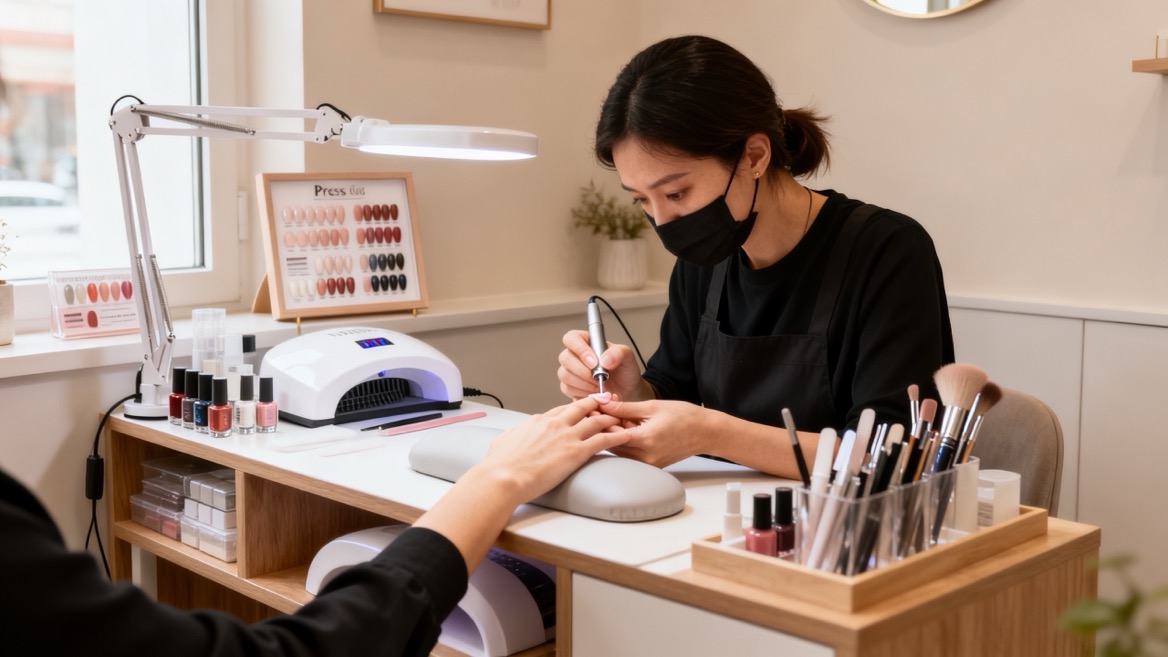
Before renting a space, decide how you will serve clients and what your business must earn.
| Business model | Main advantage | What to check first |
|---|---|---|
| Salon booth rental | Access to an established environment | Lease terms, permitted services, client ownership |
| Private salon suite | Greater control over the experience | Total occupancy costs and establishment requirements |
| Home-based studio | Potentially lower premises costs | Zoning, licensing, insurance, and client access |
| Mobile nail services | Convenient appointments for clients | Local permission, travel time, and sanitation logistics |
| Services plus product retail | Income beyond appointments | Inventory costs, product responsibilities, and demand |
Choose the smallest workable setup rather than the most impressive one.
A useful starting question is: "How many appointments can I realistically complete without rushing, and what must each appointment contribute?"
That answer should guide your rent budget—not the other way around.
A professional nail technician license and permission to operate a business are different matters. Do not assume one automatically covers the other.
Contact the relevant licensing board and local authorities to establish whether your proposed setup requires:
- An individual professional license.
- A salon or establishment license.
- Business registration or a trade-name filing.
- Local operating permits or zoning approval.
- Specific permission for home-based or mobile services.
Requirements depend on your location, services, and business structure. Confirm them before paying a deposit or advertising appointments.
Discuss your services with a licensed insurance agent. Ask about general liability, professional liability, equipment, and any product-related coverage needed if you sell branded nail products.
Do not assume a landlord's policy protects your work.
Compare exclusions, deductibles, and coverage limits—not just annual premiums. Revisit coverage when you add services, staff, retail products, or another location.
Copying nearby salons can leave you busy but underpaid. Their rent, speed, staffing, and purchasing costs may differ substantially from yours.
Start with profitability: every service should help cover operating costs and compensate you for the time it consumes.
Include consultation, preparation, removal, application, photography, cleaning, and payment administration.
The following example is illustrative, not an industry benchmark:
| Pricing component | Illustrative amount |
|---|---|
| Materials and disposables | $8 |
| Allocated overhead | $12 |
| Owner compensation: 90 minutes at $24 per hour | $36 |
| Total before payment fees and operating cushion | $56 |
A $60 appointment would leave only $4 before payment fees and an additional operating cushion. That does not make $60 universally wrong; it shows why pricing needs a calculation.
Separate your base service from time-intensive extras:
- Removal of another technician's work.
- Repairs or additional length.
- Detailed hand-painted designs.
- Extended consultations or complex customization.
Explain inclusions before the appointment. Clear pricing protects both your schedule and the client's expectations.
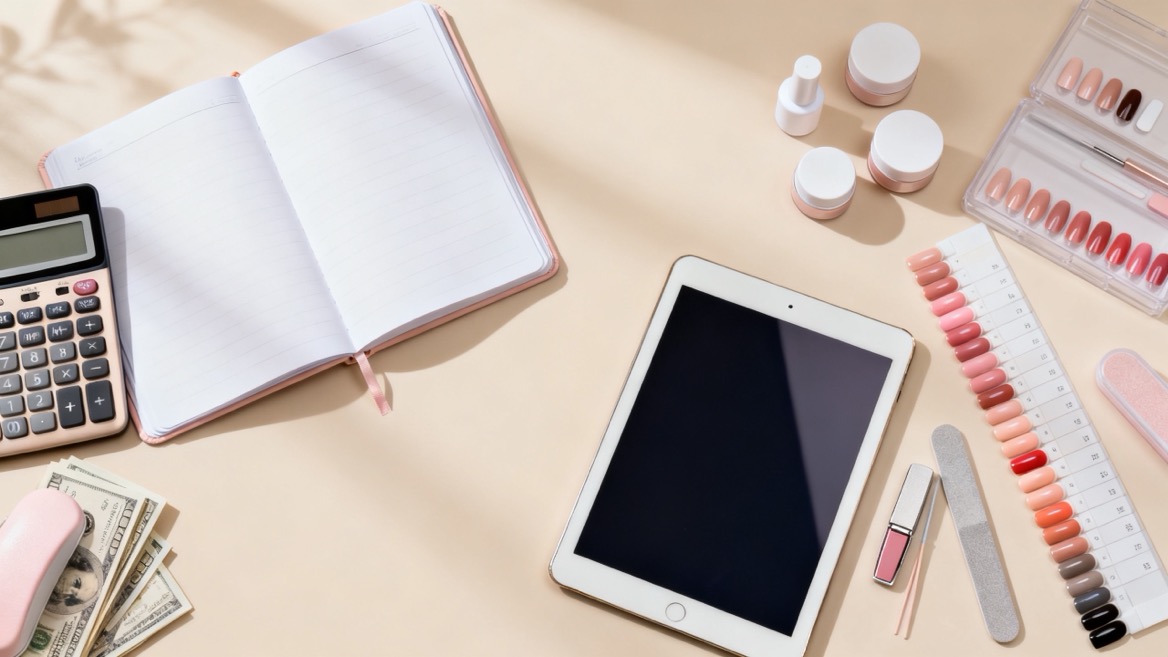
Your booking process should answer the questions clients would otherwise message you about.
Include service descriptions, prices, expected duration, location details, preparation instructions, and policies.
Compare booking and payment systems using practical questions:
- Can clients select services and approved add-ons?
- Are automated reminders available?
- Can you collect deposits where appropriate?
- Can you export appointment and financial records?
- What are the subscription, processing, and cancellation costs?
Check current terms directly. A platform described as free in an older article may now have different features or fees.
Explain lateness, cancellations, deposits, repairs, and refunds in plain language. Ensure policies comply with applicable consumer rules.
Avoid hiding important conditions in a social media highlight. Clients should see and accept relevant terms during booking.
Keep payment records, policy acceptance, and appointment notes organized so that misunderstandings are easier to resolve.
Open an appropriate business account when you begin receiving or spending business money. Even for a small operation, separation makes bookkeeping more manageable.
Record income, tips, refunds, fees, rent, supplies, insurance, and software costs. Reconcile transactions regularly rather than waiting until filing season.
Save invoices, receipts, payment confirmations, and records explaining business purchases.
Do not treat a small receipt amount as a universal exemption from documentation. Recordkeeping requirements depend on the expense and circumstances.
For business travel, maintain an appropriate mileage log. Ordinary commuting and qualifying business travel receive different tax treatment.
In the United States, individuals generally need estimated payments if they expect to owe $1,000 or more when filing, subject to applicable rules.
A blanket instruction to set aside 25% of revenue is not a personalized tax calculation. Your profit, other income, deductions, credits, and state obligations matter.
Use a qualified tax professional to establish your approach.
A polished studio is not necessarily a safe studio. Build documented routines for cleaning, disinfection, product handling, and waste disposal according to applicable requirements.
Keep product labels and relevant safety information accessible.
Nail work can involve chemical vapors, dust, and skin exposure. Appropriate ventilation and safe handling practices help reduce exposure.
General room ventilation and local exhaust at the workstation serve different purposes. Assess your setup rather than assuming an open window solves every problem.
Follow product instructions and avoid unnecessary skin contact.
Ask about previous product reactions and relevant concerns before beginning. Explain maintenance and removal clearly.
If a client presents a condition outside your training or permitted scope, do not diagnose it or conceal it beneath a service. Refer them to an appropriate professional.
A consistent consultation is more useful than an improvised disclaimer after something goes wrong.
"High-quality nails" is too broad to explain why someone should choose you.
Define a more specific proposition: detailed minimalist art, occasion-focused designs, or coordinated salon and take-home collections.
Show the work that supports that position.
Alongside attractive photographs, explain:
- The service or product shown.
- The shape, length, and design details.
- The appointment time clients should allow.
- Maintenance expectations.
- Relevant limitations.
Use accurate descriptions and obtain permission before publishing client images.
Offer clients an easy booking link and a simple referral mechanism.
A complimentary design detail may fit your business better than a large discount. Test the economics first.
Track completed referral appointments rather than counting cards distributed. Ask clients for honest reviews without requiring positive wording or inventing testimonials.
Retail can complement appointment income, but inventory is not automatically profit.
Press-on nails may suit clients seeking an alternative between appointments or a coordinated look for an event. Nail stickers can support take-home styling or selected service designs.
Begin with the needs clients already express.
Launch a limited selection with clear sizing, application, care, and removal instructions.
Evaluate:
- Which designs actually sell.
- Common sizing questions.
- Packaging damage or missing components.
- Returns and complaints.
- Margin after shipping, fees, and unsold stock.
Avoid making unsupported wear-time or safety promises. Claims should match the specific product and supporting evidence.
From a manufacturing perspective, an attractive sample is only the beginning. Buyers also need a clear specification that can guide repeat production.
Ask potential suppliers about:
1. Material, dimensions, curvature, and finish.
2. Sample approval and production tolerances.
3. Inspection procedures and defect handling.
4. Minimum quantities, lead times, and reorder terms.
5. Packaging, labeling, and destination-market documentation.
OEM projects generally produce to buyer-defined specifications; ODM projects typically adapt supplier-developed designs. Confirm the actual arrangement, ownership, and responsibilities in writing.
Dongguan YoungMei Technology Co., Ltd. offers OEM/ODM customization, sampling, and one-stop sourcing through its factory and supply chain. Project-specific specifications and timelines should be confirmed before ordering.
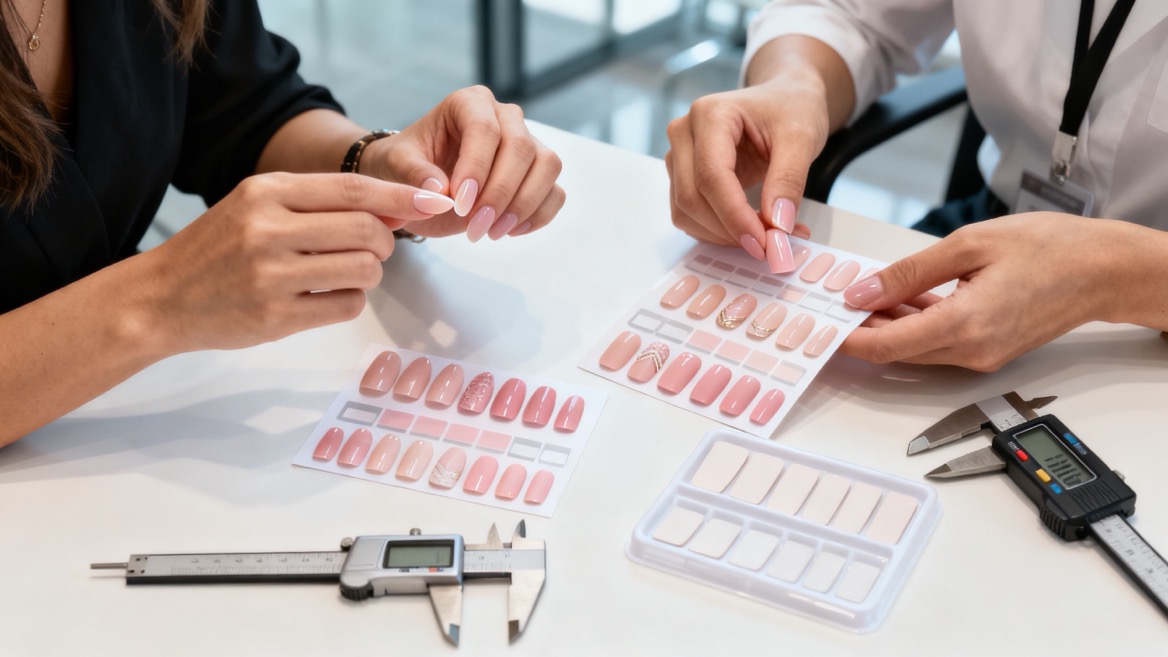
Turn the business framework into manageable weekly tasks.
Choose your business model. Confirm permissions, investigate insurance, and estimate startup spending and monthly costs.
Do not commit to premises until you understand whether your intended activities are permitted.
Finalize a focused service menu. Set up booking, payment processing, policies, financial records, and safety procedures.
Walk through the booking process as a first-time client and fix confusing steps.
Run a small, controlled appointment schedule. Record actual service duration, product consumption, and recurring client questions.
Adjust timing and descriptions before increasing availability.
Assess revenue, expenses, completed appointments, cancellations, and rebookings.
Identify one bottleneck to improve next month. A narrower menu, better appointment spacing, or clearer preparation instructions may be more useful than immediately spending more on promotion.
A sustainable independent nail business connects creative skill with disciplined operations. Start with a workable setup, price your time realistically, and improve systems using actual results.
If branded products fit your next stage, contact Dongguan YoungMei Technology Co., Ltd. with your target market, product type, design direction, packaging needs, estimated quantity, and launch schedule. Request a tailored OEM/ODM proposal and samples before approving production.
There is no universal startup budget. Costs depend on premises, licensing, equipment, insurance, inventory, and your existing qualifications. Separate one-time purchases from recurring expenses, then estimate a cash reserve for a slower launch.
Possibly, but check professional licensing, establishment rules, zoning, insurance, and any property restrictions first. Do not assume professional certification alone authorizes a home studio.
A clear booking page can support an initial launch. A dedicated website can later organize your portfolio, service information, policies, and retail products. Prioritize an accurate, usable booking experience before building something elaborate.
Make your specialty clear, show representative work, explain the experience, and deliver consistently. Track which channels produce completed appointments and repeat clients rather than judging success by follower counts alone.
Consider it when clients show demand and you can manage sourcing, sizing, instructions, inventory, and customer support. Start with a small pilot and calculate the full margin before expanding.
Ask about specifications, sample approval, minimum quantities, inspection, packaging, lead times, and defect resolution. Confirm which testing and documentation apply to your products and destination market.
- Paola Ponce. [How to Do Business and Thrive as an Independent Nail Tech]. Original practitioner perspective covering business setup, payments, booking, financial tracking, insurance, and referrals. The page includes one brief reader comment from Daniela, dated March 3, 2023; it does not establish business outcomes. [paolaponcenails]
- U.S. Small Business Administration. [Launch Your Business]. Guidance on licensing, permits, business accounts, and launch requirements. [sba]
- U.S. Small Business Administration. [Get Business Insurance]. Guidance on assessing risks, comparing coverage, and reviewing insurance as a business changes. [legacy.sba]
- Internal Revenue Service. [Recordkeeping]. Guidance on maintaining records and supporting documents for business transactions. [irs]
- Internal Revenue Service. [Estimated Taxes]. Guidance on estimated-payment obligations and calculating expected tax. [irs]
- Occupational Safety and Health Administration. [Health Hazards in Nail Salons: Chemical Hazards]. Information on chemical exposure, ventilation, and safer work practices. [osha]
- Centers for Disease Control and Prevention, National Institute for Occupational Safety and Health. [Nail Technicians: Workplace Safety and Health]. Guidance on exposure routes, ventilation, and workplace controls. [cdc]