
- All
- Product Name
- Product Keyword
- Product Model
- Product Summary
- Product Description
- Multi Field Search
English
Views: 299 Author: Young Mei Publish Time: 11-03-2026 Origin: Site


Content Menu
● Press-On Nails vs. Traditional Fake Nails: The Main Differences
● What Makes a Nail Brand Feel Premium?
>> Product Quality Customers Can Recognize
>> Value Beyond the Purchase Price
● Where Premium Press-On Nails Have the Advantage
>> A Complete Brand Experience in One Package
>> Convenience Without Competing Only on Price
>> Repeatable Design Across Retail Channels
● Where Traditional Fake Nails Offer Stronger Premium Positioning
>> Bespoke Fit and Professional Artistry
>> An Experience Customers Intentionally Pay For
● Durability, Reusability, and Nail Care: Claims That Need Precision
>> Avoid Universal Wear-Time Promises
>> Reusable Does Not Mean Indefinitely Reusable
>> Neither Category Is Automatically Damage-Free
● An Industry Example: Premium Positioning Through Specific Features
● A Practical Premium Positioning Scorecard
● Five Steps to Develop a Premium Press-On Nail Collection
>> 1. Define One Customer and One Main Occasion
>> 2. Write a Measurable Product Brief
>> 3. Evaluate Fit Before Expanding Designs
>> 4. Test the Complete Customer Experience
>> 5. Check Commercial Viability
● Choosing an OEM/ODM Partner for Premium Nail Products
● Build a Premium Collection Around a Clear Promise
>> Are press-on nails different from fake nails?
>> Can press-on nails support a luxury brand?
>> Are traditional fake nails always more durable?
>> Are all premium press-on nails reusable?
>> Which option works better for wholesale distribution?
>> What should a new private-label nail brand develop first?
Press-on nails vs. traditional fake nails is more than a comparison of application methods. For beauty brands, it is a decision about customer experience, product differentiation, distribution, and the reasons shoppers will pay more. Premium press-on nails offer strong positioning opportunities for retail and direct-to-consumer brands, while professionally applied acrylic and gel extensions remain compelling for businesses built around personalized salon service.
The important distinction is that press-on nails are themselves artificial nails. In this article, "traditional fake nails" refers primarily to salon-applied acrylic extensions and gel enhancement systems—not every product described as a fake nail.
From a product-development perspective, my assessment is straightforward: differentiation matters more than the category label. A beautiful product becomes premium when fit, performance, presentation, and support consistently justify its price.
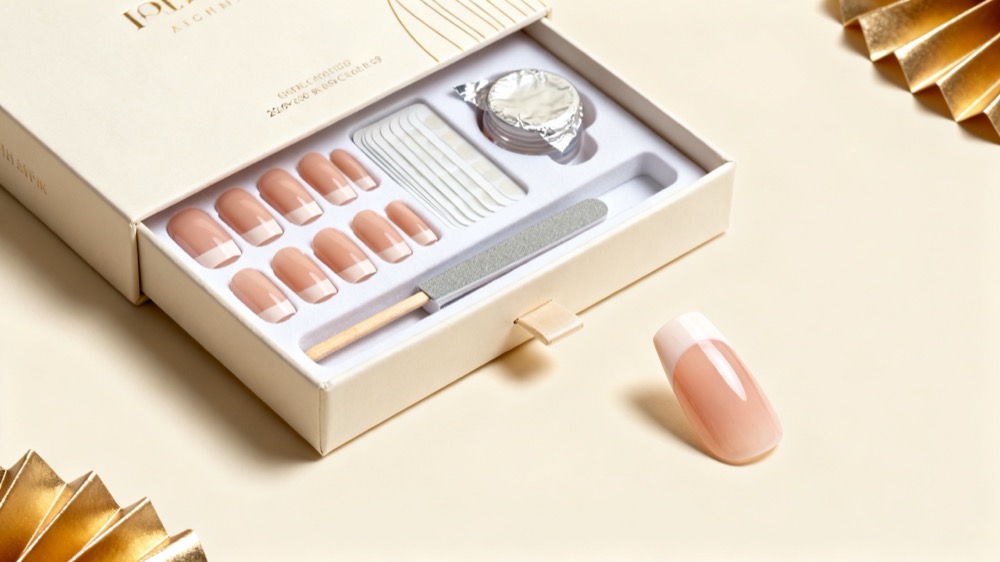
Press-on nails are preformed nail coverings attached with adhesive tabs, nail glue, or pre-applied adhesive. Customers select suitable sizes and apply the finished designs themselves.
Traditional salon enhancements involve a more service-intensive process. Acrylic systems combine liquid monomer and powder polymer, while gel enhancement systems use products cured under a suitable lamp. Application methods, maintenance, and removal differ between systems.
Neither category automatically delivers better quality. Their premium potential comes from different value propositions.
| Comparison factor | Premium press-on nails | Traditional salon enhancements |
|---|---|---|
| Core value | Convenient, coordinated finished designs | Personalized shaping and professional service |
| Application | Customer-applied using the specified adhesive | Technician-applied |
| Fit | Depends on available sizes, curvature, and selection | Can be tailored during the appointment |
| Design consistency | Finished sets can follow an approved production standard | Results depend substantially on technician execution |
| Maintenance | Replacement or reapplication according to instructions | Maintenance appointments may be required |
| Reuse | Possible for selected systems, not guaranteed | Generally not repositioned as reusable finished sets |
| Brand ownership | Packaging, product, instructions, and aftercare | Salon environment, technician relationship, and service |
| Distribution | Suitable for packaged retail and online sales | Primarily appointment-based |
For a manufacturer-backed beauty brand, press-ons provide a practical way to sell a complete branded experience. For a salon, traditional enhancements make expertise itself the premium offering.
A higher price and decorative box are not enough. Premium positioning must connect a visible promise with a dependable experience.
Customers can evaluate surface smoothness, shape symmetry, color consistency, edge finishing, and how naturally the nails sit near the cuticle.
They can also notice uncomfortable pressure, mismatched curvature, rough edges, or embellishments that detach.
For custom press-on nails, these details deserve as much attention as photography. An impressive campaign cannot compensate for a poor first application.
Beauty-industry research describes consumers as increasingly attentive to value and willing to combine expensive and inexpensive products. This does not eliminate premium demand. It raises the burden of proof.
A nail brand should explain what the customer receives:
- More suitable sizing options.
- Distinctive, coordinated designs.
- Clear application and removal guidance.
- Reliable product presentation.
- Responsive support when something goes wrong.
These benefits are more persuasive than calling every collection "luxury."
Private-label press-on nails allow brands to control much of the customer journey, from product selection to storage after use.
A thoughtfully developed kit can combine nails, an appropriate adhesive system, application accessories, and understandable instructions. Each component should support the same positioning.
For example, a minimalist brand might prioritize refined neutral shades, shorter everyday shapes, and discreet packaging. An expressive fashion brand might emphasize sculptural decoration and limited seasonal collections.
The advantage is coherence—not simply including more accessories.
Press-ons can be positioned around flexibility: preparing for an event, changing styles, or creating a polished look without arranging an appointment.
However, "quick application" should not become "no preparation required." Customers still need to select sizes and follow the adhesive instructions.
The premium message is control over the experience, rather than a promise that every customer will achieve identical results instantly.
An approved press-on design can become a recognizable product sold through multiple channels.
That makes press-ons attractive to wholesalers and chain retailers seeking coordinated assortments. The manufacturing challenge is maintaining the approved appearance across production runs.
Brands should define acceptable variation in color, decoration placement, shape, and packaging before scaling distribution.
Traditional salon enhancements offer a valuable human element. A skilled technician can assess the customer's preferences, adjust the shape, and create a personalized finish.
That relationship can justify a premium independently of the material cost.
For customers with difficult sizing requirements or highly specific design expectations, professional customization may be more compelling than a ready-made set.
Some customers value the appointment itself: consultation, personal attention, and confidence in a familiar technician.
A press-on brand should not dismiss this as inconvenience. For a service-led business, the salon experience is part of the product.
The strategic question is therefore not whether press-ons can replace every salon service. It is whether the target customer wants a packaged beauty product or a professionally delivered experience.
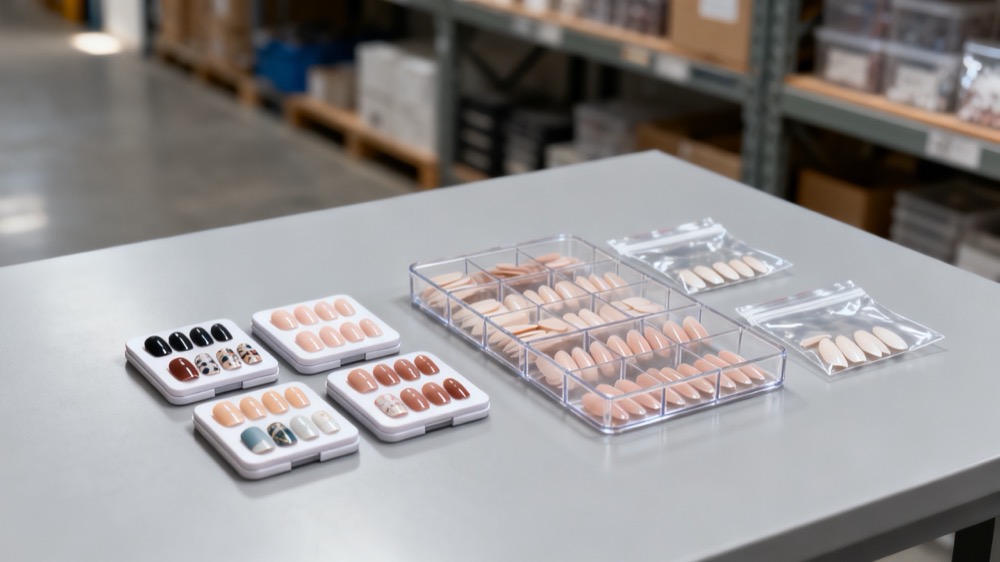
Wear depends on adhesive choice, preparation, fit, daily activities, and removal practices.
A claim made for one finished kit cannot automatically support another kit with different nails or adhesive. Even changing the included glue may change the customer experience.
If a brand wants to advertise a particular wear period, it should evaluate the finished system under defined conditions and document the results.
Traditional enhancements also require maintenance. Dermatology guidance notes that artificial nails worn for extended periods may need touch-ups every two to three weeks as natural nails grow.
Some press-on systems support reuse, but not all do.
A useful example is KISS ICON: the brand describes a specific sequence involving adhesive tabs for earlier applications and glue for the final application. This illustrates why reuse is a system-level claim, not an automatic property of every press-on nail.
A premium reusable nail kit should explain:
- Which adhesive supports the intended reuse.
- How to remove the nails without forcing them.
- How to clean and store the set.
- When damaged or distorted nails should be discarded.
Artificial nails and related products can contribute to irritation or nail damage. Aggressive preparation and improper removal can increase problems.
Press-ons should not be described as universally harmless, and salon enhancements should not be portrayed as inevitably damaging.
Provide product-specific instructions, discourage forced removal, and advise customers not to cover unhealthy nails. Persistent pain, rash, or nail changes warrant professional medical advice.
KISS ICON demonstrates how press-on positioning can move beyond basic convenience.
Its presentation combines decorative finishes, sculpted effects, an expanded size assortment, and a defined reuse proposition. The lesson is not that every brand should copy its designs. It is that premium positioning becomes clearer when supported by identifiable features.
A competing brand needs its own reason to exist. Possible directions include:
- Refined designs for professional wardrobes.
- Coordinated bridal collections.
- Distinctive artist collaborations.
- Fit-focused collections developed around customer feedback.
These are strategic options, not guarantees of demand. Validate the concept with the intended audience before committing to a broad assortment.
Before selecting a format, evaluate the customer promise rather than relying on category popularity.
The following framework is a planning tool, not a published industry benchmark.
| Decision question | Press-ons may fit better when… | Salon enhancements may fit better when… |
|---|---|---|
| What does the customer value most? | Flexibility and ready-made design | Bespoke fit and professional attention |
| Where will purchases happen? | Online, in stores, or across retail chains | Through appointments and local relationships |
| What makes the brand distinctive? | Recognizable collections and product experience | Technician expertise and consultation |
| How will quality be controlled? | Approved samples and production inspection | Training, service protocols, and technique |
| What encourages repeat purchases? | New designs and dependable fit | Maintenance and trusted service |
For a retail-first brand, press-ons often provide the more directly scalable format. For a service-first business, traditional enhancements may provide the stronger foundation.
Avoid beginning with "luxury nails for everyone."
Specify the intended wearer, preferred length, design preferences, application confidence, and purchasing channel. A collection designed for occasional event wear may need a different adhesive proposition from one intended for longer wear.
Document shape, length, curvature, size assortment, finish, decoration placement, accessories, and packaging.
Replace vague descriptions such as "excellent quality" with inspection criteria and approved visual references. Establish which defects are unacceptable before approving production.
A broad design assortment cannot rescue an unsuitable fit range.
Use a pilot group representing intended customers. Record sizing gaps, uncomfortable pressure, visible sidewall gaps, and application difficulties. Revise the system where necessary.
Do not present a small pilot as proof of universal fit.
Assess the actual retail kit, not just loose nail samples.
Ask participants to use the instructions without coaching. Track application problems, early detachment, decoration damage, removal difficulties, and packaging confusion.
This identifies weaknesses that a visual sample review may miss.
Compare more than the quoted unit price.
Include packaging, freight, inspection, channel fees, returns, customer support, and promotional allowances where relevant.
Premium pricing is commercially useful only when the product delivers enough value to support both customer satisfaction and a workable contribution margin.
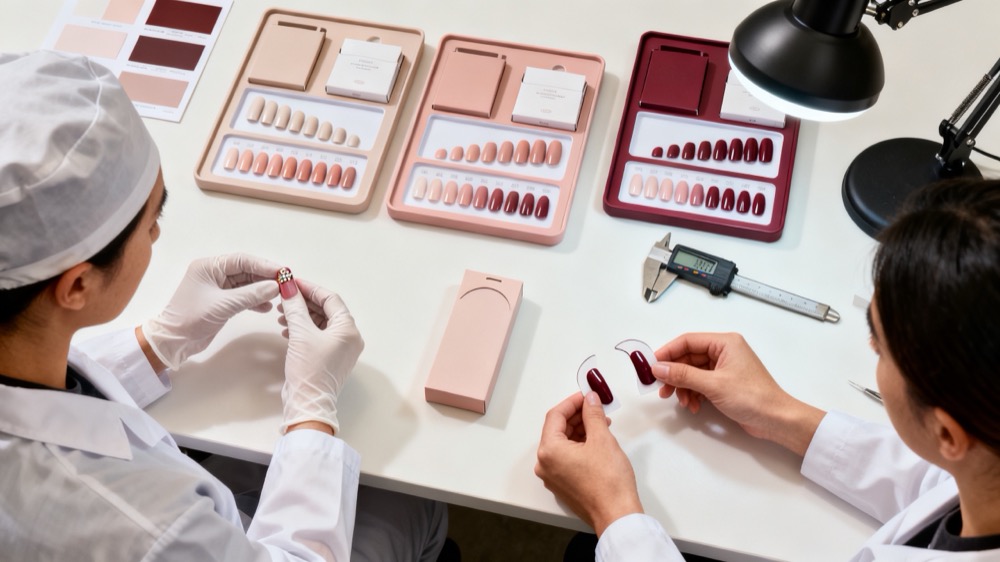
An OEM/ODM relationship should translate brand positioning into repeatable specifications.
Dongguan YoungMei Technology Co., Ltd. describes its capabilities as more than 15 years of experience, an owned factory, an established supply chain, and development and production of press-on nails, nail stickers, and related products.
For buyers, the next step is to validate how those capabilities support the specific project.
Request clarity on:
- Sampling stages and revision responsibilities.
- Minimum order quantities by design and packaging format.
- Approved-sample control and inspection procedures.
- Adhesive documentation and destination-market requirements.
- Production timelines and replenishment planning.
Rapid sampling helps development, but it does not replace approval discipline.
For packaged beauty brands, press-on nails offer a strong route to premium positioning through coordinated design, convenience, and a controlled product experience. Traditional enhancements remain persuasive where personal service and bespoke artistry lead the value proposition.
To develop a collection with Dongguan YoungMei Technology Co., Ltd., prepare your target market, preferred shapes, reference designs, packaging direction, and expected quantities. Request an OEM/ODM proposal covering samples, quality criteria, documentation, and production planning before committing to launch.
Press-on nails are a type of artificial nail. The useful comparison is between ready-made, customer-applied press-ons and professionally applied acrylic or gel enhancement systems.
Yes, when distinctive design, suitable fit, consistent finishing, clear instructions, and customer support justify the positioning. Packaging alone is insufficient.
No universal ranking is reliable. Performance depends on the product system, application, maintenance, and wearer's activities. Compare defined systems rather than broad labels.
No. Reuse depends on construction, adhesive, removal, and condition after wear. Brands should provide instructions and support any advertised reuse claim.
Press-ons are generally more straightforward to distribute as finished consumer kits. Traditional enhancement products also have wholesale opportunities, but usually serve professional application channels.
Start with a focused collection, a clearly defined customer, and a validated fit and application experience. Expand after identifying which designs and product features customers actually value.
1. American Academy of Dermatology Association. ["Artificial nails: Dermatologists' tips for reducing nail damage."] Supports the discussion of preparation, maintenance, removal, and potential nail damage. [aad]
2. American Academy of Dermatology Association. ["Manicure and pedicure safety."] Supports cautions concerning artificial nails, existing nail problems, and possible allergic reactions. [aad]
3. McKinsey & Company. ["A close look at the global beauty industry in 2025."] August 28, 2025. Provides broader beauty-industry context on value, cross-price-point purchasing, and emotional brand connections; it does not establish nail-specific demand. [mckinsey]
4. KISS. ["Kiss Icon Press On Fake Glue Nails — Remarkable."] Primary product source for the brand-specific size assortment, reuse sequence, application, and removal instructions. Manufacturer claims are not independent comparative test results. [kissusa]
5. KISS. ["New More Better."] Primary brand source illustrating premium press-on positioning through decorative finishes, sculpted effects, and a defined reuse proposition. [kissusa]