
- All
- Product Name
- Product Keyword
- Product Model
- Product Summary
- Product Description
- Multi Field Search
English
Views: 288 Author: Young Mei Publish Time: 10-22-2026 Origin: Site


Content Menu
● Square vs. Round Gel Nail Brushes: The Main Differences
● What Is a Square Gel Nail Brush?
>> Where Square Gel Brushes Work Well
>> Limitations of Square Gel Brushes
● What Is a Round Gel Nail Brush?
>> Where Round Gel Brushes Work Well
>> Limitations of Round Gel Brushes
● Square vs. Round Gel Brushes by Application
>> Base Gel: Prioritize Thin, Controlled Coverage
>> Color Gel: Compare Evenness, Not Just Speed
>> Builder Gel: Flexibility Becomes Especially Important
>> Press-On Nail Decoration: Evaluate the Tip Geometry
● Brush Specifications That Matter Beyond Shape
>> Bristle Material and Recovery
>> Density, Thickness, and Handle Balance
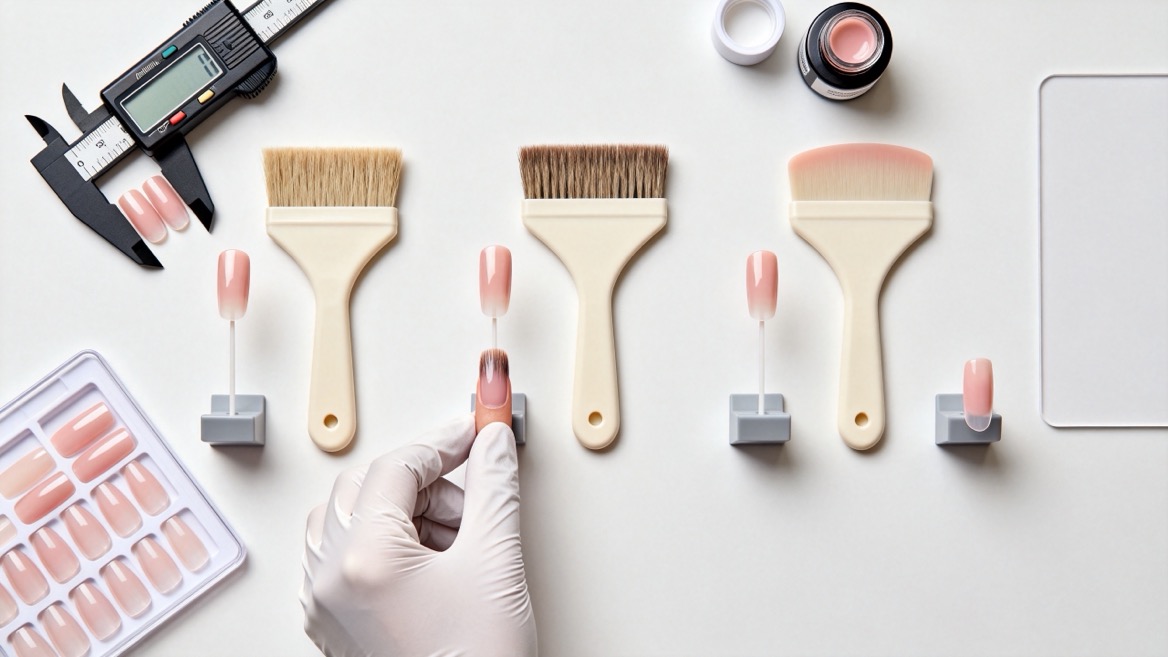
● A Practical Method for Testing Square and Round Gel Brushes
>> Step 1: Control the Variables
>> Step 2: Test Different Tasks Separately
>> Step 3: Record Observable Results
● Common Application Problems and How to Diagnose Them
>> Gel Floods the Cuticle Area
>> The Brush Feels Too Soft or Too Stiff
● Safety: Precise Application Matters More Than Brush Preference
● What Brands and Wholesale Buyers Should Specify
● Build a Nail Collection Around Real Application Needs
>> Is a Square or Round Gel Brush Better for Beginners?
>> Can I Use a Square Brush for Color Gel?
>> Are Round and Oval Gel Brushes the Same?
>> Can One Brush Handle Base, Color, and Builder Gel?
>> Does Brush Shape Affect Gel Curing?
>> Which Brush Is Best for Decorating Press-On Nails?
Square vs. round gel nail brushes: does the shape really change your application? Yes—but neither shape is automatically better. A square gel brush offers a straight edge and defined corners for controlled placement. A round or oval gel brush provides a curved tip that can make outlining the cuticle area feel more intuitive.
The most useful comparison is not "Which brush wins?" It is "Which brush works best with this gel, nail size, and application technique?"
At Dongguan YoungMei Technology Co., Ltd., our manufacturing perspective emphasizes matching tools and product specifications to their intended use. With more than 15 years of experience in press-on nails, nail wraps, and related nail products, we understand why control matters—from individual application to consistent commercial production.
This guide compares both brush shapes, explains their limitations, and introduces a practical evaluation method for professionals and nail-product buyers.
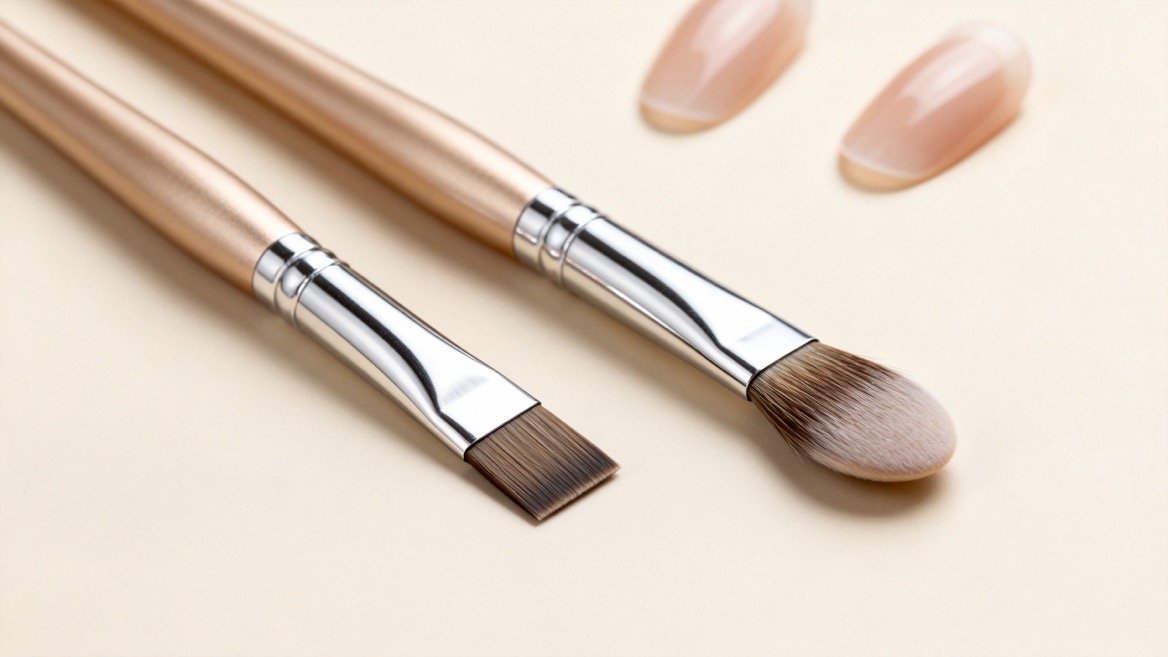
For this comparison, "round" means a flattened gel brush with a rounded or oval tip—not a full-bodied acrylic sculpting brush.
| Comparison | Square gel nail brush | Round or oval gel nail brush |
|---|---|---|
| Tip shape | Straight edge with defined corners | Curved edge, sometimes gently tapered |
| Application feel | Deliberate, directional placement | Smooth, curved perimeter tracing |
| Cuticle-area technique | Use a corner to guide the outline | Follow the outline with the curved tip |
| Common uses | Base gels, controlled coverage, structural adjustments | Color application, curved outlines, general gel work |
| Main learning challenge | Avoid pressing corners into surrounding skin | Avoid overloading or spreading the bristles |
| Best selection approach | Match width and flexibility to the task | Match tip curvature and flexibility to the task |
These are practical tendencies rather than fixed rules. Bristle construction, gel viscosity, and hand pressure can change how either shape behaves.
A square gel nail brush has a flat head with a relatively straight working edge. Its corners provide distinct contact points for directing gel.
Think of it as a small paddle: the broad face distributes material, while the corners handle localized adjustments.
Square brushes are useful when you want to:
- Spread a controlled amount of base gel.
- Cover a relatively broad nail surface.
- Adjust gel near the sidewalls.
- Guide small amounts of builder gel.
- Work with a clearly defined brush edge.
Educator Paola Ponce describes flat brushes as useful for controlled base application and for guiding self-leveling gel with their corners.
That does not mean every square brush picks up less product. Brush thickness, bristle density, and loading technique also matter.
A straight edge does not naturally mirror every cuticle outline.
On small or strongly curved nail beds, you may need to rotate the brush and use one corner at a time. Excessive pressure can spread the bristles and push product beyond the intended boundary.
A square brush rewards deliberate positioning. It does not compensate for an overloaded brush or rushed application.
A round gel nail brush typically has a flattened head ending in a curved or oval tip. Some versions have a more tapered center.
The curved edge can follow the proximal nail outline without requiring as much corner-by-corner adjustment.
However, "round," "oval," and "flat oval" are not always used consistently across suppliers. Check the brush photograph and dimensions rather than relying on its name alone.
Round brushes are often chosen for:
- Framing curved cuticle areas.
- Applying color gel.
- Working around smaller nail beds.
- Making soft, continuous strokes.
- General clear-gel application.
For example, KOKOIST describes its Round Brush as having soft, flexible bristles and tapered edges intended to support even application.
This is a useful design example, not evidence that every round brush performs identically.
A curved tip still requires careful loading.
If you collect too much gel and press firmly, the bristles can fan outward and move product toward the skin. A very soft brush may also feel less precise when repositioning a thicker material.
Conversely, a very stiff brush can disturb a thin color layer. Shape alone cannot predict either behavior.
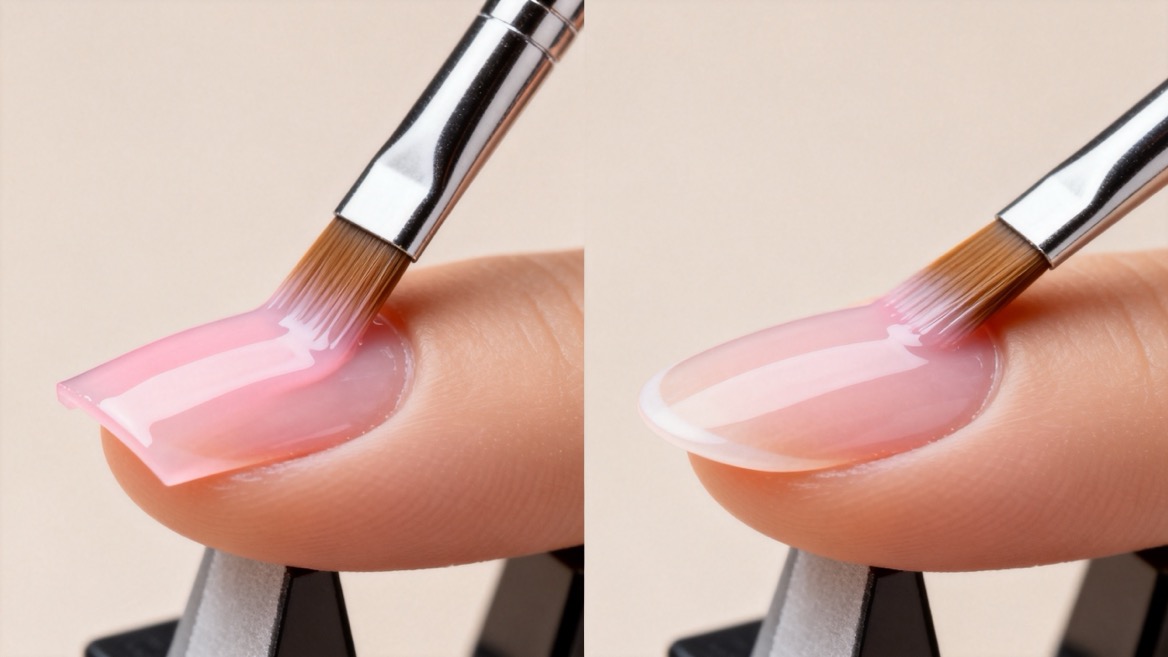
A square brush can provide a clear working edge for distributing base gel. Its broad face suits controlled spreading, while its corners help refine the outline.
A round brush remains a valid alternative, particularly when its curve matches the nail.
Follow the base gel's application instructions. Some systems require a specific rubbing-in technique or layer thickness; brush preference should not override those requirements.
A round gel brush may feel more natural when tracing the cuticle area and drawing color toward the free edge.
A square brush can also apply color evenly when its width suits the nail and its bristles do not separate excessively.
Assess the result after curing according to the product instructions:
- Is the coverage even?
- Are there visible streaks?
- Is the perimeter clean?
- Did application require repeated corrections?
Fewer strokes are useful only when they produce an acceptable finish.
For builder gel, brush shape is only part of the decision.
A square brush corner can guide localized adjustments. A tapered round brush can also reposition gel around the sidewalls or central structure.
The better choice depends on the material's viscosity, self-leveling behavior, and intended technique.
Do not assume that every brush labeled "gel brush" suits every builder system. Check the gel manufacturer's guidance and evaluate the brush with the actual material.
For press-on nail decoration, compare brushes on the nail tips you actually use.
A broad brush may cover a wide tip efficiently but feel cumbersome on a narrow size. A smaller oval brush may offer easier perimeter access while requiring more passes across a larger surface.
For commercial development, evaluate the full size range—not just one display tip.
Brush width influences coverage and access.
A head that is too wide can complicate work around narrow nails. One that is too small may require unnecessary overlapping strokes.
Bristle length also affects working feel. Compare actual measurements instead of assuming that two "medium" brushes are equivalent.
Synthetic fibers are used in professional gel brushes; KOKOIST, for example, specifies PBT fiber for its Round Brush.
However, a fiber name does not establish overall quality.
Evaluate whether the bristles return to their original shape after gentle pressure, maintain a clean edge, and resist persistent splitting during normal use.
Two brushes with the same outline may carry and release gel differently because their heads have different thicknesses or densities.
Handle balance also affects comfort. A tool that looks attractive in packaging may feel awkward during repetitive application.
For buyers, the practical question is whether the complete brush supports consistent work—not whether its specification sheet sounds premium.
A structured comparison provides more useful evidence than choosing by appearance.
The following is a proposed evaluation method, not a report of YoungMei laboratory results.
Use:
1. The same gel and shade.
2. Matching nail tips or comparable practice surfaces.
3. The same preparation method.
4. The same operator.
5. The manufacturer's specified curing procedure.
Choose brushes with similar head widths where possible. Otherwise, you may be comparing size more than shape.
Run separate comparisons for base application, color coverage, and structural gel placement.
Do not combine everything into a single overall impression. A brush that performs well with color may not be your preferred tool for thicker gel.
| Test item | What to record |
|---|---|
| Application time | Time required to reach an acceptable uncured finish |
| Perimeter control | Number of corrections around the cuticle and sidewalls |
| Coverage | Streaks, gaps, or visibly uneven distribution |
| Bristle behavior | Splitting, spreading, and recovery |
| Operator comfort | Grip comfort and ease of positioning |
| Repeatability | Whether results remain consistent across repeated tips |
A five-point rating system can organize observations, but define each score before testing.
Avoid turning a small internal comparison into a universal performance claim.
Possible contributors include excessive loading, strong pressure, unsuitable brush width, or working too slowly with a flowing material.
Try a smaller product load and more deliberate placement. Keep uncured gel off surrounding skin, and remove accidental contact before curing according to the product's instructions.
Changing from square to round may help your hand positioning, but it does not eliminate the need for careful technique.
Check the gel's instructions, brush condition, pressure, and layer consistency.
Repeatedly dragging through partially leveled product may worsen the finish. A damaged or separated brush head can also make even coverage difficult.
Do not simply add a thick layer to hide streaks; application thickness must remain compatible with the curing instructions.
Evaluate another brush with different bristle length or construction before rejecting the entire shape category.
A short oval brush and a long oval brush may feel substantially different. The same applies to square brushes.
Keep uncured gel brushes away from curing lamps and unnecessary light exposure.
For its own brushes, KOKOIST recommends avoiding acetone, limiting alcohol exposure, and using appropriate gel-based cleaning methods. Follow the specific brush supplier's care instructions rather than applying one cleaning routine to every tool.
Uncured gel ingredients can cause allergic reactions in susceptible individuals. Avoiding skin contact and following the correct curing procedure are therefore essential.
Neither brush shape makes improper application safe.
Use the lamp and curing process specified for the gel system. Do not treat a hard-feeling surface as proof that an unsuitable application procedure worked correctly.
If itching, swelling, blistering, or persistent irritation develops, stop using the product and seek medical advice.
A cleaner perimeter is not merely an aesthetic detail; it is part of responsible application.
For brands, wholesalers, and retail chains evaluating nail-tool assortments, "square versus round" is only the starting point.
A useful purchasing brief should identify:
- Intended users and application tasks.
- Brush-head shape and dimensions.
- Bristle material and desired flexibility.
- Handle dimensions and finish.
- Protective cap requirements.
- Cleaning and care instructions.
- Packaging and labeling requirements.
- Sample approval and inspection criteria.
Use an approved physical sample alongside written specifications. Appearance alone cannot communicate the desired working feel.
For press-on nail and nail-wrap collections, confirm whether a gel brush actually supports the intended customer routine before adding one to a kit.
Square brushes offer defined edges and corners. Round brushes offer a curved working tip. The strongest choice is the one that delivers clean, repeatable results with your actual materials.
Dongguan YoungMei Technology Co., Ltd. supports global brands, wholesalers, and chain retailers with OEM/ODM development for press-on nails, nail wraps, and related nail products.
Contact our team with your target market, design brief, packaging requirements, and expected order volume to discuss sampling, product development, and coordinated sourcing for your next nail collection.
Neither is universally easier. A round brush may feel intuitive around curved cuticle outlines, while a square brush provides distinct edges for placement. Start with a manageable size and judge which allows cleaner application.
Yes. Choose an appropriate width, use controlled pressure, and follow the gel's layer instructions. A square tip does not prevent smooth color application.
The terms sometimes overlap. In this article, both describe flattened brushes with curved tips. Check the actual head profile because supplier terminology can differ.
It may, but compatibility and cleaning requirements matter. Separate brushes can simplify color management and preserve a preferred working feel. Follow the product and brush manufacturers' guidance.
Brush shape does not determine curing requirements. Its relevance is indirect: application influences layer distribution. Always follow the gel system's specified thickness, lamp, and curing time.
Choose according to tip size, gel behavior, and design requirements. Test both shapes across representative sizes rather than selecting from a single demonstration.
1. Paola Ponce and Fabiola Saucedo. "Square vs. Round Gel Nail Brushes | Does It Make a Difference?" Practitioner perspectives on flat and rounded brushes, application techniques, and individual preferences. [paolaponcenails]
2. KOKOIST USA. "Round Brush." Manufacturer information on brush shape, PBT bristles, application characteristics, and recommended brush care. [kokoistusa]
3. Allure. "Gel Nail Allergy: Safety, Concerns, and Prevention Tips." Dermatologist and chemist commentary on gel ingredients, skin exposure, and curing-related precautions. [allure]
4. YoungMei. "Custom OEM/ODM Press-On Nails Manufacturer." Company information on private-label press-on nails, nail wraps, and customized product development. The 15-plus years of experience and additional company capabilities described here were supplied in the commissioning brief. [youngmeinails]